

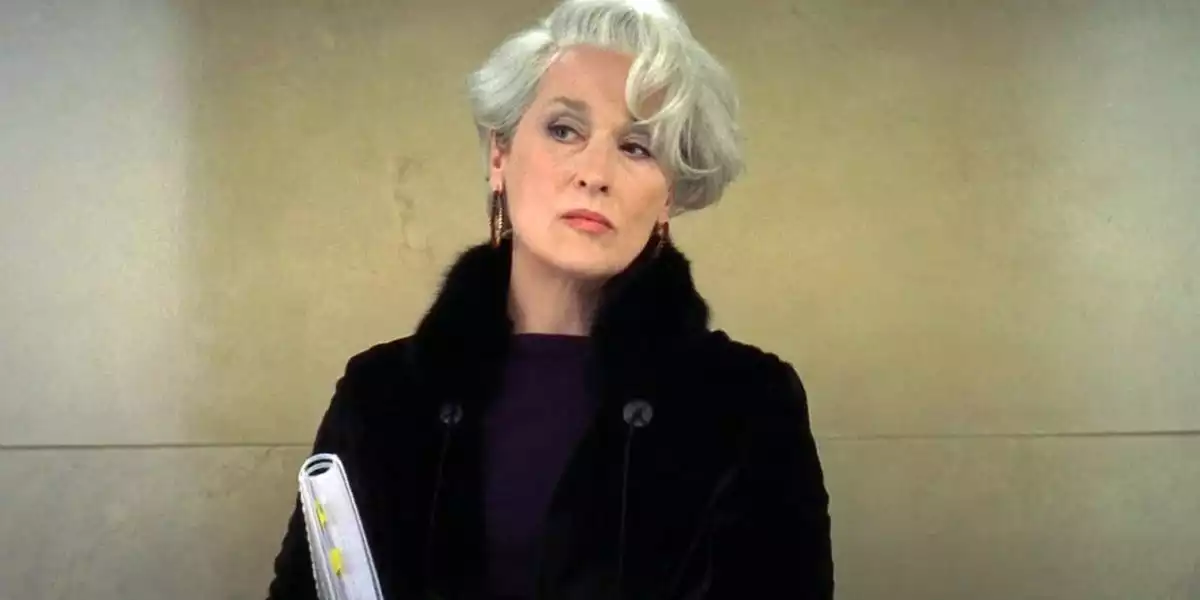

When a single performance becomes a balance-sheet catalyst
Meryl Streep’s account of initially declining *The Devil Wears Prada*—then returning to the table with a salary demand that ultimately doubled—reads like a Hollywood anecdote. In business terms, it is a clean case study in pricing power, asset valuation, and value capture. The 2006 film’s $326 million global box office (on what was widely regarded as a modest production budget) demonstrated that certain creative inputs behave less like costs and more like revenue multipliers.
Studios have long understood that A-list talent can de-risk a project, but Streep’s Miranda Priestly illustrates something more specific: a role-performance fit so definitive that it becomes part of the intellectual property (IP) itself. In that scenario, compensation is not merely payment for labor; it is a strategic investment in a brand-defining component of the product. The market’s response—critical acclaim, cultural staying power, and durable rewatch value—helped convert a fashion-industry satire into a long-lived franchise asset.
For executives and investors, the takeaway is not that every star can “name their price,” but that some talent functions like a high-impact intangible asset. When that is true, the question shifts from “How much does this cost?” to “What is the expected return across the full monetization stack—box office, licensing, streaming, and long-tail cultural relevance?”
Franchise revival economics: nostalgia as a risk-management strategy
Two decades later, Streep’s return in a sequel projected to open at $80 million domestically and $180 million worldwide underscores how modern studios increasingly treat legacy IP as a stabilizer in an unpredictable market. The strategic logic is familiar across industries: when consumer attention is fragmented and acquisition costs rise, companies lean on brands with pre-existing trust and recognition.
A sequel to *The Devil Wears Prada* is not simply a creative continuation; it is an exercise in brand equity renewal. The time gap is itself a feature, not a bug. Spacing installments across decades can:
- Reactivate original audiences with nostalgia-driven demand
- Introduce the property to new cohorts via streaming discovery and social media circulation
- Reframe the narrative for contemporary contexts, expanding relevance without rebuilding awareness from scratch
This “heritage reboot” pattern mirrors playbooks in gaming, consumer electronics, and automotive—industries that increasingly monetize the past to fund the future. For film studios, the advantage is measurable: proven IP can reduce development uncertainty, improve marketing efficiency, and increase the probability of strong opening-weekend performance—still a critical signal for downstream revenue.
At the same time, reliance on sequels is not a free lunch. Legacy franchises carry expectation risk: audiences arrive with a mental model of what the brand “should be.” That makes casting continuity and signature performances even more valuable—strengthening the argument that certain actors are not interchangeable line items, but core components of the franchise’s commercial identity.
AI forecasting, windowing strategy, and the new distribution calculus
The reported projections for the sequel reflect a broader shift: box-office expectations are now shaped by predictive analytics pipelines that ingest pre-sales velocity, social-media sentiment, historical comparables, and real-time engagement signals. In practical terms, studios are moving toward a more financial-services-like posture—treating releases as portfolios, optimizing spend and timing with data models that update continuously.
This data-centric approach is also changing marketing execution. Campaigns can be adjusted mid-flight using dashboards that track:
- Geographic demand pockets (where incremental ad spend yields the highest lift)
- Audience sentiment shifts (which creative assets resonate or backfire)
- Conversion proxies (trailer completion rates, ticketing clicks, influencer amplification)
Distribution strategy is equally consequential. A theatrical-first posture—especially amid ongoing debates about streaming-first releases—signals confidence that premium cinema remains a differentiator. Theatrical runs can still deliver:
- Eventization that streaming struggles to replicate
- Higher-margin premium formats (IMAX, Dolby, luxury seating)
- Marketing halo effects that boost later streaming performance
Meanwhile, global revenue diversification continues to reshape decision-making. Growth in Southeast Asia and Latin America has made overseas performance less of an afterthought and more of a primary lever—driving localized marketing, region-specific partnerships, and release strategies designed to maximize worldwide momentum.
Negotiation as governance: what Streep’s leverage reveals about modern compensation
Streep’s negotiating arc—from hesitation to confident value maximization—lands at the intersection of organizational behavior and compensation governance. In corporate terms, it highlights a persistent tension: high performers often under-ask until they understand their true leverage, while organizations may underpay until forced to reconcile compensation with measurable impact.
Her experience also points to structural issues that extend beyond one contract. Negotiation outcomes can reflect information asymmetry, risk tolerance, and—frequently—demographic disparities in how advocacy is received and rewarded. For industries aiming to retain elite talent, the lesson is not simply “negotiate harder,” but to build systems that reduce reliance on individual brinkmanship.
Forward-looking organizations—whether studios or Fortune 500 employers—are increasingly experimenting with mechanisms that make value-sharing more transparent and scalable, including:
- Structured compensation committees and clearer pay bands tied to performance metrics
- Performance-linked bonuses that align incentives without constant renegotiation
- Emerging concepts like smart-contract-style royalty automation to reduce friction and disputes in complex revenue splits
Ultimately, *The Devil Wears Prada* sequel is more than a pop-culture milestone. It is a live demonstration of how modern entertainment is financed and forecasted, how legacy IP is deployed as a hedge, and how a single individual’s leverage—when matched to undeniable product-market fit—can reshape the economics of an entire franchise.

 By
By
 By
By

 By
By
 By
By


 By
By







