

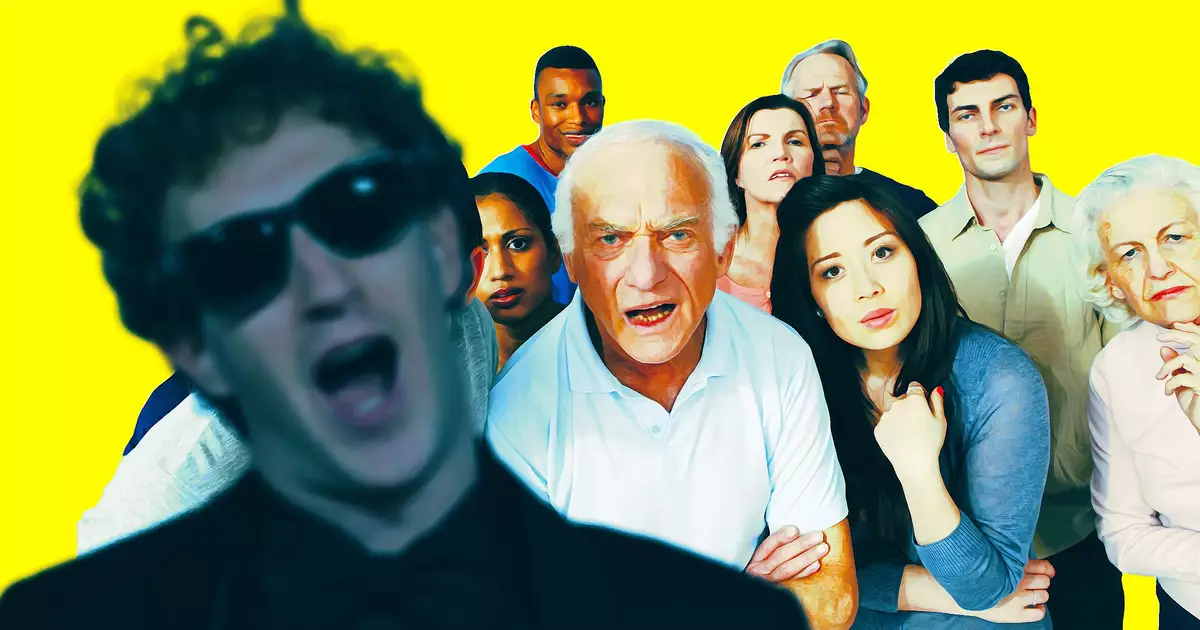

Subterranean Ambitions: The New Architecture of Tech Wealth
Beneath the manicured streets of Palo Alto, a new kind of Silicon Valley arms race is unfolding—one not of code or capital, but of concrete and contingency. Mark Zuckerberg’s ongoing construction of a sprawling 7,000-square-foot subterranean complex beneath his 11-parcel estate has become a lightning rod for local discontent, exposing the friction lines between the ambitions of extreme wealth and the civic fabric of the communities in which it embeds itself. The noise, the traffic, the omnipresent security details—these are just the surface-level irritants. What lies beneath, quite literally, is a deeper story about the future of private resilience, the evolving relationship between tech elites and urban governance, and the reputational risks that shadow the personal choices of those who shape our digital world.
The Engineering of Personal Resilience: From Eccentricity to Industry
What was once the province of Cold War paranoia or survivalist fantasy has, through the alchemy of technological progress and capital abundance, become a quietly booming sector: personal resilience engineering. The Palo Alto project is emblematic of a new era in which bunker-grade architecture is no longer a fringe indulgence, but a testbed for advanced geotechnical robotics, smart-home IoT, and compact life-support systems.
- Biometric perimeter controls and drone-ready airshafts are now standard features, not science fiction.
- Directional noise baffling and autonomous security protocols are being piloted in luxury residences before filtering down to broader markets.
- The same vendors fortifying the homes of tech titans are quietly courting enterprise clients, offering turnkey resilience suites for corporate campuses.
For CIOs and procurement leaders, this signals a subtle but significant shift. The cost curves and capabilities of these technologies are being shaped in the crucible of ultra-high-net-worth demand, but their eventual diffusion into commercial and even residential real estate is all but inevitable. The smart money is benchmarking now, before crisis-driven scarcity sends prices soaring.
Urban Power Dynamics: Land, Law, and the Two-Tier City
The physical expansion of tech wealth is mirrored by its influence over the urban landscape. In the Bay Area, where land is scarce and zoning variances are currency, influential homeowners increasingly operate in a parallel regulatory universe. Local governments, eager to anchor their tax bases, often grant easements and exceptions that would be unimaginable for ordinary residents. This creates a two-tier land-use market—one for the elite, another for everyone else.
- The global market for security-as-a-service for ultra-high-net-worth individuals now exceeds $30 billion, growing at over 8% annually.
- High-visibility projects like Zuckerberg’s normalize expenditure thresholds, recalibrating everything from insurance underwriting to real estate pricing.
- Municipalities, meanwhile, walk a tightrope between catering to their wealthiest citizens and complying with federal mandates tied to infrastructure and equity.
The political risks are mounting. As cities become more dependent on concentrated property taxes, they expose themselves to both fiscal volatility and the specter of regulatory backlash—special assessments, excess-land taxes, or new conditional-use permits are all on the table. The optics of luxury bunkers in an era of housing affordability crises are, to put it mildly, combustible.
Reputational Asymmetry and the New Social Contract
Perhaps the most profound tension is not technological or economic, but reputational. The private behaviors of tech leaders—especially when they seem to flout the “rules-based order” that governs everyone else—can rapidly erode the social license their companies depend on. The gap between the rhetoric of community stewardship and the reality of fortress-like personal estates is a vulnerability that activist investors, regulators, and employees are increasingly attuned to.
- ESG narratives are fragile; personal conduct can undermine years of corporate positioning in a single news cycle.
- Talent culture is sensitive to perceived hypocrisy—visible status moats can alienate technical staff and impact retention.
- Forward-thinking boards are beginning to integrate personal real-estate projects into their risk mapping, recognizing that the boundary between private and corporate reputation is more porous than ever.
For organizations navigating this landscape, the imperative is clear: synchronize strategies across facilities, public affairs, and ESG. Anticipate the diffusion of resilience features into employee expectations. Codify transparent frameworks for community impact. Monitor the convergence of residential and enterprise security technologies for procurement leverage.
The excavation beneath Zuckerberg’s estate is more than a feat of engineering; it is a harbinger. As the appetite for resilience infrastructure grows—among both individuals and institutions—the tolerance for asymmetrical privilege is narrowing. The challenge for business and technology leaders is not just to build for the future, but to do so in a way that sustains the fragile social contract on which their license to operate ultimately depends.

 By
By
 By
By
 By
By
 By
By
 By
By


 By
By







