


Reinventing the Road: Lightship’s Electric RVs and the New Frontier of Mobile Electrification
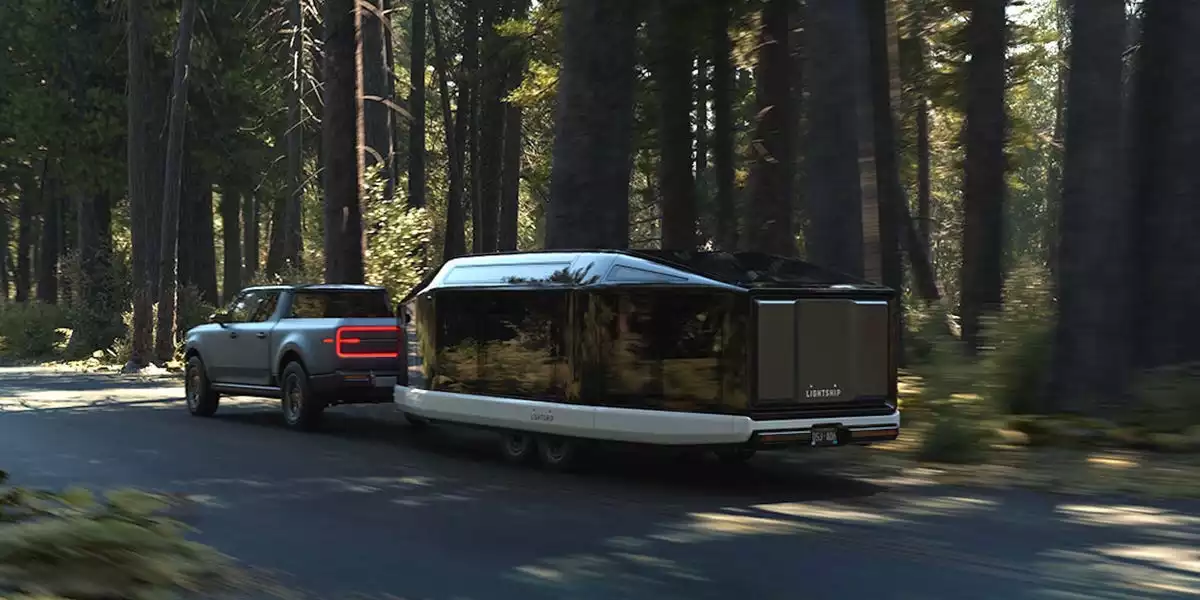
The American road trip has long been a symbol of freedom—an open highway, a horizon of possibility, and, for many, the gleaming promise of the recreational vehicle. Yet, as the world pivots toward electrification, the RV has lagged behind, stymied by the brutal physics of towing and the limitations of battery technology. Enter Lightship, a Broomfield, Colorado-based startup helmed by former Tesla executives Ben Parker and Toby Kraus, whose $250,000 AE.1 “Cosmos” electric trailer is less a nostalgic nod to the past than a bold leap into the future.
Propulsion, Power, and the Architecture of Autonomy
At the heart of Lightship’s innovation is a deceptively simple question: What if the trailer pulled its own weight? The Cosmos answers with an onboard battery and e-axle, transforming the RV from a passive burden into an active propulsion partner. This electrified trailer architecture neutralizes the aerodynamic drag and mass penalties that have historically slashed EV towing ranges by up to 60%. Instead of draining the tow vehicle’s battery, the Cosmos synchronizes torque in real time, preserving range and redefining what’s possible for electric adventure.
But the technological ambition runs deeper. Lightship’s proprietary energy-management stack orchestrates the dance between trailer and tow vehicle, a software platform with the potential to become OEM-agnostic. Imagine a “tow-assist” layer, adaptable to both electric and combustion trucks, that could one day be licensed across the industry. The dual-use battery system, meanwhile, doubles as a stationary power source at campgrounds, hinting at a future where RVs become mobile microgrids—supplying energy not just to travelers, but to the grid itself.
Market Dynamics: Premium Pricing and the Bridge to Mass Adoption
The AE.1’s six-figure price tag may raise eyebrows, but Lightship is targeting a segment already primed for luxury. The premium RV market, home to Airstream devotees and high-net-worth nomads, is less sensitive to interest rates and more attuned to technological novelty. For these early adopters, the Cosmos is not just a vehicle—it’s a statement.
Yet, Lightship’s strategy is not confined to the upper echelons. Lower-priced variants, slated for release next spring, aim to broaden the addressable market. Crucially, the electrified trailer serves as a transitional technology: it empowers consumers to leverage existing ICE or partial-range EV trucks, sidestepping the chicken-and-egg problem of waiting for fully electric pickups with robust tow ratings. This bridge market could accelerate the adoption of electric mobility, nudging both consumers and automakers toward a zero-emission horizon.
On the policy front, domestic manufacturing positions Lightship to capitalize on incentives embedded in the Inflation Reduction Act. By assembling batteries stateside, the company not only buffers against tariffs but also potentially unlocks clean-vehicle and energy-storage credits, driving down costs as production scales.
Strategic White Space: Software, Data, and the Future of Connected Mobility
Lightship’s true moat may lie less in hardware than in its software and data. The company’s intellectual property spans power electronics, aerodynamic optimization, and—most critically—control algorithms that harmonize independent drivetrains. This software-defined towing is a harbinger of a broader trend: multi-power-unit coordination, relevant not just to RVs but to future freight platoons and autonomous convoys.
The data loop is equally compelling. Every journey generates a trove of telemetry—traction, wind load, trip planning—forming a proprietary dataset on real-world RV usage. This behavioral intelligence opens doors to new monetization pathways, from predictive maintenance and insurance optimization to dynamic campground-grid services. In the hands of a systems integrator, such as Lightship, these insights could reshape not just how we travel, but how we power and insure our journeys.
Adjacent markets beckon. The self-propelled trailer architecture could migrate into commercial logistics—think powered box trailers for last-mile delivery—or even defense, where silent running and exportable power are at a premium. And as utilities and energy retailers eye the distributed energy potential of aggregated mobile batteries, the humble RV may find itself at the nexus of the next grid revolution.
Regulatory Hurdles and the Road Ahead
Innovation rarely travels a straight path. Lightship’s domestic production strategy sidesteps some tariff headaches, but battery cell sourcing remains a global puzzle, with supply chains knotted by critical mineral constraints. Regulatory complexity looms: an electrified trailer must satisfy both automotive safety and energy-storage codes, a gray zone that could stymie fast followers but reward those who master it early.
For decision makers—auto OEMs, utilities, RV park operators, and investors—the implications are profound. Partnerships that bundle electrified trailers with EV pickups could shift adoption curves. Campgrounds may need to upgrade infrastructure, while utilities explore demand-response programs for mobile storage assets. Policy makers, for their part, have a mandate to clarify tax credits and harmonize safety standards, accelerating capital deployment in this emergent sector.
Lightship’s AE.1 is more than a high-end RV; it is a systems solution to a high-visibility pain point, and a test case for whether auxiliary-powered trailers can become a mainstream bridge to full electrification. As the road to zero-emission mobility unfurls, the Cosmos may well mark the beginning of a new chapter—one where the journey is powered not just by wanderlust, but by watts and algorithms.

 By
By
 By
By

 By
By
 By
By

 By
By
 By
By







