
Kunal Shah’s ascent signals a leadership model built for machine-speed markets
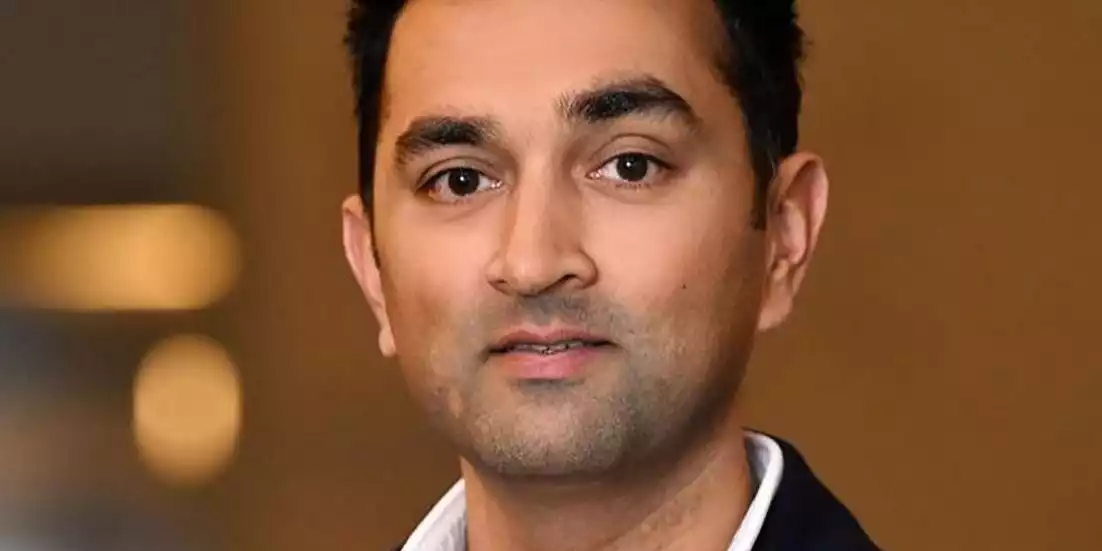
Kunal Shah’s rapid rise—culminating in his role as co-CEO of Goldman Sachs International and global co-head of Fixed Income, Currencies, and Commodities (FICC)—reads as more than an individual success story. It is a window into how a top-tier investment bank is calibrating leadership for an era where technology, geopolitics, and capital flows interact at unprecedented velocity.
Shah’s emphasis on mentorship and cross-hierarchy collaboration is particularly telling in a FICC environment where risk decisions often hinge on the quality of information transfer: from junior analysts closest to data and tooling, to senior decision-makers accountable for balance sheet and reputational exposure. In practice, this style can compress the distance between insight and execution—an advantage when markets reprice in minutes and when regulatory scrutiny demands demonstrable controls.
At the same time, Shah’s remit across 29 EMEA offices places him at the intersection of three forces reshaping global finance:
- AI-driven workflow redesign inside banks and among clients
- Europe’s evolving technology ecosystem, increasingly defined by specialized, B2B innovation
- Geopolitical fragmentation, where regional stability becomes a tradable and financeable asset
The subtext is clear: modern FICC leadership is no longer only about market intuition and client coverage. It is about orchestrating a complex system—people, models, governance, and macro risk—without losing speed.
AI in FICC: commoditization pressure, and a premium on bespoke risk engineering
Shah’s view that incoming analysts—unburdened by legacy processes—will drive automation reflects a structural reality: routine trading, vanilla execution, and basic analytics are increasingly machine-addressable. As AI and systematic tooling absorb repeatable tasks, the industry’s margin pool is likely to shift away from commoditized flow and toward higher-complexity services.
This is not simply a “jobs versus machines” narrative. It is a recomposition of value inside capital markets:
- What gets automated: repetitive pricing checks, standardized reporting, surveillance triage, and elements of execution optimization
- What becomes more valuable: bespoke structuring, cross-asset hedging design, complex derivatives, and advisory that integrates policy, regulation, and political-event risk
For Goldman Sachs and peers, the competitive question becomes how to industrialize AI without eroding trust. That requires governance that is as sophisticated as the models themselves—particularly in FICC, where model risk, data lineage, and explainability can be existential issues during stress events.
Management’s challenge, implied in Shah’s framing, is dual-track:
- Upskill experienced staff so domain expertise can be translated into model features, controls, and client-facing solutions
- Empower junior “intrapreneurs” to reengineer workflows while operating within strict guardrails for privacy, ethics, and regulatory compliance
In effect, the winning operating model is likely to look like agile product teams embedded inside trading and advisory, paired with disciplined risk governance—an attempt to fuse Silicon Valley iteration speed with bank-grade control.
The $725 billion tech capex wave and what it means for rates, FX, and commodities
The projection of $725 billion in tech platform capex by 2026 is not just a technology headline; it is a macro-financial catalyst. Large-scale investment in data centers, cloud infrastructure, fiber, and semiconductors creates second-order effects that land directly on FICC desks and corporate treasuries.
Several transmission channels stand out:
- Interest rates and funding: long-duration infrastructure build-outs increase demand for financing and hedging, boosting relevance of interest-rate swaps, project-linked derivatives, and liability management
- Foreign exchange exposure: global supply chains for chips, GPUs, and specialized equipment generate multi-currency cash flows, increasing demand for FX forwards, options, and cross-currency swaps
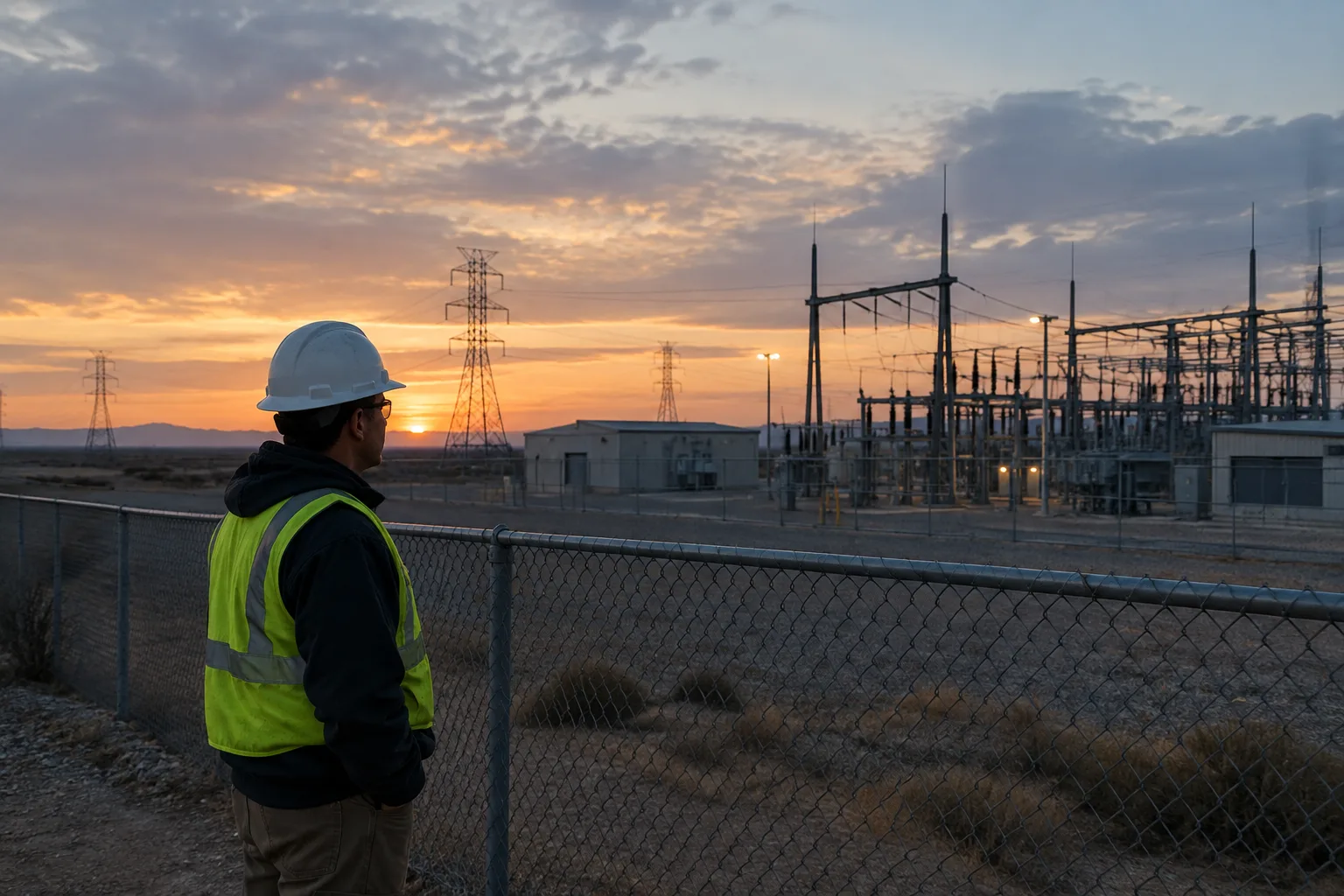
- Commodities and energy: data centers and semiconductor fabs are energy- and materials-intensive, linking tech capex to power markets, industrial metals, and broader commodity volatility
Against a backdrop of higher real rates and episodic tightening cycles, the appetite for structured risk solutions tends to rise. Corporates building capacity cannot afford to have project economics derailed by rate spikes, currency swings, or input-cost shocks. That environment typically rewards banks that can deliver cross-asset hedging strategies and tailor them to regulatory and accounting constraints.
Shah’s outlook implicitly positions FICC not as a legacy trading franchise, but as a risk intermediation and engineering platform—one that becomes more central as capex cycles grow larger and more globally entangled.
EMEA’s specialized AI advantage and the Gulf’s post-conflict investment horizon
Shah’s EMEA vantage point captures a nuanced shift: Europe’s growing unicorn population is less about replicating U.S.-style consumer platforms and more about building domain-specific, compliance-aware AI—robotics simulation, industrial automation, and vertical software that thrives under stringent rules.
Europe’s comparative edge is increasingly defined by:
- Industry depth: manufacturing, energy, logistics, and regulated sectors that generate high-value proprietary workflows
- Regulatory rigor (e.g., GDPR and sectoral compliance): a constraint that can become a moat when AI systems must be auditable and trustworthy
- B2B commercialization pathways: where procurement cycles are slower but switching costs and long-term contracts are higher
For an institution like Goldman Sachs, this creates opportunities beyond traditional capital raising: structuring cross-border financing, advising sovereign funds on scaling “national champions,” and shaping public-private frameworks where policy clarity unlocks investment.
Parallel to this, Shah’s attention to the Gulf Cooperation Council (GCC) underscores how geopolitical risk can invert into strategic advantage. Relative stability, fiscal buffers, and proactive central bank actions can make the region a magnet for capital—particularly if post-conflict dynamics translate into a multiyear rebuild cycle. The likely financing toolkit is broad and sophisticated:
- Sukuk and sharia-compliant structures for infrastructure and development funding
- Green bonds and transition finance tied to renewables, grids, and efficiency upgrades
- Commodity trade finance and hedging aligned with energy and materials flows
Taken together, Shah’s trajectory and thesis map onto a larger institutional imperative: in a world where AI compresses the value of the routine and geopolitics reshapes the map of opportunity, the durable edge belongs to firms that can combine machine-enabled execution with human judgment in complexity—and deliver both at scale, across regions, and under intensifying scrutiny.

 By
By
 By
By



 By
By
 By
By
 By
By