


A K-pop hiatus that reads like a corporate continuity plan
Seventeen’s extended group hiatus—driven by South Korea’s mandatory military service as four of the nine currently active members enlist—lands less as a pause than as a carefully managed transition. In entertainment terms, it’s a familiar lifecycle moment. In business terms, it’s a stress test for a talent-led intellectual property (IP) franchise operating under a non-negotiable regulatory constraint.
What stands out is the deliberate preservation of brand equity during a period when the core product—full-group releases and promotions—cannot operate at full capacity. Rather than allowing attention to decay, Seventeen’s ecosystem is being redistributed across individual members, sub-units, and adjacent industries. The result resembles a portfolio strategy: multiple smaller “assets” remain active, each targeting different markets, demographics, and monetization channels.
Key signals of this continuity architecture include:
- Unit and solo activations that keep the release calendar alive
- Global-facing appearances that broaden the group’s cultural footprint beyond music
- Digital-first fan engagement that sustains community momentum and data-rich touchpoints
- A clearly communicated 2028 full-group comeback, effectively anchoring long-term demand with a defined horizon
For management teams across entertainment, sports, and creator economies, Seventeen’s approach offers a real-time example of how to keep a premium brand “always on” even when the flagship configuration is temporarily unavailable.
Joshua Hong’s dual-stage strategy: cultural diplomacy meets luxury-market signaling
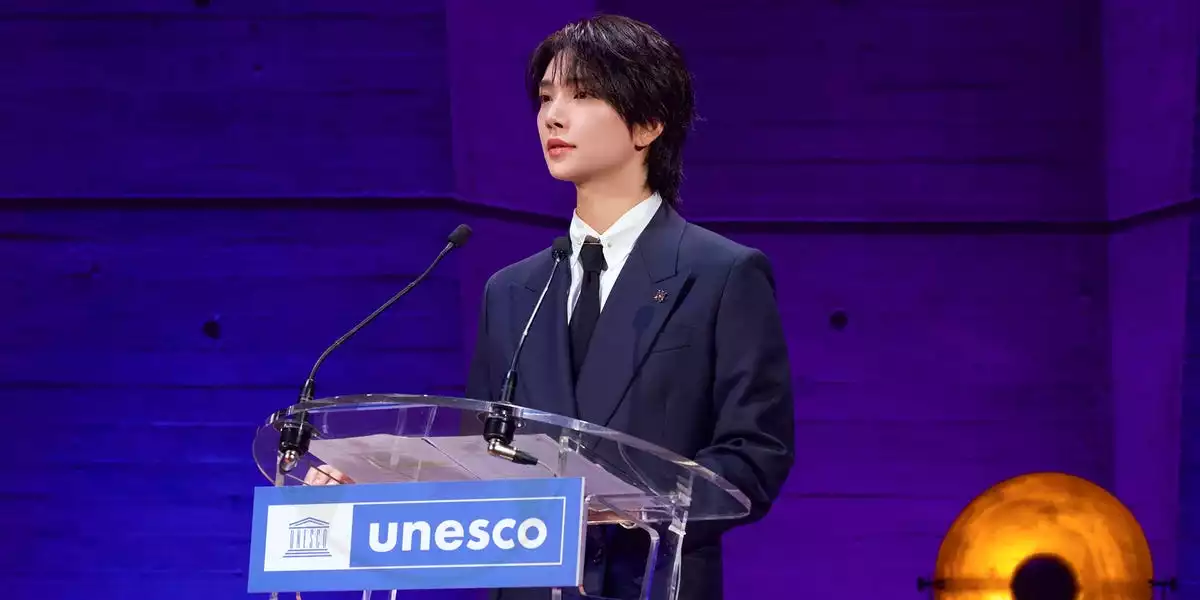
Among the most strategically visible moves is the emergence of Joshua Hong—American-born and English-fluent—in two arenas that carry outsized reputational leverage: a UNESCO youth initiative forum and Paris Fashion Week. These are not merely publicity stops; they function as credibility multipliers that reposition both the individual and the parent brand.
On the UNESCO side, participation aligns Seventeen with social-impact storytelling—a narrative increasingly intertwined with sponsorship decisions, brand safety considerations, and ESG-adjacent marketing. For global institutions and corporate partners, the value proposition is straightforward: youth engagement, cultural exchange, and measurable visibility. For Seventeen, the benefit is more subtle but powerful—institutional legitimacy that extends beyond entertainment.
Paris Fashion Week, meanwhile, signals entry into a different kind of market: luxury’s attention economy, where influence is measured not only in streams and ticket sales, but in brand adjacency, editorial presence, and high-margin collaborations. Fashion remains one of the most scalable extensions of celebrity IP, and Hong’s visibility suggests an intentional pivot toward solo creative work spanning music and fashion, without severing the connective tissue to Seventeen’s collective identity.
Taken together, UNESCO and Paris Fashion Week illustrate a modern playbook for global artists:
- Cultural diplomacy as trust-building and market entry
- Luxury alignment as a premiumization strategy
- Bilingual, cross-cultural fluency as a competitive advantage in global media cycles
This is the K-pop archetype evolving—from exportable music product to multifaceted lifestyle IP with institutional and commercial reach.
“V8” and the economics of cross-border collaboration in the streaming era
While Hong expands into diplomacy and luxury, Seventeen’s unit duo Vernon and The8 are pushing the music strategy forward with the mini-album “V8,” including collaborations with Pharrell Williams and Alice Longyu Gao, alongside planned live shows across Asia. This is not just a creative headline; it’s a strategic bet on cross-market interoperability.
High-profile Western collaborations—especially with a producer-artist like Pharrell—serve multiple functions at once:
- They create global press gravity, increasing discoverability beyond the core fandom
- They introduce new sonic palettes that can travel across playlists and radio formats
- They enable premium content positioning, supporting higher-value releases, exclusives, and brand tie-ins
- They reinforce the idea of a two-way cultural exchange, rather than a one-directional “Western validation” narrative
Economically, these collaborations can expand revenue options beyond touring—particularly important during a hiatus period shaped by enlistment schedules. In parallel, Asia-based live shows keep the performance engine running where feasible, preserving both cash flow and fan intimacy.
At the same time, other members’ individual branding moves—Dino’s solo debut under the alias Picheolin, and Seungkwan and DK completing a regional concert tour—underscore a broader operational logic: distribute activity across the roster so the overall franchise remains resilient.
This is what brand strategists would call layered architecture:
- The group remains the “master brand”
- Units function as mid-tier products with distinct identities
- Solo projects operate as niche-market entries that can later be reintegrated into the flagship narrative
The rotational deployment model—and why 2028 is more than a date
South Korea’s compulsory military service is often framed as an entertainment disruption. Strategically, it is closer to a structural constraint that forces innovation in workforce planning. Seventeen’s staggered approach resembles rotational deployment in enterprise settings: when key personnel must step away, the organization redeploys remaining talent into adjacent initiatives to maintain continuity, visibility, and institutional memory.
Equally important is the group’s commitment to a full-group comeback in 2028. For fans, it’s reassurance. For the business, it’s a long-range narrative anchor—akin to a flagship product relaunch date that keeps the market oriented toward a future peak moment. In the meantime, the hiatus becomes a runway for experimentation: new genres, new partnerships, new markets, and new identity layers that can ultimately feed back into the group’s next era.
In a media environment governed by micro-content and constant competition for attention, Seventeen’s strategy suggests a durable thesis: a hiatus does not have to be a silence. With disciplined brand diversification, cross-sector partnerships, and digitally sustained fan engagement, it can become a controlled expansion—one that keeps the franchise culturally present today while quietly engineering the conditions for a larger return tomorrow.


 By
By
 By
By
 By
By
 By
By


 By
By







