


A breakout micro-role that reveals how streaming hits are engineered today
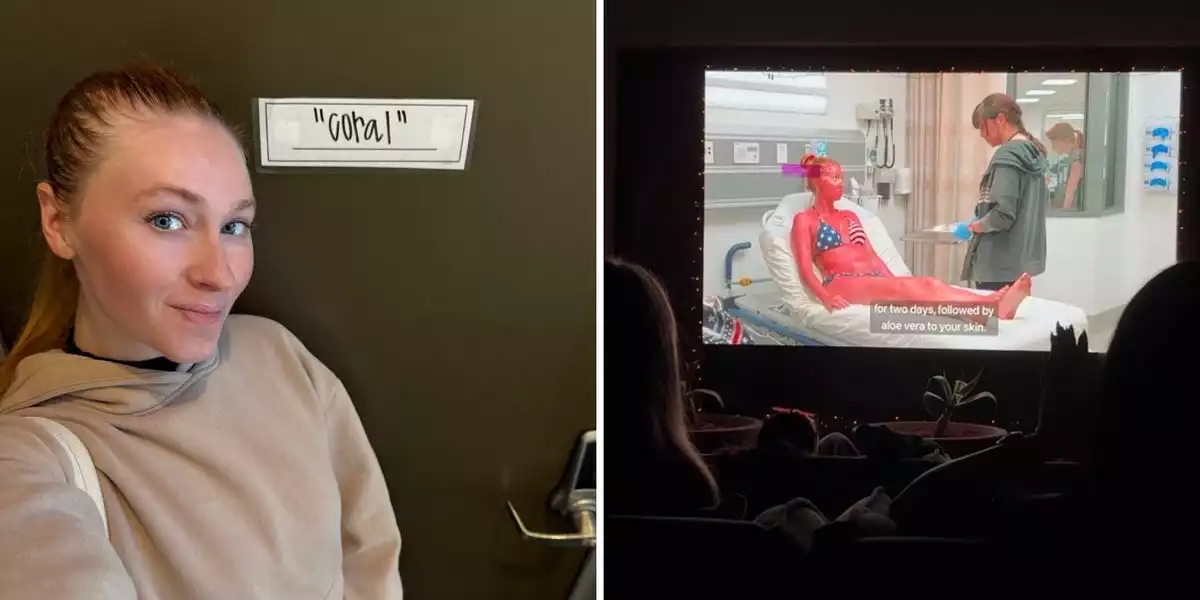
Jenna Moloney’s first meaningful television credit—cast as the “Sunburned Girl” in HBO Max’s *The Pitt*—reads like a classic entertainment breakthrough: a newcomer grinding through unpaid student films while holding a full-time marketing job, then landing a paid role after a self-tape assembled in a single night. Yet the more instructive story is not the romance of discovery; it’s how a modern streaming production converts small, low-risk creative decisions into outsized cultural and commercial impact.
Moloney’s on-screen moment was brief—reportedly beginning as a single line—yet it became a social-media meme, a reminder that audience attention no longer maps neatly to screen time. In the streaming era, a “bit part” can become a brand asset: a repeatable clip, a reaction template, a shareable reference point that keeps a series circulating between episodes and beyond release week. For platforms competing on retention and conversation, these micro-moments can function like compounding interest—small inputs that accrue value across the social web.
Just as notably, Moloney’s experience on a large-scale set—intensive makeup, tight schedules, and collaboration with established talent like Emmy winner Noah Wyle—highlights the operational reality behind prestige TV: even when the audience sees seconds, productions may invest hours to make those seconds feel inevitable, authentic, and rewatchable.
Remote casting and the quiet normalization of decentralized talent markets
Moloney’s overnight audition tape underscores one of the most consequential shifts in entertainment operations: remote casting is no longer an exception—it’s infrastructure. Streaming platforms and production houses increasingly rely on secure portals, standardized self-tape requirements, and consumer-grade camera quality that is “good enough” for early-stage selection. The result is a more decentralized talent funnel that changes who can compete and how quickly productions can move.
Key implications for casting and production workflows include:
- Lower friction, higher throughput: Self-tapes reduce scheduling bottlenecks and enable casting teams to review far more candidates across geographies.
- A new baseline for performer readiness: Actors are now expected to be their own mini production units—lighting, sound, framing, and file delivery—turning technical competence into a career prerequisite.
- Data-rich decision cycles: Digital auditions create an archive that can be revisited for future roles, effectively turning casting into a longer-term talent intelligence function rather than a one-off selection event.
This is where Moloney’s marketing background becomes strategically relevant. The industry is increasingly populated by professionals with hybrid skill sets—creative ambition paired with fluency in messaging, audience behavior, and digital presentation. In a world where a self-tape is both an audition and a piece of media, performers who understand attention mechanics may be better positioned to deliver what casting teams need: clarity, range, and immediacy under tight constraints.
Meme culture as a distribution layer—and a measurable business lever
That a minor performance beat became a meme is not merely a fun footnote; it’s a case study in how user-driven distribution can extend the marketing runway of a series at minimal incremental cost. Viral moments are unpredictable, but the conditions that allow them to flourish are increasingly legible: a distinctive visual, a relatable emotional cue, and a clip-friendly structure that can be remixed without context.
For streaming brands, the strategic question is no longer whether memes matter, but how quickly organizations can recognize and operationalize them. When a micro-character resonates, it can:
- Increase discoverability through algorithmic amplification on short-form platforms
- Strengthen brand recall via repeated exposure to a single, recognizable moment
- Support subscriber conversion by keeping the show present in cultural conversation during the crucial early window of release
This is also where “micro-influencer” logic intersects with entertainment. Emerging actors who suddenly become part of the online discourse can be engaged—carefully and ethically—as partners in promotion. Formalizing lightweight frameworks for co-created content, behind-the-scenes snippets, or sanctioned reposting can help studios participate in the momentum without appearing to manufacture it. The goal is not to hijack grassroots energy, but to reduce response time when the audience has already decided what’s share-worthy.
The economics behind seven days of work—and the future of production efficiency
Moloney’s reported compensation—about $1,200 per day over seven days—illustrates the paradox of creative labor in the streaming economy: day rates can look strong, while employment remains inherently intermittent. This is the gig model applied to prestige production, where financial stability depends less on any single booking and more on continuity, representation, and long-term career management.
From the studio perspective, the economics of micro-roles can be unusually attractive. A small casting and shooting investment can generate disproportionate returns if the moment becomes culturally sticky. It’s a reminder that ROI in entertainment isn’t only driven by leads and showrunners; it can also come from precision casting that seeds the narrative with memorable texture.
Moloney’s account of elaborate sunburn makeup also points to a persistent truth: even in an era saturated with CGI, practical effects remain central to believable storytelling—often because they are faster on set, more consistent under real lighting, and more intuitive for actors to perform against. That said, the workflow is ripe for innovation:
- Rapid-application prosthetics and improved materials could reduce chair time
- AI-guided color matching could standardize continuity across shooting days
- Digitally assisted planning could optimize prep/teardown schedules and labor allocation
Taken together, this single casting story reflects a broader industry trajectory: streaming platforms are building competitive advantage through decentralized talent acquisition, real-time cultural feedback loops, and operational investments that make small moments land with big impact. In that environment, the “Sunburned Girl” isn’t just a breakout credit—it’s a signal of how modern hits are cast, made, and amplified.

 By
By


 By
By
 By
By


 By
By







