
Tehran’s Ecological Reckoning: When Water Scarcity Redraws the Map of Power
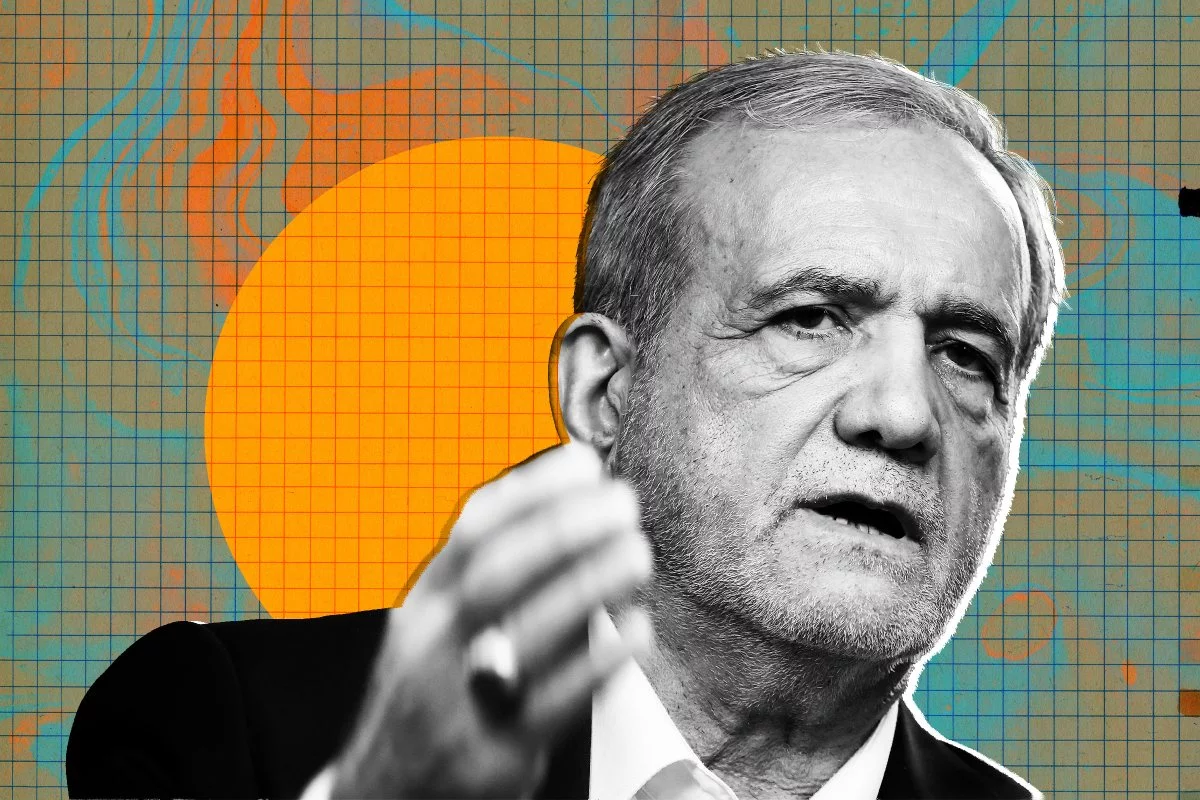
Iran’s capital, Tehran, has long stood as the nation’s political, economic, and cultural epicenter—a city of nearly nine million, perched at the foot of the Alborz mountains, its skyline a testament to both imperial ambition and modernist aspiration. But beneath the surface, a slow-motion crisis has been unfolding. President Masoud Pezeshkian’s recent pronouncement—that Tehran can no longer serve as the country’s political hub—marks a historic inflection point, one where environmental realities have outpaced the inertia of tradition and bureaucracy.
Six consecutive years of drought, the hottest summer in six decades, and a water system stretched to the breaking point have forced the administration’s hand. What was once a “strategic option”—the relocation of the capital—has become, in Pezeshkian’s words, an “environmental obligation.” The implications ripple far beyond Iran’s borders, signaling a new era in which climate risk is not merely an externality, but a central axis of statecraft.
The Anatomy of Urban Collapse: Water, Infrastructure, and Irreversible Strain
Tehran’s predicament is a case study in the limits of legacy urban systems. The city’s water grid, once reliably fed by mountain snowmelt, now faces annual declines of double-digit percentages. Attempts to compensate—desalination plants, aquifer overdrafts, and costly inter-basin transfers—have provided only marginal relief. Satellite data paints a stark picture: land subsidence of up to 25 centimeters per year in some districts, a silent but devastating indicator that aquifers are collapsing beneath the city’s weight. This not only raises the specter of infrastructure failure but also complicates any plans to build anew on the surrounding plains.
The agricultural sector, accounting for roughly 90 percent of national water withdrawals, looms large in this crisis. Households, by contrast, use just 8 percent—a disparity that underscores the political delicacy of any reform. Without a credible signal that water pricing and industrial compliance will be re-engineered, the risk of public backlash remains acute. Iran’s recent protest cycles have shown that distributive justice is not a luxury, but a necessity for social stability.
Capital Relocation: A Rare Opportunity for Smart Urbanism and Tech Realignment
The prospect of relocating the capital is daunting—fiscally, logistically, and socially. Estimates place the cost at 12–15 percent of Iran’s GDP over 15 years, rivaling the reconstruction efforts of postwar economies. Financing will likely depend on oil revenues and RMB-denominated credit, deepening Iran’s alignment with China via the “25-year strategic pact.” The internal migration of nearly 700,000 civil servants, plus contractors, will redraw the country’s housing and labor markets, with Tehran’s real estate poised for decline and the successor city primed for speculative boom.
Yet, embedded within this upheaval is a once-in-a-century chance to leapfrog legacy constraints. A new administrative capital offers Iran the potential to design a city from the ground up, integrating:
- Edge IoT for leak detection and real-time resource management
- AI-driven traffic and utility systems
- Demand-response water pricing architectures
However, Western export controls on advanced semiconductors and cloud services will likely steer Iran toward domestically sourced or China-supplied technology stacks. This eastward realignment in digital infrastructure could serve as a bellwether for broader regional tech ecosystems, as nations increasingly seek resilience amid geopolitical fragmentation.
Geostrategic and Industry Ripples: Climate Adaptation as the New Sovereign Risk
Iran’s move echoes recent decisions by Kazakhstan and Indonesia to relocate their capitals in response to ecological or seismic threats. The message to global markets is clear: the costs of climate adaptation are now material enough to reshape sovereign balance sheets and reprice risk premiums. For multinational corporations, this means:
- Reassessing location-risk matrices for real estate, logistics, and talent
- Embedding climate-adaptation clauses in joint ventures
- Anticipating government incentives for relocating to the new administrative zone
For technology providers, the opportunity lies in modular, sanctions-compliant solutions—edge analytics, SCADA retrofits, membrane desalination—tailored for phased deployment. Chinese EPC consortia are likely to dominate primary contracts, but opportunities exist for tier-two subcontractors and IP licensors willing to navigate the narrow export pathways.
Financial institutions and sovereign investors will need to grapple with dual-tranche financing structures and the emergence of hedging instruments tied to water-stress indices. As climate risk transcends governance concerns, ESG funds may be forced to recalibrate their exposure to Iranian assets.
Regionally, Tehran’s decision may catalyze a domino effect, spurring water diplomacy accords and multilateral desalination initiatives across the Gulf. Water scarcity is no longer a silent undercurrent—it is a central force reshaping alliances, trade, and national security.
The downgrading of Tehran from capital to legacy megacity is more than a bureaucratic maneuver; it is a watershed moment that signals the ascendancy of environmental constraints as core drivers of national destiny. Those who internalize water stress as a leading indicator—rather than a distant threat—will be best positioned to navigate the next era of climate-resilient urbanization and geopolitical recalibration.

 By
By
 By
By

 By
By
 By
By

 By
By
 By
By