


A high-stakes collision of blockbuster IP and personal biometric rights
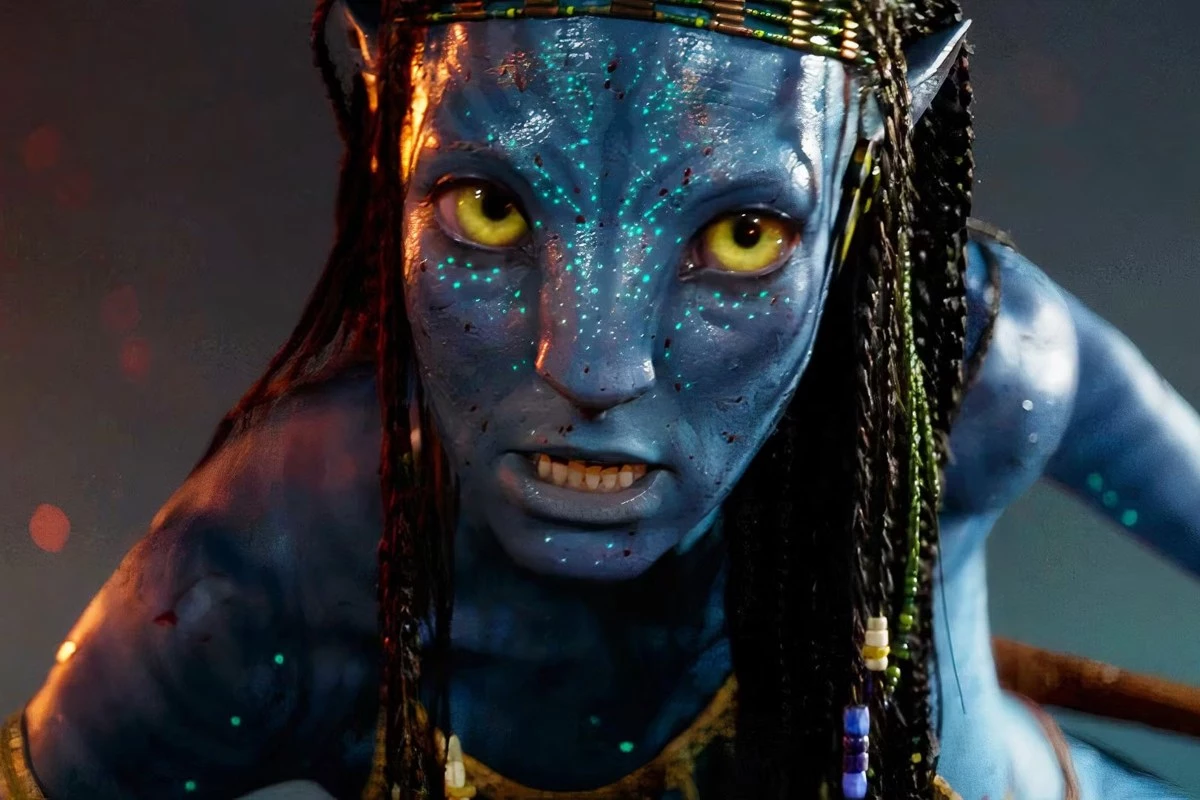
Indigenous actress Q’orianka Kilcher has filed suit in California against director James Cameron and The Walt Disney Co., alleging that her likeness—specifically her facial features—was used without authorization to shape the design of Neytiri, the central Na’vi character in the “Avatar” franchise. The complaint asserts that Cameron’s team “extracted” her features from a 2006 still image of Kilcher portraying Pocahontas when she was 14, and that this uncredited digital borrowing became a foundational reference for Neytiri’s appearance.
The legal theory is notable not only for its focus on right of publicity and biometric identity, but also for its attempt to connect character animation to California’s emerging deepfake and synthetic-media statutes—particularly because Neytiri appears in intimate scenes. If the court accepts the premise that a photorealistic, synthetic character can constitute an actionable “use” of a real person’s likeness (even absent a direct scan or on-set capture), the case could recalibrate how studios treat “reference” materials across modern visual effects pipelines.
Kilcher’s filing reportedly points to preliminary sketches, production notes, and internal commentary suggesting she served as a muse. Disney and Cameron have not publicly responded at the time of writing, leaving the industry to parse the complaint’s implications in the absence of countervailing factual context.
When “inspiration” becomes “extraction”: the technology behind the allegation
At the heart of the dispute is a question that entertainment law has struggled to answer in the age of AI-assisted creation: where does artistic inspiration end and misappropriation begin when digital tools can replicate human identity with increasing fidelity?
Modern character creation can draw from multiple technical approaches, including:
- Photogrammetry and image-based modeling, where still images can inform geometry, texture, and proportions without a live scan
- Neural rendering and face synthesis, which can learn facial structure and expression patterns from limited visual data
- Hybrid VFX workflows, where artists blend references from multiple sources into a single “original” asset
Kilcher’s allegation effectively argues that the pipeline crossed from reference into biometric appropriation—that her face was not merely a creative influence, but a source asset. This distinction matters because entertainment companies have long relied on mood boards, reference photography, and composite inspiration. What has changed is the precision and scalability of digital reproduction: a single still can now be used to infer features in ways that are difficult to detect, audit, or attribute after the fact.
The complaint’s invocation of deepfake-related legal concepts is especially consequential. Deepfake statutes were largely designed to address non-consensual synthetic sexual imagery and political deception. Applying that logic to a fictional character—if that character is alleged to be derived from an underage likeness—would test the boundaries of how “synthetic media” is defined and whether derivation can be treated as identity use even when the final output is a non-human, stylized being.
Financial exposure and strategic risk for Disney, Cameron, and the wider VFX supply chain
For Disney and other media conglomerates, the immediate stakes extend beyond damages. The larger issue is whether this case introduces a new category of production risk premium tied to biometric rights—one that could affect budgets, insurance, vendor contracts, and release strategies for effects-heavy franchises.
Potential business ramifications include:
- Insurance and underwriting pressure: If likeness-based claims become more common, insurers may demand stricter disclosures, higher premiums, or narrower coverage for VFX-intensive productions.
- Vendor indemnities and audit trails: Studios may push VFX houses to provide stronger warranties about dataset provenance, reference usage, and consent documentation—raising costs and slowing pipelines.
- Franchise governance and IP stewardship: “Avatar” is a long-horizon asset. Any legal uncertainty around character design provenance could complicate sequels, merchandising, and licensing negotiations.
- Brand equity sensitivity: Disney’s corporate identity is closely linked to family-oriented values. Allegations involving a minor’s likeness—especially tied to intimate scenes—carry reputational risk regardless of ultimate legal outcome.
This is also a strategic moment for the VFX and virtual production ecosystem. As studios adopt AI-enabled tools, the weakest link may not be rendering quality but rights management: who consented, what was used, and how that consent is tracked across iterations, sequels, and derivative works.
Consent, cultural agency, and the next compliance frontier in synthetic media
Beyond the courtroom, the case lands in a broader cultural and regulatory environment where biometric data is increasingly treated as a personal asset—and where audiences expect more transparency around representation, especially involving Indigenous performers and stories.
Two parallel pressures are converging:
- Regulatory fragmentation: Companies must navigate a patchwork of rules—from state-level biometric protections (often cited alongside Illinois’s BIPA) to international privacy regimes such as the EU’s GDPR—with no single, unified standard for entertainment-grade synthetic characters.
- Representation and equity expectations: The dispute underscores how quickly cultural credibility can erode when communities perceive that identity has been mined rather than meaningfully partnered with. For studios, the cost is not only legal; it can be lost trust, strained relationships with advocacy groups, and reduced creative latitude in future projects.
Forward-looking studios are likely to treat this as a governance problem as much as a legal one. The emerging best practice is to institutionalize end-to-end likeness protocols, including:
- explicit consent for any identifiable facial/voice reference used to build character assets
- documented scope for sequels, re-releases, marketing, and merchandising
- internal “dataset provenance” controls that function like chain-of-custody records for creative inputs
As synthetic media becomes a default tool rather than a novelty, the competitive advantage may shift toward companies that can prove—not merely claim—that their innovation is built on verifiable consent, accountable tooling, and respectful cultural collaboration.

 By
By


 By
By
 By
By
 By
By
 By
By
 By
By







