
A fuel shock collides with an underhedged U.S. airline model
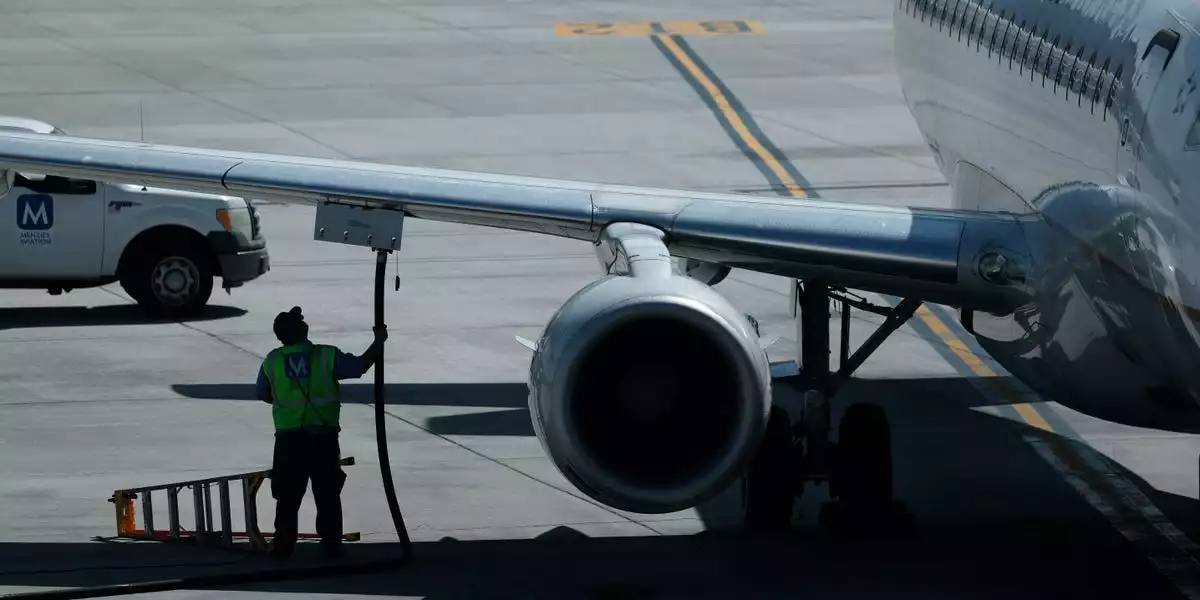
A sharp geopolitical risk premium is rippling through aviation economics. Since late February, the conflict in Iran has helped propel Brent crude up roughly 41% to about $107 per barrel, with jet fuel rising even faster—a critical distinction for airlines because jet fuel is typically the second-largest operating cost after labor. The immediate storyline is not simply higher energy prices; it is the structural exposure of U.S. carriers that entered this cycle largely unhedged, unlike many European peers that routinely use derivatives to smooth volatility.
That asymmetry matters because a sudden 40–50% jump in jet fuel—when it represents ~20–25% of operating expenses—can compress operating profitability quickly. Industry estimates suggest an unmitigated fuel shock of this magnitude can erode EBIT margins by roughly 2–4 percentage points, depending on network mix, fleet efficiency, and the speed at which pricing can be adjusted.
The early earnings-season disclosures underscore how fast the bill is arriving:
- Delta Air Lines reported an additional $332 million in fuel expense year-over-year, but expects to recoup about $300 million next quarter via its Pennsylvania refinery—a rare form of vertical integration in commercial aviation.
- United Airlines saw fuel outlays rise $340 million (12.6%) and is targeting a 15–20% fare uplift per passenger, though full cost recovery across the year remains uncertain.
- American Airlines posted a 13.2% fuel-cost increase ($341 million) and forecasts $4 billion more in fuel spending over 2024, with management warning that persistently high prices could force industry-wide capacity pullbacks.
- Southwest Airlines added $164 million in fuel costs and guided to $4.10–$4.15 per gallon in Q2, signaling selective fare actions based on market conditions.
Across the group, the $10 increase in checked-bag fees introduced in April is a telling indicator: when fuel spikes faster than fares can be repriced, airlines reach for ancillary revenue levers that are operationally simple, immediately collectible, and less visible than base-fare increases.
Pricing power, demand elasticity, and the new role of ancillary revenues
Airline pricing is never a pure pass-through exercise. The current environment highlights a three-way tension between demand resilience, price elasticity, and competitive capacity decisions.
Leisure travel has remained comparatively robust, giving carriers some room to lift fares—especially on peak routes and constrained airports. Business travel, however, continues to lag pre-pandemic patterns in many markets, and corporate demand often sits behind negotiated contracts and travel policies that can delay repricing. The result is a fragmented ability to recover costs: airlines may be able to raise prices on certain leisure-heavy corridors while struggling to fully offset fuel inflation on routes where corporate volumes are thinner or competition is intense.
This is where ancillary revenues increasingly function as a shock absorber. The baggage-fee hike is not merely opportunistic—it reflects a broader industry shift toward unbundled pricing as a stabilizer when macro inputs move abruptly. Ancillaries also allow airlines to target monetization more precisely:
- Higher fees can be concentrated on discretionary travelers without uniformly raising fares for all segments.
- Loyalty tiers and co-branded credit card benefits can be used to soften the impact for high-value customers.
- Revenue management systems can tune bundles (seat selection, priority boarding, bags) to protect yield when base fares face competitive ceilings.
For investors and executives, the key question is whether airlines can sustain fare and fee increases without triggering demand destruction—particularly if energy-driven inflation tightens household budgets and corporate travel approvals.
Risk management is becoming a competitive differentiator—again
The most strategically revealing detail in this cycle is Delta’s refinery-linked offset. While not a perfect hedge, asset ownership in the fuel supply chain can reduce exposure to refining spreads and regional dislocations. It also signals a broader reappraisal: in a world where geopolitical volatility is persistent rather than episodic, airlines may need to treat fuel risk as a core strategic domain, not a finance-side afterthought.
Several pathways are emerging as credible responses:
- More sophisticated hedging programs: U.S. carriers’ underhedged posture highlights the value of instruments such as collars and swaps that cap extreme outcomes while preserving some participation when prices fall. The goal is not to “beat the market,” but to reduce earnings whiplash and protect planning assumptions.
- Supply-chain partnerships and offtake agreements: Longer-term contracting, joint ventures with suppliers, and regional diversification can reduce vulnerability to localized disruptions.
- Sustainable Aviation Fuel (SAF) positioning: Early SAF partnerships can serve dual purposes—regulatory preparedness and partial input diversification—though SAF remains constrained by cost and supply scale.
Technology, too, becomes more than an efficiency narrative when fuel is expensive. Airlines are accelerating adoption of:
- Next-generation aircraft (A320neo family, 737 MAX) and lightweight retrofits
- AI-driven flight-path optimization and real-time telemetry to reduce burn through routing, altitude, and speed adjustments
- Operational tools such as improved maintenance planning and electric taxi concepts that can collectively deliver 3–5% fuel savings, which is material at today’s price levels
In this context, “digital transformation” is less about customer experience and more about unit-cost survival.
What to watch next: capacity discipline, consolidation pressure, and macro spillovers
If crude remains elevated, the industry’s next moves will likely center on capacity discipline. American’s warning about potential pullbacks is notable because capacity is the ultimate balancing mechanism: reducing marginal flying can support pricing and protect cash flow, but it can also cede market share and weaken network connectivity. The carriers best positioned will be those that can surgically trim low-yield routes while defending high-value hubs and premium corridors.
Macro spillovers are equally important. Sustained energy inflation feeds headline CPI, complicating central bank decisions and potentially tightening financial conditions. That matters because airline demand—especially leisure—is sensitive to consumer confidence, credit costs, and real wage growth. A fuel shock that begins as an airline margin story can evolve into a broader demand story in 2025–26 if monetary policy stays restrictive.
Finally, margin compression historically increases consolidation pressures, particularly among smaller or regionally concentrated operators with limited access to capital, weaker pricing power, and fewer tools to manage fuel volatility. In a high-fuel regime, scale, fleet efficiency, and risk management sophistication become decisive advantages—separating airlines that can absorb turbulence from those forced to retreat from it.

 By
By
 By
By
 By
By
 By
By
 By
By


 By
By