


When “No. 1” Isn’t the North Star: What the Hot 100 Misses About Cultural Power
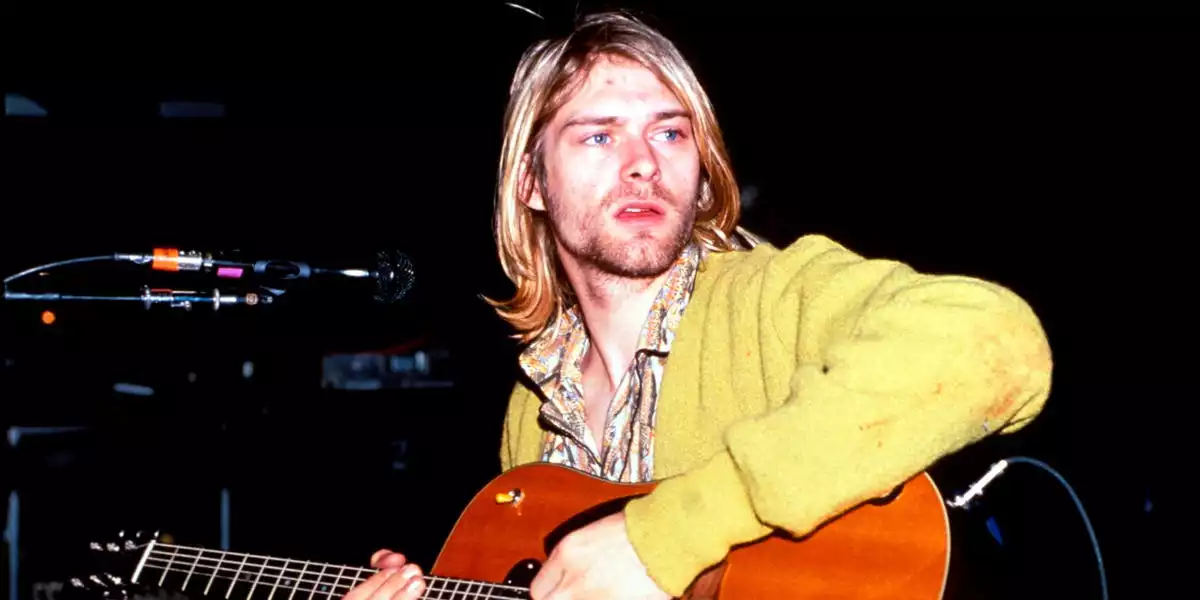
Billboard’s Hot 100 has long served as the music industry’s most visible scoreboard—an easily understood shorthand for mainstream dominance. Yet the list of artists who never reached the chart’s summit reads like a canon of modern music: Bruce Springsteen, Nirvana, James Brown, The Who, Jimi Hendrix, Led Zeppelin, Bob Dylan, Johnny Cash, Bob Marley, and others whose work shaped genres, politics, fashion, and even the business mechanics of touring and licensing. Their absence from the No. 1 slot is not a footnote; it’s a signal that peak chart position is a narrow metric for measuring long-term value.
Consider the paradox embedded in the data points: Springsteen’s “Dancing in the Dark” stalled at No. 2, Nirvana’s “Smells Like Teen Spirit” peaked at No. 6, and Johnny Cash’s “A Boy Named Sue” reached No. 2—all culturally definitive records that outlived countless chart-toppers. The same pattern extends across pop and contemporary eras: Backstreet Boys, Shania Twain, One Direction, Green Day, Missy Elliott, Demi Lovato—artists with global recognition and durable catalogs—never captured the symbolic crown.
What emerges is a clearer separation between momentary mass consumption and enduring cultural and commercial gravity. The Hot 100 can capture a week’s intensity; it struggles to quantify a decade’s influence.
The Digital Rewiring of “Success”: From Radio Peaks to Lifetime Catalog Economics
The Hot 100’s methodology has evolved—from radio airplay and physical sales to a blended formula incorporating streaming volume, digital downloads, and social-media-driven discovery. That modernization improved relevance, but it also intensified a key limitation: the chart still privileges short-term velocity over long-term compounding.
For legacy and genre-defining artists, the economic story increasingly lives elsewhere:
- Catalog streaming durability: Older repertoires often generate consistent listening over years, not just release-week spikes.
- Touring and experiential revenue: Many “non–No. 1” artists have built careers on live performance economics—premium ticketing, residencies, and high-margin merchandise.
- Synchronization licensing (sync): Film, TV, and advertising frequently value emotional fit and recognizability over chart credentials, enabling iconic songs to command premium fees.
- Reissue and collector markets: Deluxe editions, vinyl re-pressings, box sets, and anniversary releases can outperform expectations precisely because the audience relationship is deep, not fleeting.
This is where the industry’s measurement frameworks begin to look outdated. A No. 1 hit is a powerful marketing asset, but it is not necessarily the best predictor of fan lifetime value, catalog growth, or rights-based income. In practice, the most resilient music businesses are built on repeatable demand—songs that remain useful to listeners and licensors long after their initial release cycle.
Algorithmic Gatekeeping and the New Hit-Making Stack
If radio once functioned as the primary gatekeeper, today’s arbiters are playlist editors, recommendation engines, and short-form video algorithms. These systems can create a No. 1 overnight—yet they can also disadvantage artists whose audiences are less concentrated in the most algorithmically amplified demographics.
The structural realities are increasingly clear:
- Playlist placement is a distribution channel, not just promotion. Being added to major playlists can determine whether a track becomes a mass-market event.
- Virality favors immediacy and repeatable hooks. The mechanics of “For You” feeds and short-form loops can elevate certain song structures and release strategies.
- Audience fragmentation penalizes broad-but-diffuse fandoms. Veteran performers may have large followings spread across age groups and platforms, producing strong aggregate demand without the concentrated burst that charts reward.
This helps explain modern contrasts such as One Direction’s global reach without a U.S. Hot 100 No. 1, while Zayn Malik achieved solo chart success—an illustration of how hit-making power can shift with timing, platform dynamics, and the specific alignment of a song with algorithmic incentives.
For labels and managers, the strategic response is increasingly two-pronged: optimize for algorithmic discovery (metadata, release timing, editorial relationships) while building direct-to-fan infrastructure that reduces dependence on chart-mediated visibility.
The Business Playbook Now: Composite KPIs, AI Discovery, and Rights-Led Growth
For stakeholders across music, media, and technology, the deeper lesson is operational: the industry is moving toward multi-dimensional performance dashboards that better reflect how value is created.
Forward-looking organizations are already emphasizing:
- Composite KPIs: Blending streaming unit economics, catalog trajectory, touring margins, sync revenue, social engagement quality, and fan retention.
- Predictive analytics and AI: Using machine learning to detect “hidden hit” potential in catalogs—signals like rising search activity, playlist adds, social chatter spikes, or inbound sync interest.
- Rights-first strategy: Treating publishing and master rights as long-duration assets, where cultural familiarity can be monetized repeatedly across media formats.
- Hybrid release and monetization models: Staggered windows, collector tiers, premium editions, and experiential bundles that sustain momentum beyond a single chart week.
- Selective experimentation with Web3 tooling: Not as a cure-all, but as a potential mechanism for transparent royalty tracking and niche collectibility—especially for artists whose value is anchored in community rather than chart peaks.
For tech platforms, the credibility challenge is equally strategic. As they become the primary interface between listeners and music, pressure grows to improve transparency, genre diversity in recommendation surfaces, and equitable monetization—not merely to avoid “pay-for-play” accusations, but to ensure the ecosystem rewards sustained contribution, not just viral acceleration.
The enduring commercial and cultural force of Springsteen, Nirvana, Marley, Dylan, Cash, and their peers makes one point difficult to ignore: the Hot 100 is a snapshot, not a balance sheet. In an era where catalogs behave like long-lived intellectual property portfolios, the industry’s most important question is no longer who reached No. 1—but who built music that remains indispensable.

 By
By
 By
By

 By
By
 By
By

 By
By
 By
By







