
Wearable biometrics moves from the lab to the street
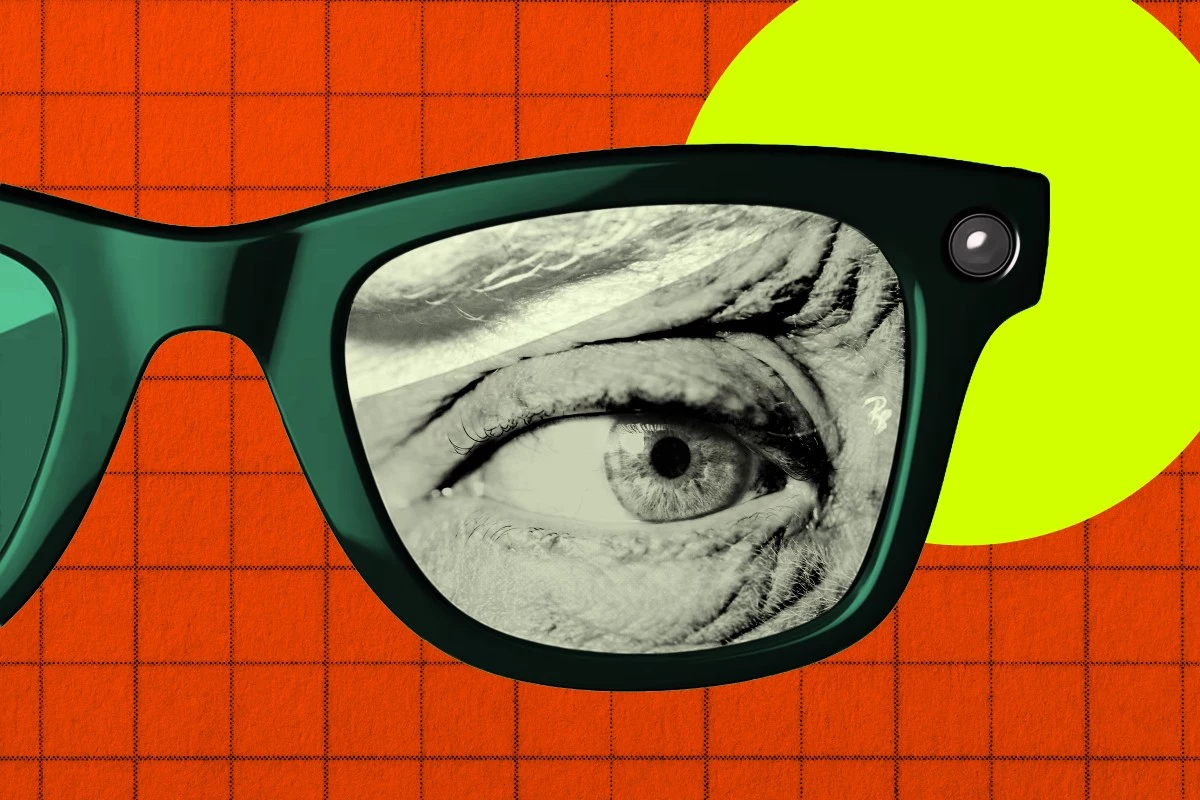
U.S. Immigration and Customs Enforcement (ICE) is reportedly pushing toward a field-deployable facial recognition capability embedded in smart glasses, a step that would shift biometric identification from fixed checkpoints and post-event analysis into continuous, mobile, real-time surveillance. Financial disclosures surfaced by journalist Ken Klippenstein indicate prototypes designed to capture live video and query federal biometric repositories on the spot—potentially identifying any individual encountered, regardless of whether they are suspected of a crime.
The significance is less about the novelty of facial recognition—already widely used across airports, border operations, and policing pilots—and more about where the capability sits: directly on an agent’s face, always available, and usable in fluid public settings. Budget language describing on-the-spot scanning and database matching suggests a system that can be deployed at protests, transit hubs, or routine street encounters with minimal friction.
Internal Department of Homeland Security (DHS) legal counsel, as described in the reporting, appears to recognize the core risk: even if positioned as an immigration enforcement tool, a wearable biometric scanner is inherently general-purpose. Once the hardware and data pipes exist, the boundary between “immigration-only” and broader domestic surveillance becomes a matter of policy restraint, not technical limitation. The reported incident in Maine—where an ICE agent allegedly labeled demonstrators as “domestic terrorists” while compiling their information—illustrates how quickly a tool designed for one mission can be applied to another, especially in politically charged environments.
For civil society, the deeper question is whether the United States is approaching a practical reality in which anonymity in public becomes conditional—not on wrongdoing, but on whether the state chooses to look.
The technology stack: edge AI, real-time matching, and “digital twin” risk
From a business and technology perspective, smart glasses for facial recognition represent a convergence of three maturing trends: wearable optics, edge AI inference, and biometric database interoperability. The reporting notes architectural parallels to consumer platforms associated with Meta and other major players—an important signal that the same design patterns powering lifestyle wearables can be repurposed for enforcement-grade identification.
Key technical implications stand out:
- Edge processing and latency advantages: Embedding neural-network inference in wearable devices can reduce reliance on constant cloud connectivity. That enables faster identification, better operation in low-signal environments, and potentially fewer observable network traces—complicating external oversight of when and how scans occur.
- Real-time data fusion: Live video paired with GPS, time stamps, and cross-database identity resolution can create a high-fidelity profile of a person’s movements and associations. This is the architecture of a “digital twin”—a composite identity built not only from who someone is, but where they were, with whom, and how often.
- Error propagation at scale: Facial recognition systems can misidentify people, and those errors become more consequential when the system is always-on and mobile. Bias in training data, poor lighting, occlusions, and demographic performance gaps can translate into false matches—then amplified through downstream databases and investigative workflows.
- Thin audit trails by default: Wearables can make biometric checks feel like a “glance,” not an action. Without rigorous logging—who scanned whom, under what authority, with what confidence score—accountability becomes difficult to enforce after the fact.
This is the central technical-policy tension: the more seamless the user experience for agents, the easier it becomes to deploy at scale without meaningful friction, and friction is often where governance lives.
Industry and capital markets: dual-use wearables, procurement gravity, and reputational exposure
The emergence of a DHS budget line for smart-glass facial recognition prototypes signals a potentially lucrative procurement channel for a growing ecosystem:
- Low-power vision AI chips and SoCs optimized for on-device inference
- Secure mobile-edge platforms capable of encrypted capture, transmission, and storage
- Systems integrators that connect wearables to legacy federal biometric repositories
- Data management and identity resolution vendors specializing in cross-agency interoperability
Yet the commercial opportunity is inseparable from dual-use risk. Consumer wearables companies have spent years normalizing cameras on faces, ambient capture, and AI assistance. Government adoption—especially for identification—can accelerate demand, but it can also trigger backlash that spills into consumer markets, employee activism, and investor scrutiny.
Three economic dynamics are likely to shape the next phase:
- Compliance and litigation as a cost center: As state biometric privacy laws expand and GDPR-style norms influence U.S. expectations, vendors and agencies may face rising legal exposure, procurement protests, and injunction risk—especially if deployments touch constitutionally sensitive activity such as protests.
- Contract clauses become strategic assets: “Use restriction” language, audit rights, and independent testing requirements may become differentiators for vendors seeking to protect brand equity while still competing for government business.
- Privacy-enhancing technologies (PETs) gain momentum: Public concern tends to catalyze markets. Expect increased interest in decentralized identity, data minimization architectures, homomorphic encryption, and robust red-teaming for biometric AI—both as genuine safeguards and as procurement checkboxes.
For public companies with government exposure, the market sensitivity is straightforward: a single high-profile misuse allegation or misidentification event can reprice reputational risk overnight, especially when paired with viral video evidence and legislative attention.
Governance pressure points: warrants, scope control, and democratic legitimacy
The strategic dilemma is not whether governments will use AI for identification—they already do—but whether democratic systems can impose credible constraints when the technology becomes portable, ubiquitous, and operationally irresistible.
If ICE’s smart-glass facial recognition proceeds, the policy debate will likely concentrate on a few concrete levers:
- Warrant or judicial authorization standards for mobile biometric scans in public spaces
- Purpose limitation that is enforceable in practice, not merely stated in policy memos
- Mandatory auditability: immutable logs, retention limits, and independent review of match confidence thresholds
- Sunset clauses and reauthorization tied to measured outcomes and rights-impact assessments
- Clear prohibitions around monitoring First Amendment-protected activity absent specific, documented predicates
Ultimately, the durability of any enforcement technology depends on legitimacy. Smart glasses that can identify passersby and protesters in real time may offer operational efficiency, but they also risk redefining the relationship between citizens and the state—turning public life into a space where participation is quietly conditioned on being machine-readable, searchable, and permanently recordable. That is a profound shift, and it will test not only regulatory frameworks and vendor ethics, but the public’s willingness to accept surveillance as the default setting of modern governance.


 By
By
 By
By

 By
By
 By
By
 By
By
 By
By