


The Wired Renaissance: Hall-Effect Joysticks and the New Controller Playbook
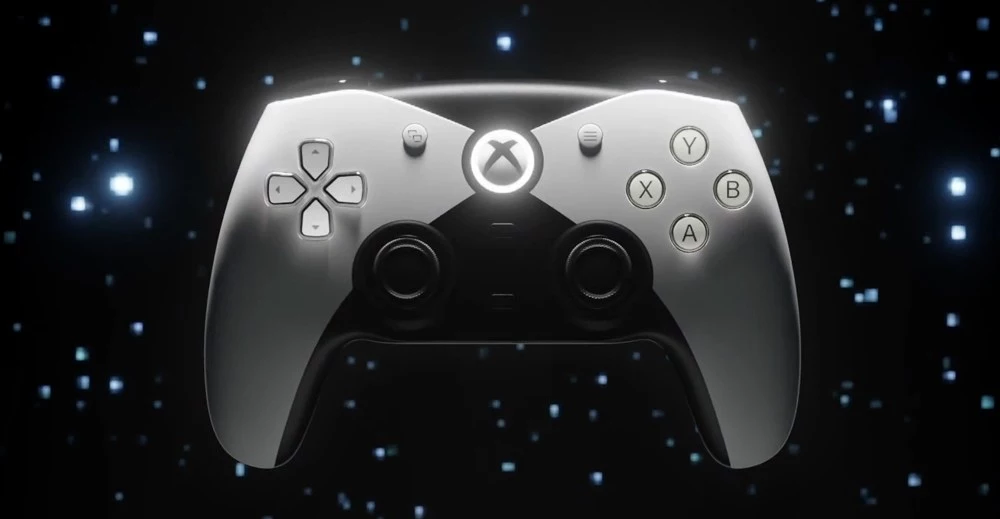
In an era where wireless convenience is presumed sacrosanct, Hyperkin’s forthcoming “Competitor” controller for Xbox dares to swim against the current. Announced for an October 2025 release at a $49.99 price point, the Competitor is a wired-only device that borrows the symmetrical stick placement and visual cues of Sony’s DualSense, yet remains firmly rooted in the Xbox ecosystem. The choice is not mere nostalgia—it’s a calculated response to shifting technological, economic, and regulatory tides that are reshaping the console accessory landscape.
Hall-Effect Joysticks: From Enthusiast Niche to Industry Standard
The Competitor’s most consequential feature is its adoption of Hall-effect “anti-drift” joysticks. This technology, once the preserve of modders and premium brands, is now crossing into mass-market territory. Hall sensors, which use magnetic fields to detect movement, eliminate the physical wear points that have plagued potentiometer-based sticks for decades. The result is a dramatic reduction in joystick drift—a failure mode that has triggered class-action lawsuits against industry giants like Nintendo and Sony, and generated costly warranty claims across the board.
For third-party accessory makers operating on razor-thin margins, this shift is transformative. Reduced return rates and longer product lifecycles mean more predictable profits and fewer logistical headaches. Supply chain partners, such as Alps Alpine and Honeywell, are capitalizing on this trend by scaling up sensor production, leveraging economies of scale once reserved for the automotive sector. As Hall-effect sensors become table stakes, early adopters stand to lock in favorable contracts before the inevitable demand spike.
Wired-Only Design: Latency, Reliability, and the New Economics of Play
In a market saturated with wireless devices, Hyperkin’s decision to go wired is both retrograde and visionary. The hardwired architecture guarantees sub-3 millisecond latency, a critical edge for competitive gamers and esports tournaments where even the slightest lag is unacceptable. More subtly, it sidesteps the volatility of lithium-ion battery supply chains—a growing concern as cobalt prices surge and international shipping regulations tighten.
The wired approach also aligns with emerging sustainability mandates. With the European Union poised to require battery replaceability in consumer electronics by 2027, battery-less peripherals like the Competitor offer a credible path to lower carbon footprints—an ESG angle that remains underexploited by premium brands. For retailers and platform holders, wired controllers expand the entry-level funnel without cannibalizing the lucrative wireless or haptic-enhanced SKUs.
Design Convergence and the Cross-Platform Future
Perhaps the most visually striking aspect of the Competitor is its embrace of DualSense-inspired ergonomics. The symmetrical stick placement and modular colorways—mirroring sneaker “drop” culture—signal a broader trend toward cross-platform homogenization. As Game Pass for PC, Steam Deck, and Sony’s own PC ports blur the boundaries between console and computer gaming, controller design is converging on a new, platform-agnostic norm.
This aesthetic and functional cross-pollination is not accidental. By courting Xbox users with PlayStation-style comfort, Hyperkin aims to siphon share-of-wallet before Sony can fully monetize its growing PC player base with official pads. The move is a shrewd hedge against the shifting sands of platform loyalty, and a tacit acknowledgment that the next generation of gamers may care more about ergonomics and reliability than about brand tribalism.
Strategic Ripples: Market Dynamics and the Road Ahead
The Competitor’s launch will reverberate far beyond Hyperkin’s own balance sheet. At $49.99, it undercuts Microsoft’s official controllers and matches rival wired offerings, exploiting consumer trade-down behavior in a still cost-conscious economic climate. The razor-thin margins—compressed further by retailer cuts and licensing fees—will be offset by volume sales, particularly in emerging markets where console prices remain prohibitive.
Looking forward, the accessory market is poised for accelerated innovation:
- Console-agnostic controllers are likely to proliferate as IP barriers around wireless stacks and haptics erode.
- Sustainability credentials will become a key differentiator, with battery-less designs gaining regulatory and consumer favor.
- Hall-effect sensors will become ubiquitous, much as mechanical switches did in keyboards.
- Premium haptics will remain the preserve of higher-end devices, sustaining a bifurcated market.
Should the Competitor’s wired gamble pay off, larger players may move to acquire or license Hall-sensor technology, and platform holders could formalize multi-platform standards to cement their layouts as the default for PC gaming.
The October debut of Hyperkin’s Competitor controller will be more than a product launch—it will be a referendum on what today’s gamers truly value: the reliability of Hall-effect engineering, the low-latency assurance of wired play, and the cross-platform comfort of convergent design. The outcome may well redraw the boundaries of the controller market for years to come.

 By
By
 By
By

 By
By
 By
By


 By
By







