
The Seductive Mirage of the Humanoid: Rethinking Robotics in the Age of Industrial Automation
Few images capture the public imagination quite like the bipedal robot—upright, uncannily familiar, and, in its best moments, eerily reminiscent of our own gait. Tech giants from Tesla to Figure and Unitree have invested heavily in this vision, parading human-shaped automatons as the vanguard of a new industrial revolution. Yet beneath the spectacle, a quieter, more consequential debate is unfolding among leading roboticists and industry strategists: Is the humanoid form truly the optimal vessel for the future of automation, or merely a captivating branding exercise?
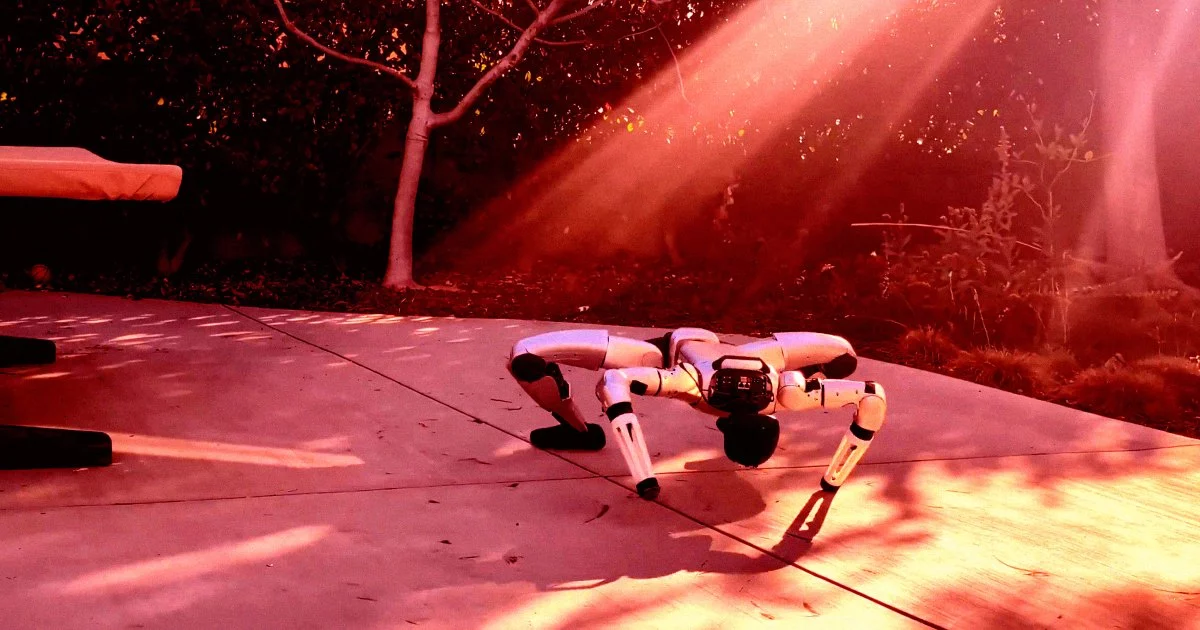
Recent viral footage of a research robot seamlessly shifting from upright walking to a rapid, almost animalistic quadrupedal crawl has reignited this conversation. The visceral unease such motion evokes—deep in the so-called “uncanny valley”—may be as instructive as it is unsettling. As Chris Walti, former lead on Tesla’s Optimus project, and scientists from Agility Robotics have argued, the human body is a product of evolutionary pressures alien to the repetitive, efficiency-driven demands of modern factories. Evolution, after all, did not optimize us for cycle time or payload.
Beyond Two Legs: Morphological Diversity and the New Economics of Automation
The technical challenges of building a truly capable humanoid robot are formidable. Achieving stable bipedal locomotion demands a symphony of dense sensor arrays, high-precision actuators, and sophisticated control algorithms—all of which drive up bill of materials costs and energy consumption. Early prototypes often exceed $100,000 per unit, with mean time between failure (MTBF) data still in its infancy. In contrast, task-specific cobots—wheeled, tracked, or built around articulated arms—are now available for a fraction of the price and can deliver sub-two-year payback periods.
- Energy Efficiency: Bipedal robots currently consume two to three times more power per kilogram moved than their wheeled counterparts—an acute concern as energy prices climb.
- Supply Chain Resilience: Humanoid designs often rely on bespoke components and rare-earth magnets, exposing manufacturers to geopolitical bottlenecks. More conventional morphologies can tap into mature, diversified supply chains.
- Regulatory Hurdles: The uncanny, unpredictable motion of humanoids can trigger both public discomfort and regulatory scrutiny, slowing deployment in public and semi-public environments.
Perhaps the most profound shift, however, is occurring at the software level. Advances in reinforcement learning and motion planning have begun to decouple robot capability from human mimicry. Once a platform achieves sufficient actuation freedom, its movement repertoire becomes a function of code, not chassis. This opens the door to hybrid systems—machines that can reconfigure between wheeled transit and articulated manipulation, or adopt entirely novel gaits optimized for specific environments.
Strategic Imperatives: Navigating the Inflection Point
For business leaders, the implications of this morphological renaissance are as strategic as they are technical. The allure of humanoids is undeniable: they capture headlines, attract talent, and offer a tantalizing promise of universal utility. But the spreadsheet tells a more nuanced story.
- Portfolio Hedging: Savvy executives are diversifying bets, piloting both general-purpose humanoids and specialized automation cells to avoid single-form-factor dependency.
- Performance over Pageantry: Investors and stakeholders increasingly demand hard metrics—cycle time, uptime, payload—not just viral videos.
- Data as Moat: The ability to collect and leverage motion data across diverse tasks may prove a more durable competitive advantage than any one form factor.
- Regulatory Engagement: Early, proactive collaboration with regulators and workforce councils is essential, especially as safety standards for free-roaming bipeds lag behind those for wheeled or fixed robots.
The capital markets, too, are recalibrating. While venture enthusiasm remains buoyant, the lessons of the SPAC era loom large: public markets will reward those who can demonstrate robust unit economics, often on platforms that eschew anthropomorphism for industrial pragmatism.
The Next Chapter: Morphology-Agnostic, Software-Defined Platforms
As foundation models for robotics—think Google’s RT-1/2 or OpenAI’s next-generation agent stacks—advance, the locus of innovation is shifting decisively from hardware to software. The competitive edge will belong to those who can orchestrate fleets of morphologically diverse robots, each tuned to a specific economic pain point, yet unified by a common data and control infrastructure.
In this context, the humanoid robot is less a destination than a waypoint—a symbol of technological ambition, yes, but not necessarily the final form of automation. The future will be written by those who look beyond the spectacle, deploying the right machine for the right job, and building resilient, data-rich ecosystems that can adapt as quickly as the markets they serve.
For those willing to separate myth from metric, the next era of robotics promises not just spectacle, but scale.

 By
By
 By
By
 By
By

 By
By

 By
By
 By
By