
A deep-time business case for planetary resilience—without leaving Earth
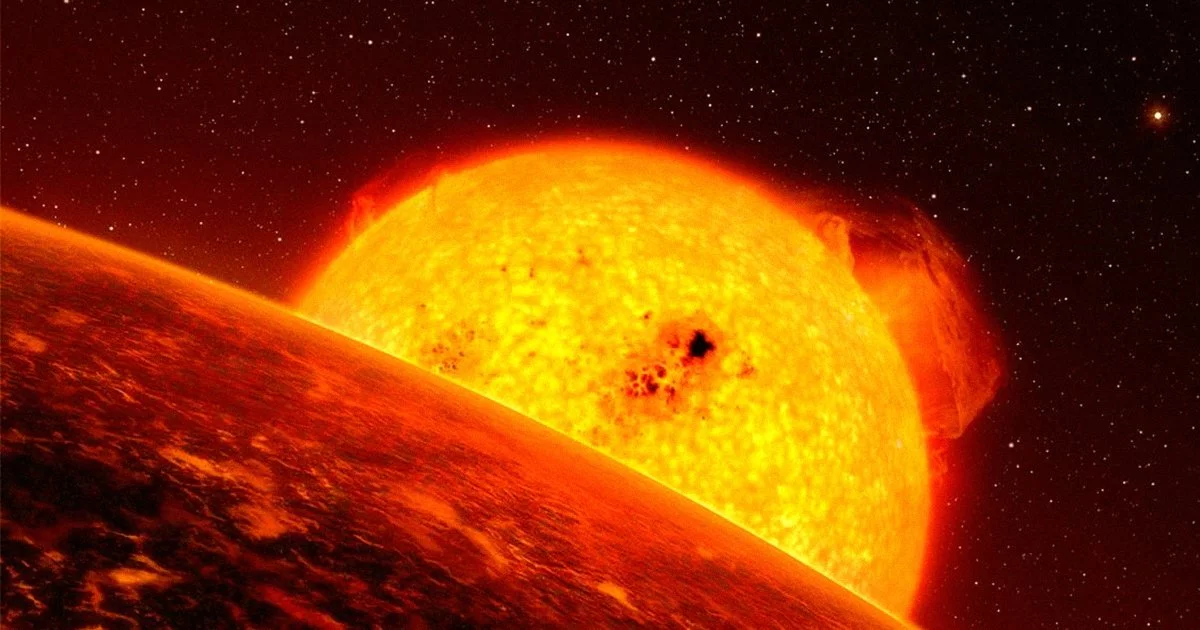
Independent researcher Gabriel Harry is advancing a provocative idea with unusually explicit engineering contours: a multi-phase program intended to keep Earth habitable through the Sun’s red-giant evolution roughly five billion years from now—and even through the distant Milky Way–Andromeda interaction. Slated for publication in the *Journal of the British Interplanetary Society*, the proposal reads less like escapist science fiction and more like an attempt to formalize planetary-scale infrastructure planning across geological and cosmological timescales.
At its core is a contrarian strategic premise: rather than treating exoplanet colonization as the default endgame, Harry’s framework treats Earth as an asset worth recapitalizing indefinitely—an “operating system” to be upgraded, shielded, and repositioned as external conditions change. That framing matters for business and policy audiences because it reclassifies existential astrophysical threats—red-giant luminosity growth, long-horizon orbital instability, and galactic dynamics—as manageable risk domains with potential technology roadmaps, supply chains, and governance requirements.
The headline claim—maintaining an “Earth-like” environment for up to 9.1 million billion years—is less a forecast than a boundary-pushing stress test of what “sustainability” could mean when the time horizon is not decades, but deep time. Even if the end-state is unreachable, the intermediate steps illuminate a portfolio of capabilities that overlap with nearer-term markets in space energy, autonomous construction, and climate-adjacent engineering.
The four engineering pillars—and what they imply technologically
Harry’s blueprint is organized around four major interventions, each escalating in complexity and civilizational coordination.
The plan begins with a colossal sunshade positioned at the Earth–Sun L1 point, designed to subtend a 70° sky aperture using a structure with a radius of roughly 434,000 miles, tethered by a 1.2-million-mile carbon filament. Technically, this is a station-keeping and materials problem at a scale beyond any current space architecture.
Key feasibility dependencies include:
- Ultra-light, ultra-strong materials (e.g., carbon nanotube-class tethers) with reliable long-duration performance under radiation and micrometeoroid exposure
- Autonomous assembly robotics and in-space manufacturing to avoid impossible Earth-launch mass requirements
- Precision formation flying and control at Lagrange points, where small perturbations accumulate over time
Notably, the sunshade concept has conceptual cousins in space mirrors, starshade optics, and even climate engineering debates. That linkage creates a plausible “technology ladder”: small-scale demonstrators could validate deployment mechanics, control algorithms, and degradation models long before any megastructure is attempted.
The second pillar imagines fusion-reactor arrays deployed deep within Jupiter’s atmosphere, transmitting power back to Earth via laser beaming. The ambition here is twofold: achieving robust fusion and doing so in an environment defined by extreme pressure, temperature gradients, turbulence, and corrosive chemistry.
The business-relevant takeaway is not that “Jupiter fusion” is imminent, but that the proposal spotlights two strategic bottlenecks:
- Fusion hardening and maintainability in hostile environments (a proxy for deep-sea, polar, or off-world industrial fusion applications)
- High-efficiency long-distance power beaming, which would require exceptional beam control, adaptive optics, and atmospheric compensation to deliver usable energy safely and predictably
If power beaming matures, it could seed an “astro-utilities” sector—energy generation and transmission as a service across cislunar space and beyond—analogous to how terrestrial grids enabled entire industrial ecosystems.
To offset the Sun’s increasing luminosity, Harry proposes gradually migrating Earth’s orbit outward using repeated asteroid flyby slingshots—a concept that builds on emerging expertise in asteroid tracking, deflection, and small-body navigation. This is celestial mechanics as infrastructure: not a single heroic maneuver, but a long sequence of controlled interactions.
More controversial is the companion requirement: daily antimatter injections into Earth’s core to sustain tectonics and biogeochemical cycles as conditions evolve. This is where physics meets industrial reality. Antimatter production today is measured in tiny quantities; scaling to “pounds per day” implies a step-change—on the order of 1,000×—in accelerator capacity, energy input, storage, and safety engineering.
From an innovation standpoint, the orbital-migration concept aligns with credible near-term work in:
- Planetary defense and asteroid redirection
- High-precision ephemeris and navigation systems
- Autonomous deep-space operations
The antimatter component, by contrast, functions as a forcing mechanism in the narrative: it highlights how far current energy and particle-physics industrialization would need to expand to support planetary-scale geoengineering.
The far-future capstone—using a directed hydrogen beam to induce a solar-system-scale gravitational slingshot to evade Andromeda—pushes into fundamental constraints: delta-v, reaction mass, and the practicality of treating the Sun as a kind of reaction engine. Even as a theoretical construct, it underscores a key strategic point: at sufficiently long horizons, navigation and propulsion become governance and resource problems as much as they are physics problems.
Capital, governance, and the emerging market logic of “astro-services”
The economics are as radical as the engineering. A multitrillion-dollar (and likely far larger) program spread across millennia breaks conventional ROI logic and points toward new institutional forms—perpetual endowments, sovereign or supranational “astro-bonds,” and milestone-based financing that can survive political cycles.
Several structural implications stand out:
- Public-private interdependence becomes unavoidable. Space agencies, fusion developers, advanced materials firms, robotics companies, and energy utilities would be co-dependent in a way that resembles a planetary-scale version of the semiconductor ecosystem—shared standards, shared risk, and intense geopolitical sensitivity.
- Liability and “astro-sovereignty” become first-order issues. Who authorizes an L1 sunshade that affects global insolation? Who bears responsibility for orbital manipulation externalities? The regulatory architecture for celestial engineering would need to be as sophisticated as aviation safety regimes—only with planetary consequences.
- A new services economy could emerge around maintenance and precision operations. If large structures and power links become persistent, markets may form for debris-free assembly, station-keeping, inspection, repair, and beam-control assurance—an orbital analogue to today’s cloud reliability and cybersecurity sectors.
For executives and policymakers, the most actionable insight is that deep-time proposals can still generate near-term value by clarifying foundational capability gaps: high-strength tethers, autonomous swarm robotics, in-space manufacturing, precision navigation, and high-integrity energy transmission. These are dual-use technologies with terrestrial spillovers—from grid resilience to advanced sensing and extreme-environment operations.
Harry’s proposal ultimately functions as a mirror held up to modern strategy: it asks whether civilization can build institutions that outlast product cycles, election cycles, and even epochs—then backs the question with a concrete, if audacious, engineering ledger. Whether or not the full arc is achievable, the competitive advantage will accrue to those who start mastering the enabling layers now, because the first civilization to treat planetary resilience as infrastructure will shape the rules, markets, and norms of the space economy that follows.

 By
By
 By
By

 By
By
 By
By

 By
By