

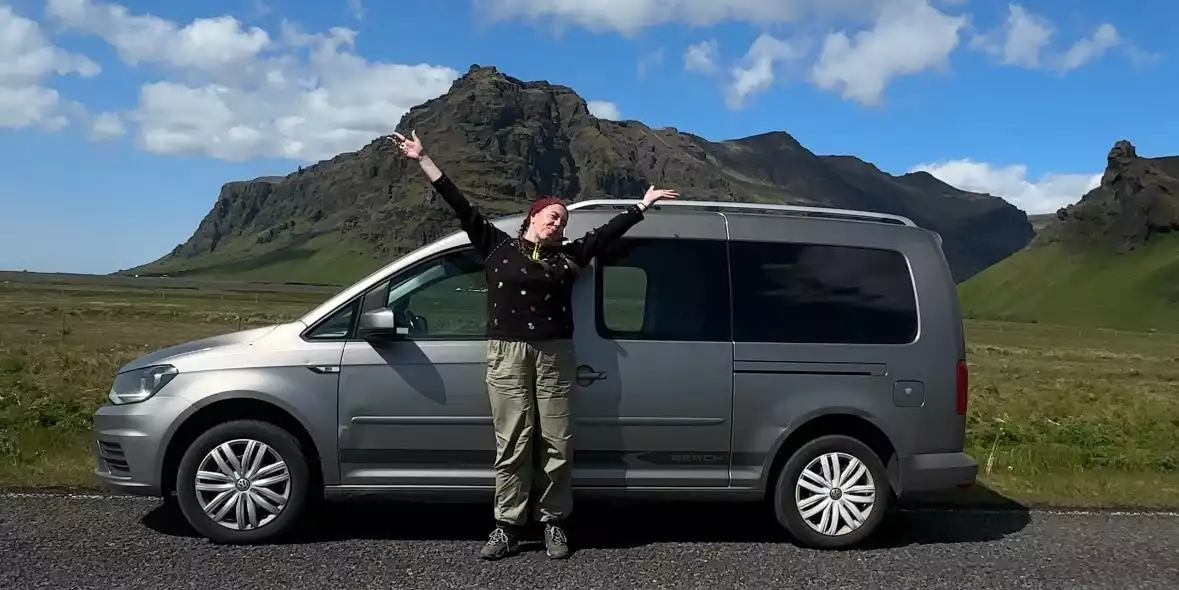

A personal inflection point that mirrors a market shift in solo travel and wellness tourism
Lily Voss’s decision to take her first solo trip—timed with two destabilizing life events, an approaching 30th birthday and a layoff—reads like a deeply human story of courage. Yet it also functions as a clear signal of where consumer travel behavior is heading: toward experiences that are not merely recreational, but psychologically purposeful.
Her choice of Iceland is telling. It wasn’t framed as a bucket-list destination so much as a risk-managed environment—a place with a strong safety reputation where she could test independence without feeling reckless. That calculus increasingly defines the modern solo traveler, particularly those shaped by an always-on media diet. Voss explicitly points to true-crime podcasts as an accelerant of anxiety, a reminder that today’s “perceived risk” is often mediated by content ecosystems rather than direct experience.
What makes her journey commercially relevant is the mechanism of change: not a dramatic transformation, but a sequence of small, trackable wins—a first solo hike, navigating severe weather, sleeping soundly in a campervan. This “micro-victory” pattern aligns closely with how digital products build habits and how wellness brands market progress. It also hints at a new class of travel demand: people seeking structured exposure to discomfort, with guardrails.
Key consumer signals embedded in the narrative include:
- Safety as a feature, not a baseline: destination choice and trip design increasingly start with reassurance.
- Independence with connection: solo travelers may still want “soft tethering” to trusted contacts.
- Growth-oriented travel: trips are evaluated by confidence gained as much as sights seen.
- Repeat behavior: the follow-up solo trip to Annecy suggests that once the first barrier breaks, a new travel identity can form—valuable for lifetime customer value in travel and hospitality.
Travel technology’s next frontier: confidence infrastructure, not just convenience
Voss’s experience underscores a subtle but important shift in travel tech priorities. For years, innovation has centered on price discovery, booking efficiency, and review-driven trust. The emerging opportunity is different: building confidence infrastructure for travelers who are capable, motivated, and still anxious.
Several product categories stand out:
- Real-time location sharing with privacy-first design
Voss’s reliance on family updates highlights demand for low-friction tools that allow a traveler to share status without feeling surveilled. The winning designs will likely emphasize:
– “Trusted circle” permissions
– Time-bound sharing
– Automated check-ins that don’t require constant manual updates
- Remote connectivity for overland and campervan travel
Sleeping in a vehicle and navigating variable weather conditions exposes a practical need: reliable communications and power in low-infrastructure environments. This points to growth potential for:
– Satellite Wi‑Fi bundles tailored to road trips
– Rugged routers and modular solar power systems
– Integrated emergency communications that work off-grid
- AI-driven itinerary and risk management
Voss performed real-time risk assessment manually—monitoring conditions, adapting plans, and managing uncertainty. AI trip planners can evolve beyond “best restaurants” into dynamic safety and feasibility engines, incorporating:
– Weather and road-condition alerts
– Hazard-aware rerouting
– Local safety advisories and daylight constraints
– Personalized risk tolerance settings (especially relevant for anxious travelers)
The strategic takeaway for travel platforms is that reassurance must be embedded, not bolted on. A generic safety page won’t compete with tools that actively reduce cognitive load while preserving autonomy.
Where mental health meets hospitality: a new layer of value creation
The most consequential implication of Voss’s story may be the convergence of mental health, travel, and consumer wellness—a market already projected to exceed $1.2 trillion by 2027. Her progress wasn’t about eliminating anxiety; it was about changing her relationship to it. That distinction matters because it maps cleanly to scalable interventions.
This opens space for “travel + mental wellness” offerings that are credible, evidence-informed, and ethically designed:
- Digital therapeutics inside travel apps
Brief CBT-style exercises, grounding prompts, or reflection tools could reinforce the exact pattern that helped Voss: recognizing fear, taking a manageable step, and logging success. The commercial advantage is retention—travel apps become companions, not transactions.
- Telehealth integration for continuity of care
As solo travel expands, especially among wellness-motivated consumers, access to licensed support across borders becomes a differentiator. Partnerships between teletherapy providers and travel brands could enable:
– In-app sessions or chat-based support
– Crisis pathways and local resource directories
– Post-trip follow-ups that extend engagement beyond the booking window
- Curated solo-traveler experiences with “bravery milestones”
Hospitality operators can productize what Voss discovered organically: confidence grows through staged challenges. Expect more:
– Modular itineraries with optional guide support
– Small-group meetups that preserve solo identity while reducing isolation
– Geo-fenced check-in protocols for those who want them
This is also where premium pricing becomes defensible. Travelers managing anxiety may pay more for verified assurance—vetted guides, certified accommodations, and concierge-style check-ins—if the value proposition is framed as empowerment rather than fear.
The business model evolution: insurance, rentals, and corporate wellness converge around resilience
Voss’s campervan loop around Iceland’s Ring Road highlights the expanding economics of asset-light adventure travel, where rentals and peer-to-peer platforms can scale quickly. But it also exposes friction points—weather risk, roadside uncertainty, and personal safety concerns—that invite new monetization.
Watch for innovation in:
- Campervan and adventure-vehicle rentals
Differentiation may come from:
– Built-in safety kits and standardized training
– One-way rental flexibility
– Optional upgrades for connectivity and emergency support
- Dynamic micro-insurance
Insurers can move from blunt annual policies to context-aware coverage that activates when needed, bundling:
– Emergency evacuation
– Weather disruption protection
– Mental health support hotlines
- Corporate wellness and HR programs
As burnout and retention remain board-level issues, some employers may experiment with travel-enabled resilience benefits—subsidized trips positioned as structured recovery. The next step is measurement: linking experiential wellness to engagement, productivity, and attrition metrics.
Ultimately, Voss’s story captures a modern paradox: people are more informed than ever, yet often more anxious; more connected than ever, yet increasingly drawn to solitude. The companies that win in this environment won’t simply sell destinations—they’ll deliver measurable reassurance, design for psychological safety, and treat confidence as a product feature that compounds with every mile traveled.

 By
By
 By
By

 By
By
 By
By


 By
By







