


The missing AI blockbuster: why Hollywood’s “two-year” prophecy keeps slipping
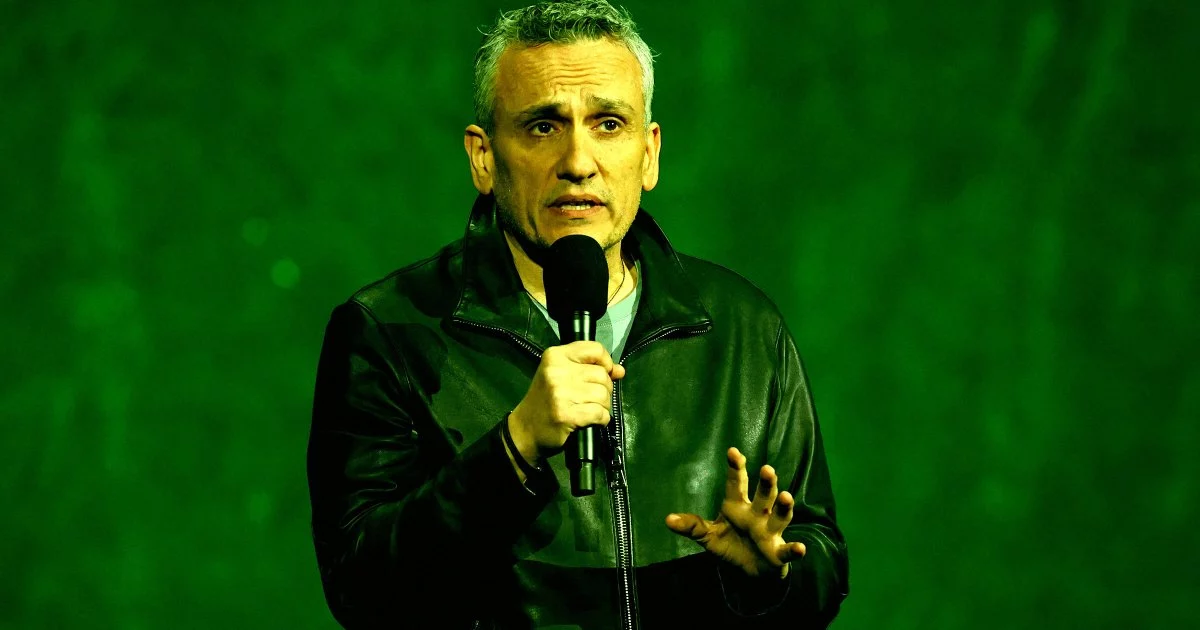
For all the noise around generative AI in entertainment, a fully AI-generated blockbuster still doesn’t exist—and that absence is becoming its own signal. The prediction most often cited came from director Joe Russo, who argued that an end-to-end AI feature film was imminent. Yet the industry’s most visible, most expensive outputs remain unmistakably human-led, and recent mega-budget releases have underscored a more sobering reality: scale, brand risk, and narrative craft are not easily automated.
The irony is hard to miss. Films such as _The Gray Man_ (US$200 million) and _The Electric State_ (US$320 million)—projects associated with blockbuster ambition—have been criticized as derivative, overfamiliar, and structurally uneven, the very qualities audiences often associate with “AI-churned” content. That doesn’t prove AI is incapable of creativity; it demonstrates that Hollywood’s current production incentives already reward formula, and that AI—at least today—doesn’t reliably solve the hardest part of the problem: sustained, feature-length storytelling with emotional coherence and thematic intent.
What emerges is less a story about technological failure than about mismatched timelines. Generative AI is advancing quickly, but blockbuster filmmaking is a high-stakes industrial process shaped by financing cycles, union rules, IP strategy, and reputational risk. In that environment, “AI-only” is not merely a technical milestone—it is a business model, a legal posture, and a labor negotiation all at once.
Where generative AI fits today: powerful in fragments, fragile in full narratives
The most practical reading of AI’s current role in film is straightforward: AI is effective at bounded tasks and far less dependable as a holistic author. Today’s models can convincingly manipulate voice, assist with visual effects, accelerate previsualization, and generate iterative variations—yet they still struggle to maintain long-range narrative logic, consistent character motivation, and the kind of deliberate pacing that distinguishes a memorable film from a content stream.
Two constraints matter especially for studios:
- Narrative coherence at feature length: Generative systems can produce strong moments—lines, images, concepts—but often fail at the “connective tissue” that makes a two-hour story feel inevitable rather than assembled.
- Black-box accountability: Large language and vision models raise unresolved questions around bias, provenance, explainability, and rights management. In a brand-sensitive industry, the inability to fully audit how an output was derived is not a philosophical concern; it is a reputational and legal exposure.
As a result, adoption has clustered where the ROI is clearer and the tolerance for iteration is higher—particularly in post-production and technical workflows. Studios and vendors are already piloting AI in ways that resemble an “industrial exoskeleton” for creatives rather than a replacement for them, including:
- Script coverage and development analytics (pattern detection, comparative performance modeling)
- Previsualization and shot planning (rapid concepting, layout exploration)
- VFX and sound augmentation (cleanup, background generation, voice modulation)
- Localization and accessibility (dubbing assistance, subtitling workflows)
This is the more durable near-term trajectory: AI as augmentation, not authorship—at least until models can demonstrate repeatable reliability across the full arc of cinematic storytelling.
The economics behind the hype: budgets, risk aversion, and the real cost of “cheap AI”
The promise that AI will dramatically reduce production costs remains compelling—and frequently overstated. At blockbuster scale, the cost structure is not dominated solely by labor hours that can be automated; it is dominated by risk management, marketing spend, star attachments, franchise expectations, and the operational complexity of delivering a global product. Even if AI compresses certain workflows, studios still face the expensive reality of building and governing AI systems responsibly.
Key economic frictions are already shaping adoption:
- Mega-budgets gravitate toward proven IP: When US$200–320 million is on the line, studios tend to favor sequels, recognizable brands, and established creative leadership. That leaves limited room for experimental AI-first storytelling.
- Compute, integration, and proprietary training are not free: Training or fine-tuning models on cleared assets, securing compute capacity, and integrating tools into existing pipelines can be costly—sometimes shifting spend rather than eliminating it.
- Streaming economics tighten tolerance for novelty risk: As platforms scrutinize content ROI more aggressively, “technological novelty” alone is rarely a sufficient investment thesis.
Meanwhile, AI’s labor implications are becoming a central strategic variable. Writers, editors, and VFX artists face a dual reality: AI can remove repetitive work and accelerate iteration, but it can also reshape billing models, credit norms, and residual structures. That is why unions and guilds are pushing AI clauses into contracts—effectively turning AI adoption into a governance question as much as a production choice.
The strategic endgame: personalization, modular IP, and regulation as competitive advantage
If the industry’s first AI blockbuster hasn’t arrived, it may be because the more transformative opportunity isn’t a single film—it’s a reconfiguration of how entertainment is packaged, personalized, and monetized. Russo’s idea of “bespoke” films tailored to individual viewers points toward a future where personalization becomes a product category, not a gimmick. Yet Hollywood will likely approach that future through smaller, testable formats before attempting tentpole-scale reinvention.
Several non-obvious vectors are gaining relevance:
- Personalized and interactive storytelling as a revenue layer: Short-form, branching narratives and “choose-your-experience” formats can test AI-driven customization without risking blockbuster budgets.
- Regional and niche market acceleration: Mid-sized studios could use AI-assisted pipelines to produce locally tailored narratives for growth markets (e.g., Southeast Asia, Africa), building franchises outside the traditional blockbuster funnel.
- IP fractionalization and licensing: AI tools may enable studios to treat legacy assets—characters, environments, soundscapes—as modular components, expanding licensing opportunities while intensifying rights-management complexity.
- Regulation as a moat: Emerging AI governance frameworks in the U.S. and Europe—covering copyright, transparency, and data lineage—may advantage incumbents with compliance infrastructure, even as they slow “move fast” experimentation.
The most competitive studios are likely to be those that treat generative AI neither as a threat nor a miracle, but as an operational capability to be integrated with discipline: hybrid workflows, measurable ROI, talent upskilling, and clear asset provenance. Hollywood’s AI revolution may still arrive—but it will look less like a sudden, fully automated masterpiece and more like a gradual industrial shift where the winners are defined by execution, governance, and trust.

 By
By
 By
By

 By
By
 By
By
 By
By
 By
By








