
Germany’s Armored Vanguard: A New Era for NATO’s Eastern Flank
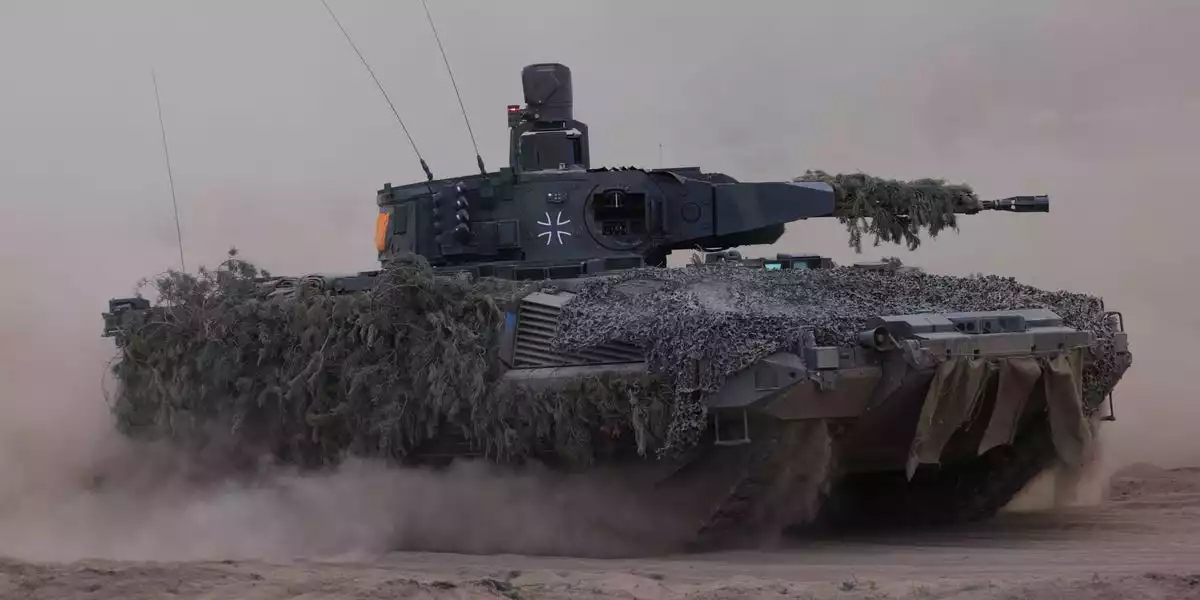
In a move that reverberates far beyond the forests of Lithuania, Germany’s decision to permanently station the 45th Armored Brigade on NATO’s eastern frontier marks a profound transformation in European security doctrine. This deployment—nearly 4,800 troops strong, equipped with Leopard 2A8 main battle tanks, Puma S1 infantry fighting vehicles, Panzerhaubitze 2000 artillery, and a suite of short-range air-defense and ISR drones—signals the end of Germany’s seven-decade reluctance to forward-base heavy forces. The lessons of Ukraine are unmistakable: deterrence now demands not just presence, but credible, technologically sophisticated commitment.
From Rear-Area Reluctance to Front-Line Resolve
The symbolism of this deployment cannot be overstated. For decades, Germany’s defense posture was defined by a “rear-area” mentality—logistics, training, and rotational light forces, always at arm’s length from the alliance’s most vulnerable borders. By anchoring a heavy armored brigade in Lithuania, Berlin is not merely reinforcing NATO’s tripwire; it is planting a “trip-stake,” embedding national credibility and risk into the very soil of the Baltics. Should aggression erupt, German casualties would be inevitable from the outset, transforming deterrence from abstract to existential.
This shift also repositions Germany within the European security architecture. No longer just a “framework nation” orchestrating multinational battlegroups from afar, Berlin becomes a front-line actor, inviting smaller Central European states to integrate niche capabilities—electronic warfare, cyber, special operations—around a robust, German-led core. The result is a living prototype for EU defense integration, accelerating concepts of forward presence that transcend the traditional NATO framework.
The Digital-Heavy Brigade: Technology as Deterrent
The 45th Armored Brigade is not merely a throwback to Cold War tank armies. It is a digitally enabled, multi-domain formation, where “heavy metal” meets silicon. The Leopard 2A8, with programmable 120mm rounds, active protection systems, and data-link gateways, stands as a testament to the evolving nature of armored warfare. Yet, as Ukraine has shown, survivability is now probabilistic, not deterministic. The emphasis on short-range air defense and loitering drones is a direct response to the proliferation of precision-guided munitions and unmanned threats.
Permanent basing in Lithuania will force the Bundeswehr to accelerate adoption of predictive maintenance platforms, battlefield-edge cloud nodes, and secure 5G tactical networks—domains where German industry has trailed U.S. and Israeli counterparts. Expect rapid experimentation with public-private pilots in condition-based logistics and zero-trust cyber envelopes. The integration of Lithuanian, U.S., and German sensor grids will test NATO’s federated data standards, potentially prototyping the alliance’s ambition for a pan-European “kill-chain-as-a-service.”
Economic, Industrial, and Alliance Ripples
The economic and industrial implications are equally profound. Each Leopard 2A8 upgrade, costing upwards of €10–12 million per unit, reverberates through Germany’s defense-industrial base—Rheinmetall, KMW, Hensoldt, and the Mittelstand optics ecosystem—strengthening Berlin’s argument for EU-qualified defense spending. Lithuania, meanwhile, faces a surge in demand for dual-use infrastructure: hardened depots, resilient rail spurs, and grid upgrades, aligning defense needs with EU climate-transition targets and unlocking new funding synergies.
Permanent basing also creates a new market for bilingual technical maintainers and cybersecurity specialists, likely accelerating STEM upskilling and reversing brain-drain trends in the Baltics. For alliance dynamics, Germany’s commitment to exceed 2% of GDP in defense spending—largely via land-combat outlays—reshapes the burden-sharing narrative, countering U.S. critiques of European free-riding and setting the stage for renewed industrial competition, particularly in artillery and drone technologies.
Beyond the immediate region, adversaries from Beijing to Tehran will scrutinize NATO’s ability to forward-deploy layered air defense and counter-UAS solutions under fiscal and political constraints. The credibility of this brigade, and its supporting logistics, will serve as a bellwether for Western resolve in theaters far beyond Europe.
Strategic Horizons: Technology, Resilience, and Autonomy
For decision-makers and industry leaders, the German-Lithuanian brigade is more than a military maneuver—it is an inflection point in Europe’s politico-industrial trajectory. The brigade’s presence opens a window for defense tech consolidation, offering a live testbed for interoperable sensor-fusion, active protection, and autonomous resupply. Supply-chain resilience, once a back-office concern, now becomes a frontline deterrent multiplier, with logistics, rail, and energy firms positioned to rebrand investments as “defense-critical” and tap new EU funding streams.
Fiscal and political trade-offs loom large as Germany’s €100 billion Sondervermögen expires in 2027, coinciding with the brigade’s full operational strength. The need to reconcile defense and climate spending under tightened EU rules will drive lobbying around dual-use assets—from green hydrogen to space-based ISR and micro-electronics.
Perhaps most consequentially, the brigade’s integration with U.S. enablers underscores Europe’s enduring dependence on American high-end capabilities. The choice ahead is stark: double down on indigenous next-gen air defense and space assets, or accept a permanent tiered dependency within the alliance.
In this crucible of deterrence, technology, and alliance politics, those who align their strategies, products, and capital to this new, digitized frontline will not only ride a structurally expanding defense-and-resilience market—they will help define the standards and architectures that will shape NATO’s order of battle for the next decade.

 By
By
 By
By
 By
By
 By
By
 By
By
 By
By

 By
By