
Rewinding the Future: Fujifilm’s X Half and the Alchemy of Digital Nostalgia
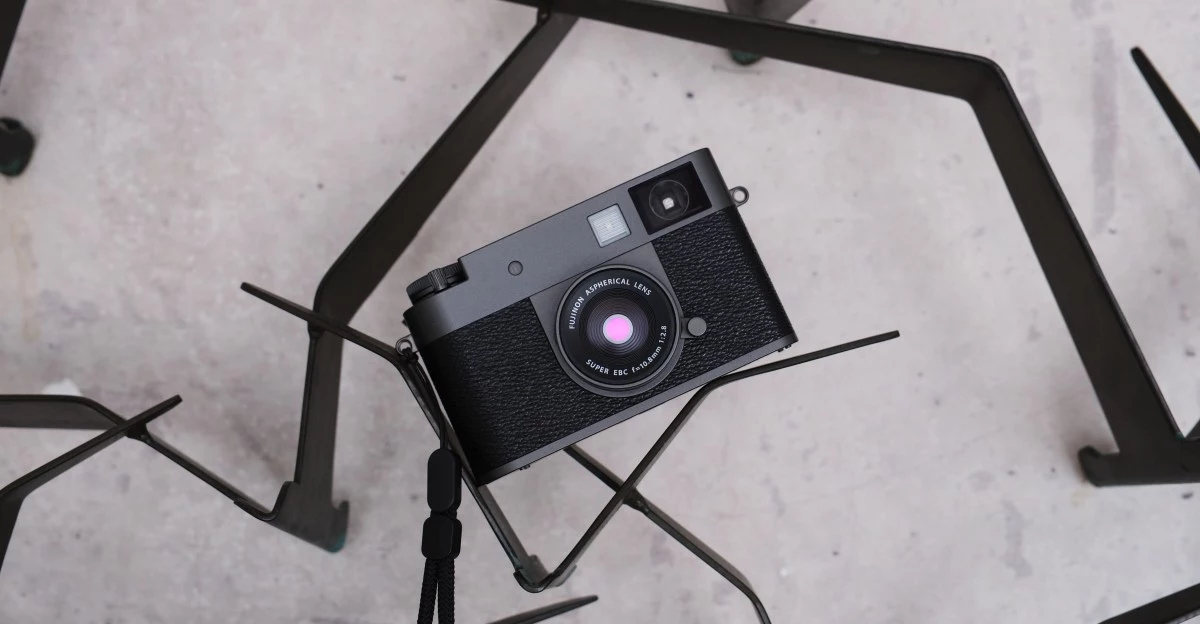
In an era when the smartphone camera has become the default chronicler of daily life, Fujifilm’s X Half emerges as a curious, almost subversive, artifact. At first glance, it’s a compact, fixed-lens digital camera—its 1-inch sensor and absence of “serious” features like RAW capture or an electronic viewfinder might seem regressive. Yet beneath its playful exterior, the X Half is a meticulously calculated gambit, designed to seduce a generation raised on immediacy with the slow pleasures of analog ritual.
The Experience Economy and the New Camera Playbook
Fujifilm’s move is less about megapixels and more about mood. The X Half, initially priced at $849.95 and now available for $649, is not a tool for the pixel-peeping professional, but a toy for the emotionally attuned hobbyist. It mimics the half-frame film cameras of yesteryear, not just in industrial design but in the very cadence of its operation. The faux manual frame-advance lever, the curated selection of built-in film simulations, the deliberate omission of RAW and image stabilization—these are not oversights, but invitations to slow down, to savor each frame.
This is a camera designed for the post-smartphone world, where the technical arms race has lost its audience. With 90% of imaging needs now satisfied by the phone in your pocket, dedicated camera makers must compete not on specs, but on sensation. Fujifilm, with its deep analog heritage, is uniquely positioned to exploit this shift. The X Half is a “premium-casual” device, a gateway for Gen Z and millennial consumers who crave the aesthetic and tactile joys of film without the inconvenience of chemicals or repairs.
Sensor Pragmatism, Software Storytelling
Technologically, the X Half is a study in pragmatic engineering. Its 1-inch stacked sensor is borrowed from the same supply chains that power flagship smartphones and drones—a choice that trades ultimate image quality for compactness, cost efficiency, and thermal stability. But where the hardware recedes, software steps forward. The X Half’s value proposition is not in its sensor, but in its story: the simulation of manual advance, the signature Fujifilm color science, the friction that transforms every shot into a small event.
By omitting features like RAW, IBIS, and an EVF, Fujifilm signals a deliberate “anti-pro” stance. This is not a camera for the spreadsheet-wielding gearhead, but for the Instagram storyteller, the collector of moments. The strategy also serves to protect the company’s higher-margin X100 and X-T lines from cannibalization, ensuring that each product in the portfolio has a clearly defined audience.
Nostalgia as a Business Model
The economics of the X Half are as carefully engineered as its user experience. The launch-high, discount-fast pricing model tests the market’s appetite for intangible value—nostalgia, collectability, a sense of belonging—while allowing Fujifilm to move inventory quickly once the initial wave of early adopters subsides. The cost structure, leveraging a smaller sensor and fixed lens, preserves margins even as the price drops—an important buffer against the volatility of the yen and global component markets.
But the real innovation lies in the creation of an ecosystem. The X Half is not just a camera; it’s a platform for recurring revenue. Limited-edition straps, custom LUT packs, influencer-led workshops—these are the accessories and experiences that will, in time, eclipse the hardware itself in profitability. The “analog dopamine” effect—the heightened sense of value that comes from slowing down, from making each shot count—drives not just engagement, but repeat purchases and community formation.
The Broader Canvas: Lessons for Consumer Tech
Fujifilm’s experiment is not occurring in isolation. Ricoh’s GR series, Leica’s Sofort 2, and even the resurgence of vinyl record players and mechanical keyboards all point to a broader trend: in a world of infinite digital abundance, friction and ritual become premium features. Smartphones, with their relentless march toward computational perfection, cannot easily replicate the tactile joy of a physical advance lever or the serendipity of analog-inspired color science.
For hardware makers, the lesson is clear:
- Bifurcate the portfolio: Serve professionals and lifestyle users with distinct products, not compromised hybrids.
- Invest in software-defined nostalgia: Authenticity, often rooted in legacy IP, is now a premium feature.
- Build ecosystems early: Accessories, content, and community will drive long-term value.
- Secure supply chains: As demand for 1-inch sensors rises across sectors, early allocation is critical.
The X Half is more than a niche indulgence—it is a signal flare for the next phase of consumer electronics, where heritage and emotion are transmuted into digital form factors. In a landscape shaped by attention scarcity and technological saturation, the true differentiator is not what a device can do, but how it makes us feel.

 By
By
 By
By
 By
By



 By
By
 By
By