


A three-act experiment in modern living—and a real-world stress test for remote work
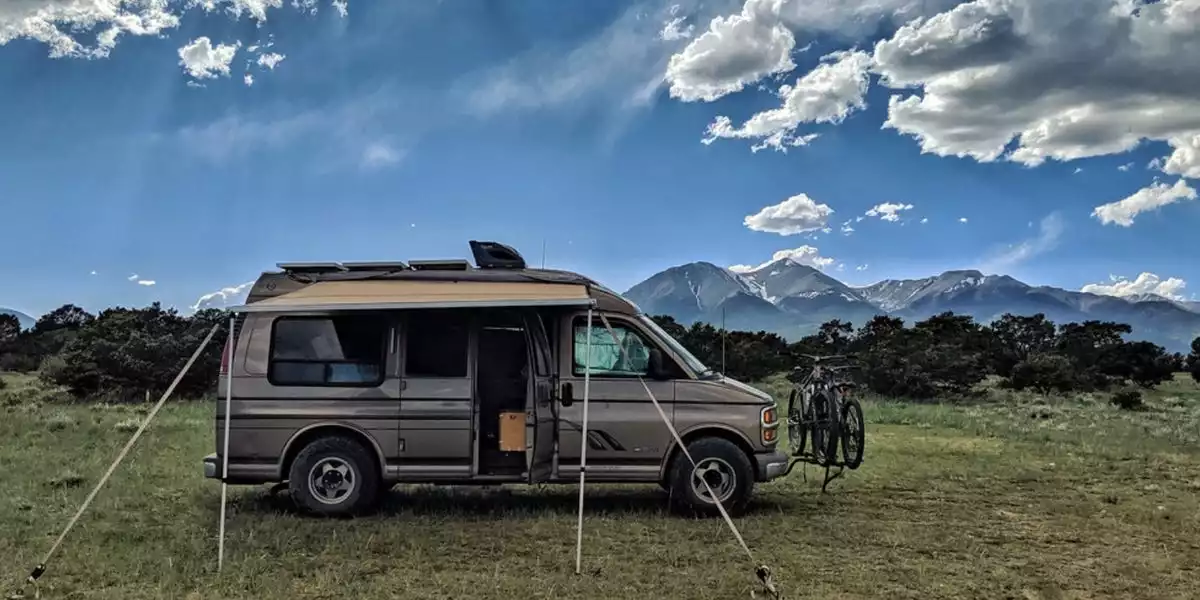
Jayme Serbell’s multi-year progression—from a 1996 Chevy Express van converted into a mobile office, to an off-grid solar-powered property in rural New Mexico, and ultimately to a walkable St. Louis neighborhood after the birth of a child—reads less like a personal reinvention story and more like a field report on how Americans are renegotiating the relationship between work, place, and infrastructure.
The first phase, van life, is often framed as romantic minimalism. In practice, it is a daily operational exercise in connectivity resilience, space optimization, and risk management. The “anywhere office” promise hinges on a fragile stack: cellular coverage, power availability, device reliability, and the ability to collaborate in real time. Serbell’s experience underscores a central truth for business leaders and technology strategists: remote work is not merely a policy—it is an infrastructure dependency.
That dependency is increasingly visible as more professionals attempt to decouple income from geography. The van becomes a moving edge node, forcing hard choices about bandwidth, latency, and redundancy. It also exposes a market gap: people don’t just want internet access; they want predictable service-level outcomes—the confidence that a video call, a file sync, or an emergency message will go through regardless of location.
Key signals embedded in this phase include:
- Rising demand for multi-path connectivity (multi-carrier routers, Wi-Fi aggregation, satellite-cellular hybrids)
- A growing expectation that collaboration tools remain usable under constrained conditions (low bandwidth, intermittent coverage)
- The emergence of “remote-work kits” as a category—hardware, software, and services bundled for reliability rather than novelty
Off-grid New Mexico and the consumer microgrid moment
The second phase—purchasing and living on an off-grid property powered by solar panels with battery storage and generator backup—shifts the story from mobility to autonomy. Here, the core constraint is no longer where to park or how to find signal; it’s how to keep the lights on, devices charged, and daily life stable when nature and seasonality dictate supply.
This is where Serbell’s experience becomes particularly relevant to the energy transition narrative. Distributed energy resources (DERs) have matured enough that individuals can assemble a functional microgrid. Yet the lived reality—especially winter shortfalls and the need for backup generation—highlights the distance between technical feasibility and operational reliability.
For the energy and cleantech ecosystem, the off-grid chapter illustrates a market that is early but increasingly legible:
- Solar + lithium-ion storage is becoming a consumer-grade baseline for resilience
- Backup generators remain a practical necessity in many climates, revealing a persistent hybrid future
- The next competitive frontier is software: predictive dispatch, load management, and weather-aware optimization
In business terms, this is the consumerization of grid strategy. Households are beginning to behave like small utilities—monitoring reserves, rationing loads, and planning around forecasted generation. That behavioral shift creates openings for:
- Unified dashboards that integrate energy, connectivity, indoor air quality, and security
- AI-driven recommendations that translate sensor data into actionable routines (when to run appliances, when to conserve, when to switch power sources)
- Financing and service models that treat home resilience as a subscription-like utility layer rather than a one-time hardware purchase
The off-grid phase also reframes sustainability as something more concrete than branding. It becomes a daily negotiation between ideals and constraints—precisely the kind of environment where durable product-market fit is forged.
The return to St. Louis: walkability, healthcare access, and the gravity of life stage
The third phase—settling in a walkable, amenity-rich neighborhood in St. Louis after having a child—captures a pattern that urban economists, real-estate developers, and HR leaders are watching closely: remote work expands options, but it does not erase the pull of healthcare access, community density, and family support networks.
This is not a retreat from flexibility so much as a rebalancing of priorities. The same person who can tolerate uncertainty in their twenties or early thirties may demand predictability once childcare, medical needs, schooling, and social support become non-negotiable. Serbell’s arc suggests that “where people want to live” is increasingly segmented by life stage and risk tolerance, not just income or ideology.
For cities and smaller “micro-urban” hubs, the implication is clear: the winners in the next migration cycle may be places that combine:
- Walkability and amenities (grocery, parks, schools, third places)
- Reliable digital infrastructure (broadband quality, redundancy, competitive providers)
- Healthcare proximity and capacity
- A sense of community that reduces the hidden costs of isolation
This is also a signal to employers: distributed workforces will not be uniformly nomadic. Many employees will oscillate—testing mobility, experimenting with rural autonomy, then re-anchoring when family dynamics change. Companies that treat remote work as a static perk may misread the moment; the more durable approach is to treat it as a life-cycle capability.
What enterprises should learn: infrastructure, modularity, and “living-as-a-service”
Across all three phases, the throughline is not wanderlust—it is systems design. Serbell’s journey resembles an agile product loop: prototype a lifestyle (van), beta test resilience (off-grid), then scale stability (urban neighborhood). That pattern is instructive for multiple industries navigating hybrid demand.
Strategic takeaways for business and technology decision-makers include:
- Connectivity is now a core utility: Expect growth in multi-carrier failover, satellite augmentation, and AI-driven signal optimization as remote workers demand reliability, not just access.
- Home resilience is becoming a consumer expectation: DERs, battery storage, and smart load management are moving from niche to mainstream—especially as climate volatility increases.
- “Living-as-a-service” is a credible market thesis: Subscription-based furnished housing, reserved co-living, flexible leases, and camper-van rentals align with consumers who value optionality but still want operational support.
- Talent policy must match real-world constraints: Location-agnostic work succeeds when paired with stipends, coworking access, and standardized home-connectivity kits—reducing friction for high-performing distributed employees.
Serbell’s story ultimately maps the modern trade space: freedom versus reliability, cost versus convenience, autonomy versus community. The most competitive organizations—whether in telecom, energy, real estate, or enterprise HR—will be those that stop treating these as lifestyle choices and start treating them as design requirements for the next economy.

 By
By
 By
By

 By
By
 By
By


 By
By







