

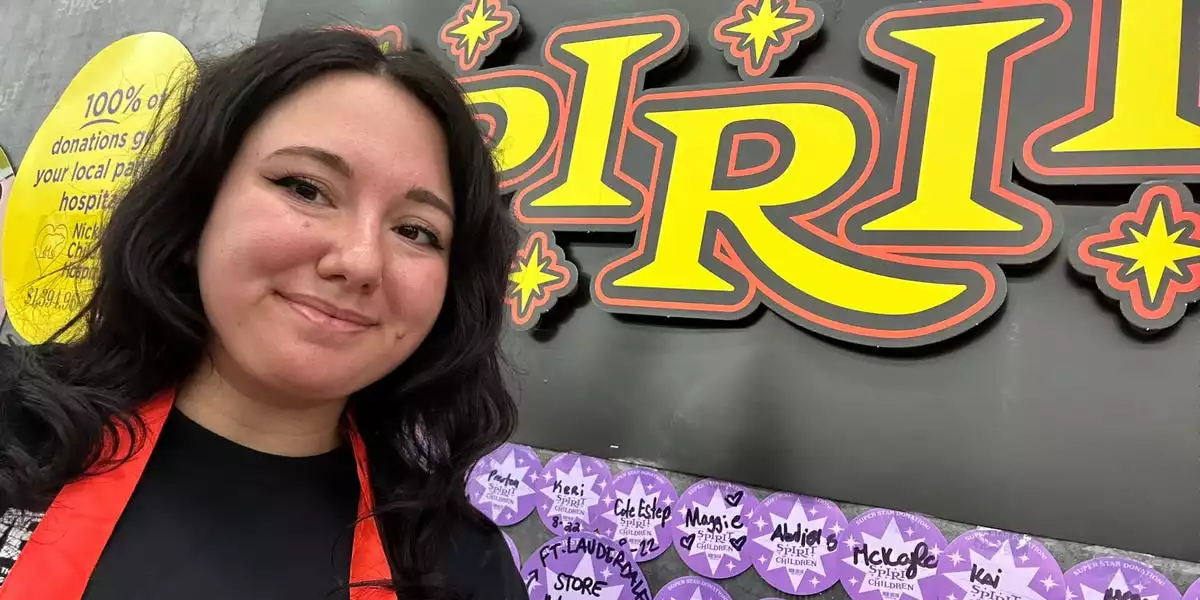

When a corporate L&D career meets a seasonal retail floor
Maggie Bodner’s trajectory—laid off at 28 from a corporate learning and development (L&D) role, then stepping into a seasonal assistant manager and sales associate position at Spirit Halloween—reads at first like a personal detour. In reality, it functions as a compact case study in how today’s labor market is reshaping professional identity, how experiential retail is defending itself against e-commerce gravity, and how “nonlinear” work can generate durable, transferable value.
After weeks of rejections in her field, Bodner accepted work that is structurally different from her prior career: customer-facing, hourly, and time-bound. Yet the move is not simply a downgrade in status or skill. It is a form of rapid skill reallocation—a pragmatic response to a job market where specialized roles can vanish quickly, and where the ability to remain economically active often depends on flexibility rather than perfect role alignment.
Just as importantly, Bodner’s choice is anchored in intrinsic motivation: a lifelong enthusiasm for Halloween and the store’s immersive, haunted-house-like environment. That detail matters. In an era when many employers struggle to sustain engagement, her story highlights a counterintuitive truth: passion can be a stabilizer during uncertainty, and it can also be a performance asset in customer-facing work.
Labor market fluidity and the rise of portfolio careers
Bodner’s pivot underscores how even highly trained professionals are increasingly navigating what economists and HR leaders often describe as portfolio careers—a sequence of roles that may span industries, seniority levels, and employment types. This pattern is becoming more visible as layoffs ripple through white-collar functions, including HR, recruiting, and L&D, where budgets can tighten quickly when companies prioritize near-term cost control.
Several dynamics stand out:
- Specialized talent is becoming more mobile by necessity. When corporate roles contract, workers redeploy into adjacent or entirely different sectors to maintain income, routine, and momentum.
- Career narratives are being rewritten in real time. A seasonal retail role can now sit credibly alongside corporate experience, particularly when framed as evidence of resilience, customer empathy, and operational adaptability.
- Empathy becomes a measurable competency. Bodner’s renewed understanding of what layoffs feel like—paired with frontline exposure to customer needs—can translate into stronger human-centered design in future L&D work, where training increasingly emphasizes psychological safety, change management, and resilience.
For employers, this suggests a widening pool of candidates whose recent experience may not look “linear” but may be highly relevant. For candidates, it reinforces that short-term pivots can preserve long-term optionality—especially when the role builds interpersonal fluency, leadership under pressure, and real-world problem solving.
Spirit Halloween as a blueprint for experiential commerce and brand advocacy
Spirit Halloween’s business model—short-term pop-ups, high-density seasonal demand, and theatrical in-store presentation—also reveals why certain physical retailers remain culturally and commercially potent. The store’s immersive setup effectively turns shopping into an event, offering something e-commerce cannot fully replicate: shared atmosphere, sensory storytelling, and spontaneous discovery.
This is experiential commerce with clear strategic advantages:
- Narrative-driven retail: The haunted-house feel and themed merchandising create a “destination” effect that increases dwell time and encourages impulse purchases.
- Social amplification: Customers often treat the visit as content—photos, short videos, and recommendations—fueling organic reach that paid advertising struggles to match.
- Authentic brand ambassadors: Employees like Bodner, who genuinely love the holiday, bring credibility that scripted sales training rarely produces. Their enthusiasm becomes a form of customer acquisition, retention, and community-building.
In this context, the seasonal workforce is not merely labor; it is part of the product. The employee-customer interaction becomes a core feature of the experience, not a supporting function.
Employee experience, perks, and the “culture flywheel” in seasonal work
Bodner cites flexible hours, camaraderie, and a 30% employee discount as meaningful benefits. On paper, these perks may look modest compared with corporate packages. In practice, they can be powerful because they are tightly coupled to identity and community—two forces that increasingly shape retention and performance.
What emerges is an “employee experience” model with lessons beyond retail:
- Intrinsic motivation can outperform purely financial incentives when the work is tied to a shared subculture (in this case, Halloween fandom and theatrical play).
- Belonging scales engagement. A team of enthusiasts can create a self-reinforcing environment where morale and effort rise because participation feels communal, not transactional.
- Brand-specific perks act as culture catalysts. A discount is not just compensation; it is a mechanism that deepens affiliation with the brand’s world and encourages employees to become customers and advocates.
For HR and talent leaders, the implication is not that every company should mimic a Halloween retailer’s vibe, but that emotionally resonant narratives—mission, craft, heritage, community impact—can be operational assets when they are authentic and consistently expressed.
Technology opportunities: phygital retail and rapid upskilling at scale
Spirit Halloween’s immersive format also points to a broader technology roadmap for retailers seeking to blend physical excitement with digital convenience. The next competitive edge is likely to come from phygital strategies—experiences that begin online, peak in-store, and continue through social sharing and loyalty loops.
High-impact opportunities include:
- Augmented reality (AR) previews for costumes, makeup, or props, enabling customers to “try” looks before visiting or buying.
- Mobile-driven interactive experiences such as scavenger hunts, QR-triggered jump scares, or collectible digital badges that increase engagement and cross-sell.
- Microlearning and AI-assisted onboarding to train large seasonal cohorts quickly—bite-sized modules, scenario-based quizzes, and adaptive coaching that improves service consistency across pop-up locations.
Bodner’s L&D background is a reminder that training itself can be a competitive differentiator in seasonal retail. When staffing ramps fast, the retailers that operationalize learning—efficiently, measurably, and with high morale—are better positioned to protect customer experience during peak demand.
Bodner’s story ultimately captures a defining feature of the current economy: careers are becoming more elastic, retail is becoming more theatrical, and the boundary between “work for income” and “work for identity” is increasingly porous. In that overlap—where adaptability meets authenticity—both workers and companies are discovering new ways to stay resilient when the market refuses to stand still.

 By
By
 By
By
 By
By
 By
By
 By
By


 By
By







