

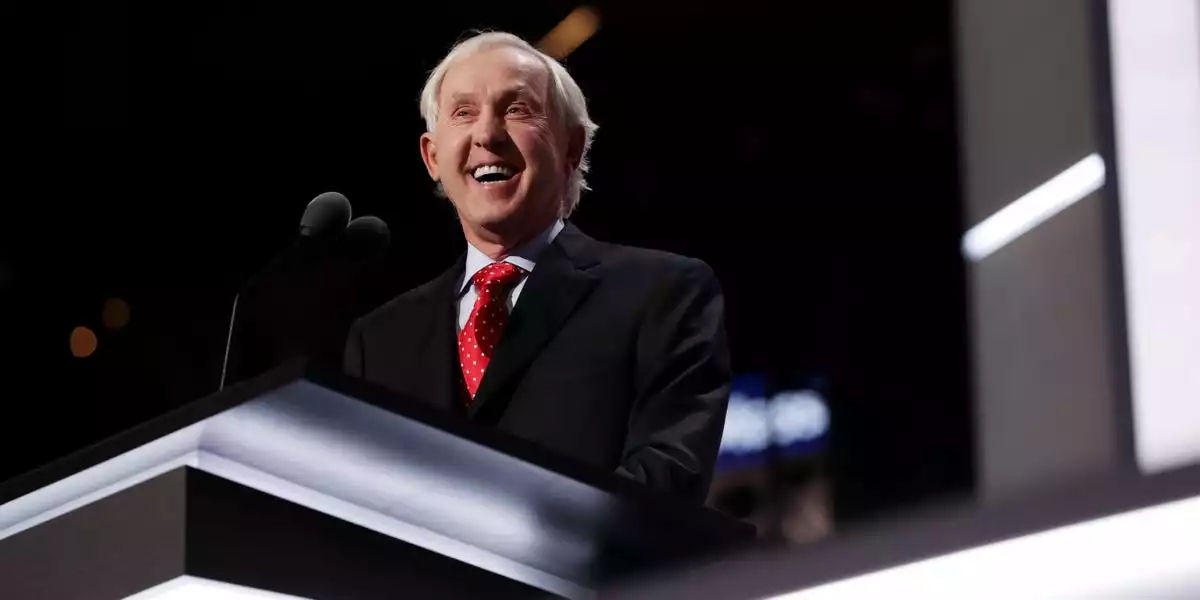

A high-profile shareholder’s signal: continuity, but not complacency
Fran Tarkenton’s public commentary on Apple’s reported CEO transition—hardware engineering leader John Ternus set to succeed Tim Cook in September—lands as more than celebrity shareholder color. Tarkenton is both an NFL Hall of Famer and a long-time Apple investor, and his remarks function as a market-facing cue: confidence in Apple’s bench strength, paired with an expectation that the next era will look meaningfully different from the last.
Two ideas stand out in Tarkenton’s framing. First is the leadership mandate: Ternus should not attempt to “be” Steve Jobs or Tim Cook, but instead operate from his own strategic judgment. Second is the implied strategic pivot: a possible re-centering of Apple around product and hardware-led innovation, after a decade in which Cook’s Apple proved that services, operational excellence, and custom silicon could compound into one of the most resilient business models in modern corporate history.
For investors and competitors alike, the subtext is clear: Apple’s next CEO will inherit a company that is still immensely profitable, but facing a more contested technology landscape—especially in AI—than at any point since the smartphone became the industry’s gravitational center.
The strategic fulcrum: hardware-first DNA meets a services-heavy profit engine
Under Tim Cook, Apple’s services business matured into a high-margin stabilizer, commonly understood to represent roughly one-fifth of revenue while contributing disproportionately to profit. That shift helped Apple smooth the cyclicality of device refreshes and defend margins even as global consumer electronics demand softened.
John Ternus’s profile—deeply associated with Apple’s hardware engineering culture—suggests a different center of gravity: end-to-end product integration as the primary growth narrative. That does not necessarily mean a retreat from services; rather, it raises the likelihood that services become more explicitly tethered to hardware differentiation.
Key strategic tensions to watch:
- Hardware vs. Services balance: Apple’s strongest advantage has been the *system*, not any single product line. A hardware-forward CEO may push Apple to make devices the “tip of the spear” again—using new sensors, silicon, and form factors to create reasons to upgrade, then converting that momentum into services adoption.
- Custom silicon as the bridge: Apple’s M-series and broader silicon roadmap are not just performance plays; they are business model enablers. Better chips unlock new experiences that can be monetized through subscriptions, bundles, and premium tiers.
- Product cadence and segmentation: A Ternus era could plausibly bring more frequent, more targeted releases—including niche variants and region-specific configurations—designed to counter demand volatility and reduce reliance on a few tentpole launch windows.
The strategic question is not whether Apple will “choose” hardware or services. It is whether Apple can engineer a tighter flywheel: compelling devices that make services indispensable, and services that make devices harder to leave.
AI, on-device intelligence, and the next platform wager
The most consequential backdrop to this transition is the AI arms race. Google and Microsoft are investing at extraordinary scale in cloud-centric generative AI, enterprise distribution, and developer ecosystems. Apple’s counterposition has historically been different: privacy-forward design, tight hardware-software integration, and a massive installed base of premium devices.
Ternus’s stewardship of hardware and his proximity to Apple’s silicon evolution place on-device AI at the center of plausible differentiation. If Apple leans into this, expect emphasis on:
- Neural processing and low-power AI accelerators: Advancing NPUs and specialized compute to deliver responsive AI without constant cloud dependence—supporting privacy, latency, and battery life advantages.
- AI embedded across iOS, macOS, and mixed reality: Not as a standalone chatbot product, but as ambient capability—translation, summarization, personal automation, health insights, and creative tooling integrated into core workflows.
- Platform expansion through form factors: A hardware-first mindset could accelerate progress in AR/VR (Vision Pro’s evolution), wearables, and smart home robotics—domains where Apple can control the full stack and monetize premium experiences.
This is where the “product-centric” interpretation becomes strategically meaningful. In AI, distribution matters, but so does where inference happens and who owns the interface. Apple’s best path may be to make the device itself the AI platform—turning silicon, sensors, and operating systems into a defensible moat against cloud-first rivals.
Execution risk in a harsher macro climate—and what markets will measure first
Leadership transitions are rarely judged on vision alone. They are judged on execution under pressure, and Apple’s pressure points are visible: slowing discretionary spending, supply-chain volatility, and geopolitical risk—especially around U.S.-China tensions and manufacturing concentration.
Ternus would inherit Cook’s playbook of operational discipline and diversification, but may need to push it further:
- Supply-chain sovereignty and resilience: Continued expansion in India and Vietnam, paired with risk management around tariffs, export controls, and component dependencies—while protecting Apple’s hallmark gross margins above 40%.
- Margin math across cycles: If hardware innovation accelerates, Apple must ensure it does not erode profitability through cost inflation or over-complexity in the product line.
- Investor messaging and early proof points: Markets will scrutinize the first earnings cycles for signs of device-led acceleration, stable margins, and a credible AI roadmap that feels “Apple-native,” not reactive.
Tarkenton’s endorsement raises confidence—but also expectations. If Ternus is indeed next, the mandate is to preserve Apple’s operational excellence while restoring a sense of technological inevitability. In a market defined by AI disruption and platform churn, Apple’s next chapter will be judged by whether it can make the future feel once again like it ships in a box—and works like it was always meant to be there.

 By
By
 By
By


 By
By
 By
By

 By
By







