
A “solar mirror” satellite tests the boundaries of the night-sky commons
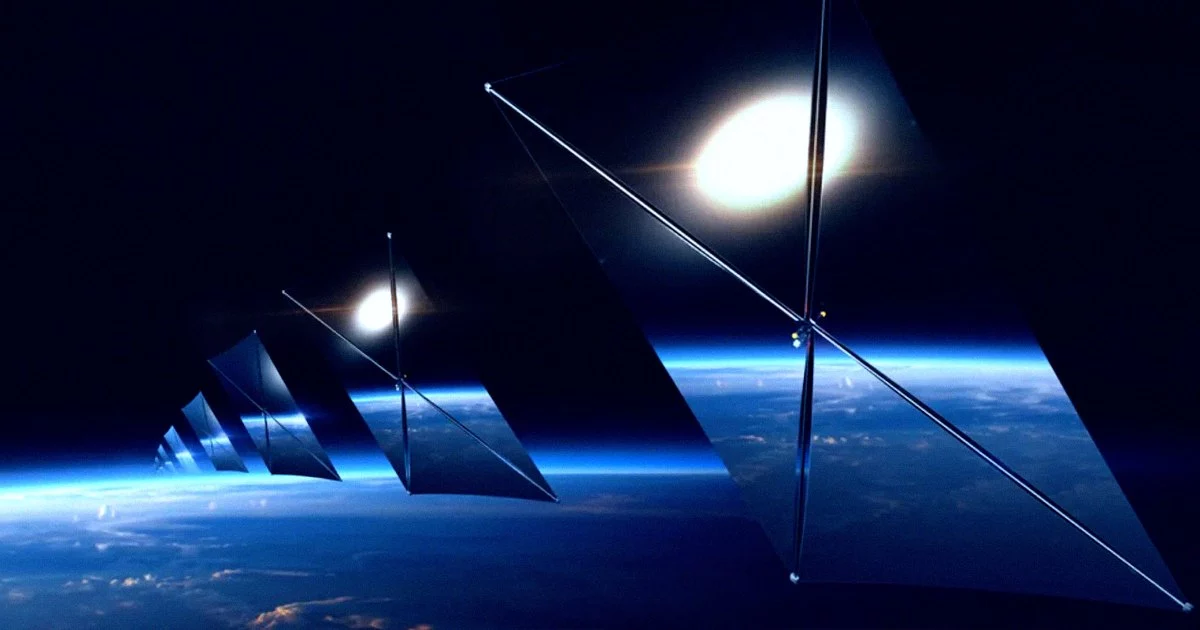
The U.S. Federal Communications Commission’s authorization for Reflect Orbital to launch and operate Eärendil-1, an experimental satellite intended to reflect sunlight onto Earth after dusk, marks a pivotal moment in the commercialization of low Earth orbit (LEO). Framed by proponents as a pragmatic extension of renewable-energy infrastructure—boosting solar-farm output beyond daylight hours and offering emergency illumination—the project has instead ignited a broader debate about who gets to shape the night sky, and at what cost.
The public record underscores the intensity of the backlash: nearly 2,000 comments, heavily driven by professional and amateur astronomers, warn that Eärendil-1’s reflected light could degrade deep-space observation, introduce safety risks, and disrupt ecological systems. The concerns are not merely aesthetic or sentimental; they are operational, measurable, and potentially irreversible if the concept scales.
At the heart of the controversy is a familiar governance dilemma in frontier technology: regulatory frameworks built for communications satellites are being asked to adjudicate environmental, scientific, and public-safety externalities that sit outside traditional spectrum and licensing considerations. The FCC’s rationale—prioritizing an “innovation imperative” and U.S. leadership in space technology—signals a policy posture that may accelerate experimentation, while leaving unresolved questions about accountability and shared-resource stewardship.
—
From climate-tech promise to orbital infrastructure: what Eärendil-1 represents
Eärendil-1 sits at the intersection of climate technology, aerospace commercialization, and energy-market innovation. The underlying proposition is straightforward: if sunlight can be redirected to solar installations after sunset, solar power’s intermittency could be partially mitigated without relying solely on storage. Even modest improvements in solar-farm utilization could, in theory, influence grid planning and the Levelized Cost of Electricity (LCOE)—particularly in regions where peak demand extends into evening hours.
Yet the leap from concept to scalable infrastructure is steep. Space-based solar augmentation is capital-intensive, operationally complex, and exposed to a layered risk stack:
- Technical uncertainty: beam control, pointing accuracy, atmospheric scattering, and cloud cover can all erode effectiveness.
- Operational variability: seasonal angles, orbital mechanics, and the need to avoid sensitive zones (observatories, airports, wildlife corridors) complicate scheduling.
- Market constraints: utilities and grid operators tend to demand predictable, contractable output—difficult to guarantee with a reflective system dependent on weather and geometry.
- Regulatory fragility: approvals may be granted for experiments, but scaling could trigger new rules, litigation, or international constraints.
This is also a signal event for climate-tech capital allocation. Investors have increasingly sought differentiated pathways beyond batteries and terrestrial renewables. Eärendil-1 exemplifies a growing appetite for high-capex, high-uncertainty “orbital climate solutions”—ventures that promise transformative impact but require tolerance for long timelines, public scrutiny, and geopolitical entanglement.
—
Scientific, safety, and ecological externalities move from hypothetical to actionable
The most pointed objections focus on the satellite’s potential to increase sky brightness and create glare events that interfere with astronomy. Ground-based telescopes—already strained by the rise of mega-constellations—depend on dark skies for deep-field imaging, near-Earth object detection, and time-sensitive observation campaigns. A reflective payload introduces a different class of interference: not just streaks across images, but localized brightening that can reduce the utility of entire observing windows.
Critics also raise ocular safety concerns. The argument is not that casual stargazers will be harmed by looking up, but that concentrated reflected light could become hazardous when viewed through optics. Some commenters warn that even a 12-inch amateur telescope might focus enough light to risk retinal injury under certain conditions—an allegation that, if validated, would elevate the issue from nuisance to public-safety hazard with liability implications.
Beyond astronomy, the ecological and aviation dimensions broaden the risk perimeter:
- Wildlife and circadian disruption: artificial illumination is known to affect migration, breeding, and feeding patterns. A moving, high-intensity light source could introduce novel behavioral stressors.
- Aviation safety: unexpected bright sources or glare near flight paths could create distraction or visibility issues, especially if reflections occur near airports or during critical phases of flight.
- Cascading unpredictability: atmospheric scattering, cloud amplification, and terrain reflectance can produce outcomes that are difficult to model precisely in advance.
Historical precedent adds weight. Russia’s Znamya experiment in 1990 demonstrated that orbital reflection can produce illumination likened by researchers to the Sun’s brightness during a total eclipse—an evocative comparison that underscores why astronomers view the technology as qualitatively different from conventional satellites.
Reflect Orbital has pledged consultations and “safeguard protocols,” but critics highlight gaps that matter operationally—particularly the absence of robust pre-flight trajectory and illumination notifications tailored to observatories and time-critical scientific campaigns. In a domain where minutes can determine whether an observation is usable, transparency is not a courtesy; it is infrastructure.
—
The strategic and regulatory stakes: innovation leadership versus ESG and legitimacy
The FCC’s decision effectively places a bet that U.S. space-technology leadership should be protected even amid unresolved externalities. That stance may resonate with industrial policy advocates and defense-adjacent stakeholders who see orbital capability as strategic. But it also creates a new category of reputational exposure for companies and investors: night-sky interference as an ESG issue.
For ESG-sensitive capital markets, the night sky is increasingly treated as a shared environmental and cultural asset—akin to biodiversity corridors or protected habitats. If orbital reflectors become associated with scientific harm, ecological disruption, or public-safety incidents, the backlash could be swift and global, regardless of where the satellite is licensed. This is where governance becomes a competitive differentiator: firms that treat sky stewardship as a core design constraint may find themselves advantaged against operators perceived as exploiting regulatory gaps.
Several strategic imperatives are emerging for the sector:
- Binding “dark-sky” standards: brightness thresholds, operational corridors, and mandatory impact assessments developed with scientific bodies such as the International Astronomical Union.
- Multilateral coordination: engagement through the UN Committee on the Peaceful Uses of Outer Space (COPUOS) to avoid a patchwork of national rules and forum shopping.
- Real-time adaptive controls: onboard sensing and dynamic reflectivity adjustments tied to sky conditions, astronomical events, and sensitive geographies.
- Verification and data-sharing: third-party monitoring platforms that allow regulators and researchers to validate compliance and investigate anomalies.
Eärendil-1 is, on paper, a demonstration satellite. In practice, it is a governance stress test for the next phase of LEO commercialization—one where the most consequential payloads may not transmit data or provide broadband, but reshape the physical experience of night. The companies that thrive in that environment will be those that can innovate while proving—continuously, measurably, and transparently—that innovation does not come at the expense of the commons.

 By
By
 By
By

 By
By
 By
By

 By
By
 By
By