

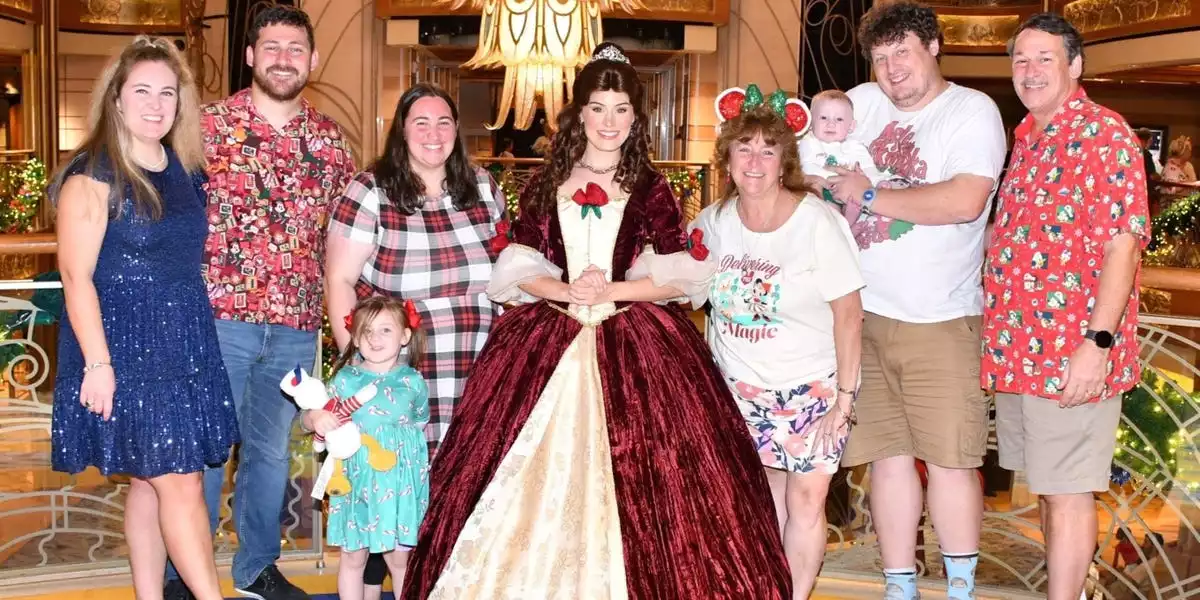

A 100th Sailing as a Case Study in Disney Cruise Line Customer Lifetime Value
Faith Colletti’s approaching 100th Disney cruise—a milestone built from a first voyage on *Disney Magic* in 1998 to a planned Alaska itinerary this summer—reads like a human-interest story. For business and technology leaders, it also functions as a crisp illustration of customer lifetime value (CLV) at its most extreme: a single guest evolving into a decades-long revenue stream, a repeat purchaser, and an organic marketing engine.
Colletti, a 63-year-old retired CPA from Orlando, is not simply “loyal.” Her behavior reflects the kind of durable engagement brands attempt to engineer: habitual repurchase, premium upsell adoption, and a willingness to structure family traditions around a product. The detail that her 100th sailing is slated for a $30,000 Royal Suite is particularly revealing. It signals that Disney Cruise Line (DCL) is not only retaining a customer—it is expanding share of wallet over time, converting familiarity and trust into higher-margin experiences.
For DCL, stories like this are strategically valuable because they demonstrate that the cruise product is not merely transportation and hospitality. It is a repeatable emotional experience—one that can be refreshed through itineraries (Mediterranean, Norwegian fjords, Alaska), ship innovations, and themed sailings, while still preserving the recognizable “Disney” service signature that reduces perceived risk for returning guests.
—
Multigenerational Travel as a Built-In Growth Flywheel
The most commercially consequential element in Colletti’s narrative may be the multigenerational dimension: husband, children, and now grandchildren joining sailings. This is more than heartwarming continuity; it is a distribution channel.
When a travel brand becomes embedded in family rituals, it gains:
- Lower acquisition costs: repeat bookings require less persuasion than first-time conversion.
- Intergenerational demand transfer: children and grandchildren become future decision-makers with pre-formed preferences.
- Network effects through social proof: friends, coworkers, and online communities often treat “superfan” behavior as a credibility signal.
- Higher itinerary elasticity: loyal guests are more willing to try new routes (e.g., Alaska) because the brand reduces uncertainty.
Disney’s advantage is structural: it can extend the cruise experience beyond the ship through a broader ecosystem of parks, media, and consumer products. Even without explicit cross-selling, the brand’s cultural presence keeps Disney top-of-mind, reinforcing the idea that a cruise is not a one-off vacation but a recurring family event.
Colletti’s own advice—book early for better pricing and prioritize candid photos over formal portraits—also hints at how the product is consumed. Early booking aligns with cruise economics and planning cycles, while candid photography underscores that the “deliverable” is not luxury alone, but memory capture. In the experience economy, the souvenir is often the story.
—
Pricing Power, Yield Management, and the Quiet Role of Data Infrastructure
Colletti’s emphasis on early booking maps neatly onto modern cruise revenue strategy. Cruise lines increasingly rely on dynamic pricing and yield management to optimize occupancy and per-guest revenue. Early-booking incentives help stabilize demand forecasts, while premium inventory—like suites—creates a ladder for upsell as loyalty deepens.
Behind the scenes, the industry’s competitive edge is increasingly digital. While the summary doesn’t enumerate Disney’s full stack, DCL benefits from the broader Disney playbook: app-based planning, wearable or identity-linked services, and operational analytics that can shape guest experience and ship performance.
In practical terms, data-driven systems can enable:
- Personalized offers based on prior onboard spending, dining preferences, and excursion history
- Real-time itinerary and capacity optimization for dining, entertainment, and shore experiences
- Predictive maintenance and uptime improvements, reducing service disruptions that erode satisfaction
- Targeted pre-cruise merchandising, from spa packages to specialty dining and photo products
The strategic point is not surveillance—it is relevance. The more accurately a cruise line anticipates what a guest values, the more it can deliver a feeling of seamlessness that guests interpret as “magic,” while the business recognizes it as higher ancillary revenue and stronger retention.
—
What Colletti’s Devotion Signals About Premium Travel, Sustainability, and Competitive Moats
Colletti also exemplifies a broader macro trend: the affluent Baby Boomer cohort prioritizing experience spending, with the time flexibility to travel outside peak windows. For cruise operators, this demographic can be especially attractive—less price-sensitive, more comfort-oriented, and often motivated by family gathering opportunities that justify premium spend.
At the same time, the cruise sector’s post-pandemic rebound has reinforced the appeal of ships as controlled environments—what many travelers perceive as a “safe bubble” with curated entertainment, childcare, dining, and logistics bundled into one purchase decision. That bundling is a competitive moat: it compresses planning friction and makes the value proposition legible, especially for multigenerational groups.
Yet the next phase of cruise growth will be shaped by pressures that loyalty alone cannot solve. Environmental regulation, fuel costs, and port-community scrutiny are rising constraints. For Disney Cruise Line and peers, sustained pricing power will increasingly depend on credible progress in:
- Lower-emission propulsion and energy efficiency (including LNG where applicable, hybridization pathways, and operational optimization)
- Wastewater treatment and waste reduction that meet tightening standards
- Transparent sustainability reporting that protects brand equity among environmentally conscious travelers
Colletti’s story shows what happens when a brand earns the right to be a tradition. The strategic challenge for Disney Cruise Line is to scale that intimacy—using data and design to keep experiences fresh—while meeting the operational and sustainability expectations that will define premium travel’s next decade.


 By
By
 By
By

 By
By

 By
By
 By
By







