
The return of “structured comfort” as a labor-market signal
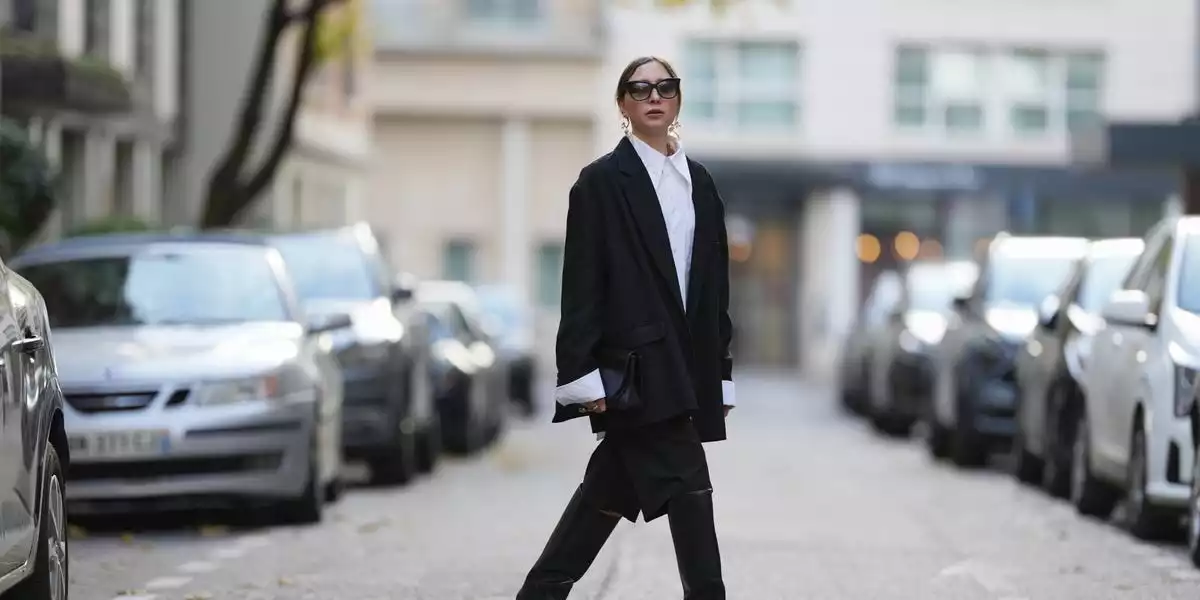
A subtle but consequential shift is moving through offices and city centers: workplace attire is tightening up—not into the rigidity of pre-pandemic suiting, but into a new hybrid of comfort and structure. As hiring slows and return-to-office expectations harden, employees are recalibrating how they present themselves in professional settings. The pandemic’s loungewear era normalized softness and informality; today’s emerging uniform favors polished silhouettes that still accommodate modern mobility.
This evolution is less about fashion’s cyclical whims and more about economic signaling. In a climate of elevated job insecurity, clothing becomes a portable form of credibility—an outward cue that a worker is prepared, stable, and serious. The rise of oversized blazers, tailored dresses, and “investment pieces” reflects a pragmatic mindset: if budgets are constrained by inflation and uncertainty, purchases must justify themselves through durability, versatility, and repeatability.
What’s notable is what *isn’t* returning. Traditional suits remain largely sidelined, suggesting that the office has not fully reverted to its old codes. Instead, the market is converging on a middle ground: garments that read as professional on camera and in conference rooms, yet remain wearable across commutes, hybrid schedules, and post-work social time. This “structured comfort” is becoming the new baseline for business casual—less relaxed than lockdown, less formal than legacy corporate attire.
Dressing as risk management: personal brand, visibility, and power dynamics
The renewed emphasis on intentional workwear is also a story about power and organizational culture. During the remote-work surge, employees gained leverage over daily norms—comfort became synonymous with productivity, and dress codes softened accordingly. Now, as companies reassert in-office collaboration and tighten performance expectations, dress is re-emerging as a cultural instrument: a way to reinforce organizational identity, professional hierarchy, and shared standards.
For workers, the response is increasingly strategic. Dressing well is being framed not as vanity, but as career risk management—a way to protect employability and increase perceived competence. In practical terms, this means clothing is treated as an asset that can travel across roles and employers, supporting a consistent professional narrative.
Several dynamics are converging here:
- Perceived competence and trust: Structured garments can function as quick heuristics for reliability, especially in high-stakes meetings or client-facing roles.
- Boundary-setting: A distinct “work wardrobe” helps re-establish psychological separation between personal life and professional demands—an issue many remote and hybrid workers continue to navigate.
- Visibility in competitive environments: When promotions and opportunities feel scarcer, employees may use presentation to reinforce readiness and leadership presence.
- Corporate authority returning by degrees: Dress codes may not be explicitly mandated, but cultural expectations can be just as powerful—especially when leadership is back in the office.
Social media accelerates these norms. TikTok office-style creators and workplace image advisors are effectively translating corporate ambiguity into actionable guidance, positioning attire as a tool for intentionality, confidence, and professional legibility. In that sense, the algorithm becomes a parallel HR channel—informal, influential, and often more immediate than company policy.
Luxury’s pivot to permanence—and the economics of “investment dressing”
Luxury and niche labels are responding with a clear message: buy fewer items, but buy better ones. Brands such as Prada, Bottega Veneta, The Row, and Toteme are foregrounding wardrobe staples designed to communicate permanence and credibility. This is not merely aesthetic positioning; it aligns with consumer behavior under inflationary pressure, where shoppers increasingly weigh cost against longevity, versatility, and resale potential.
The commercial logic is straightforward. In uncertain times, consumers often retreat from conspicuous novelty and toward foundational pieces that can anchor multiple looks. For brands, that creates an opportunity to:
- Emphasize craftsmanship and materials as differentiators
- Build capsule wardrobes that support repeat wear across hybrid contexts
- Justify premium pricing through utility, durability, and timelessness
- Strengthen loyalty by becoming the “default” for modern professional dressing
This shift also reframes business casual as a category. Rather than a permissive, anything-goes dress code, it becomes a curated set of signals: competence without stiffness, authority without ostentation, and comfort without surrendering structure. The result is a wardrobe designed for credibility across settings—office, travel, dinners, and networking—mirroring how work itself has blurred across spaces and schedules.
The tech layer: authentication, AI styling, and the emerging “data garment”
Beneath the fabric, a technology story is taking shape. As consumers treat clothing as an investment, they increasingly value proof—of origin, quality, and longevity. That is pushing brands toward tools such as RFID and blockchain-backed provenance, which can support authenticity verification and potentially enhance resale value in circular markets.
At the same time, retail technology is positioning itself as an adoption engine for higher-quality wardrobes:
- AR/VR fitting and 3D body scanning can reduce friction in buying tailored pieces online, lowering return rates and improving fit confidence.
- AI styling assistants can help consumers build modular wardrobes, recommending combinations that maximize cost-per-wear and professional appropriateness.
- Machine-learning demand forecasting can incorporate macro signals—unemployment trends, return-to-office rates, and consumer sentiment—to anticipate shifts in silhouettes and categories.
On the enterprise side, the idea of clothing as a functional interface is no longer speculative. Early experiments with smart uniforms and sensor-integrated apparel point to a future where garments can support safety, comfort, compliance, or wellness—particularly in industrial, healthcare, and logistics environments. Even in white-collar settings, the long arc suggests a convergence: professional clothing may increasingly sit at the intersection of identity, performance, and data.
The modern office wardrobe, then, is not simply “back.” It is being rebuilt for a new economy—one where credibility is currency, versatility is value, and technology is quietly reshaping what it means to get dressed for work.

 By
By
 By
By
 By
By
 By
By
 By
By

 By
By