

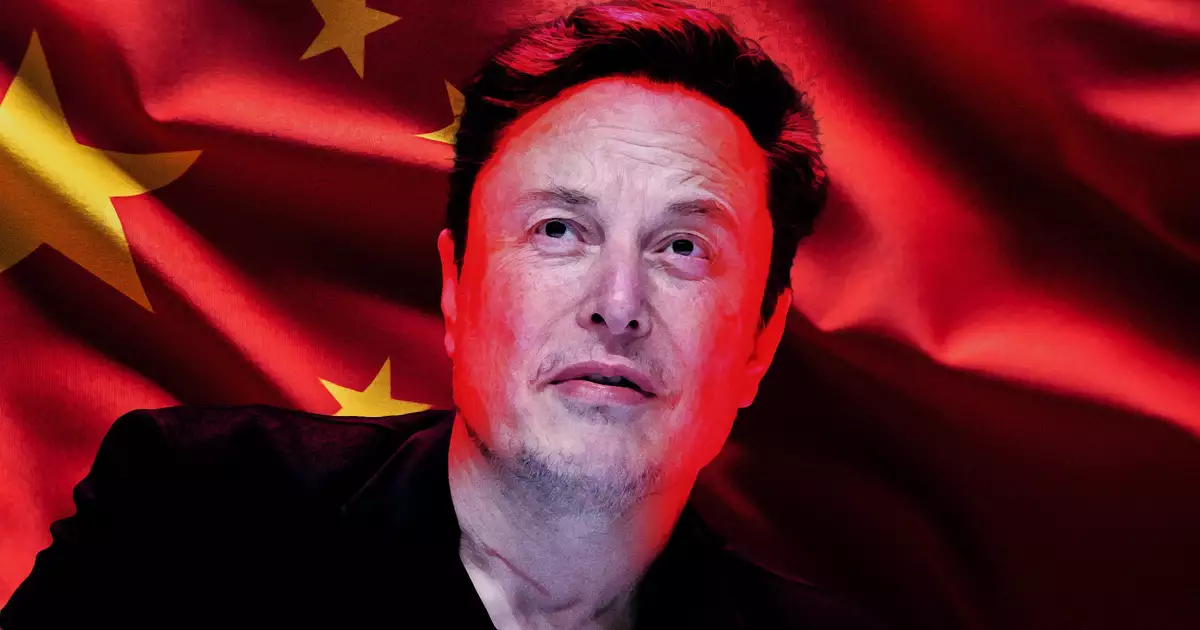

Tesla’s AI Pivot in China: Navigating a New Cartography of Intelligence
In the labyrinthine corridors of global automotive innovation, Tesla’s recent decision to anchor its China-market vehicle assistants on DeepSeek’s large-language model and Bytedance’s Doubao voice layer—eschewing its own Grok LLM—signals a tectonic recalibration. This move, at once pragmatic and profound, is less a capitulation than a masterclass in regulatory navigation and technological adaptation, illuminating the shifting power centers of generative AI.
The Anatomy of a Strategic Stack: DeepSeek and Doubao in the Driver’s Seat
At the heart of Tesla’s pivot lies a nuanced calculus of performance, compliance, and cost. DeepSeek V3, a rising star among Chinese foundation models, has quietly approached GPT-4-class benchmarks. Its secret? Aggressive quantization and parameter sparsity—techniques that dramatically lower inference costs without sacrificing fluency or accuracy. For a company like Tesla, where every millisecond and megabyte matters at fleet scale, these optimizations are not mere technicalities; they are existential.
Complementing DeepSeek, Bytedance’s Doubao voice layer brings a Mandarin-optimized, low-latency speech interface, deftly sidestepping the cloud round-trips that China’s data-localization statutes increasingly prohibit. This domestic stack is more than a technical choice—it is a passport to regulatory acceptance. Over-the-air updates, so central to Tesla’s product philosophy, now breeze through China’s Cybersecurity Review Measures, unencumbered by the legal gray zones that bedevil U.S.-trained models like Grok.
- Model Differentiation:
– DeepSeek V3: GPT-4-class performance, cost-optimized via quantization
– Doubao: Mandarin-native, edge-executed speech recognition
– Grok: English-centric, still calibrating for China’s stringent content filters
- System Integration:
– Domestic stack simplifies compliance and OTA approvals
– On-device inference slashes bandwidth and latency, future-proofing against regulatory flux
The Regulatory and Economic Undercurrents: Local Models, Global Stakes
Tesla’s maneuver is inseparable from the gravitational pull of Beijing’s Generative AI Interim Measures, which mandate real-time content monitoring and local training. By embedding DeepSeek, compliance is not an afterthought but an architectural feature—regulation “coded in.” Simultaneously, U.S. export controls on advanced GPUs render the cross-border shipment of American-trained AI weights fraught with risk, a minefield Tesla now elegantly sidesteps.
The economic logic is equally compelling. DeepSeek’s per-token inference cost, reportedly a fraction of Western peers, reshapes the profit calculus for mass deployment. Lower compute costs accelerate a virtuous cycle: as utilization rises, richer in-situ data flows back into model refinement, compounding cost-performance gains and further entrenching the domestic ecosystem.
- Policy Gravity:
– Local models ensure compliance with China’s real-time monitoring mandates
– Avoids export-license headaches and IP entanglements
- Cost Dynamics:
– DeepSeek’s low inference cost unlocks scalable deployment
– Data flywheel effect: more usage, better models, lower costs
Strategic Reverberations: Tesla, China’s EV Titans, and the Global AI Order
For Tesla, the trade-off is clear-eyed: the vertical-integration dream of Grok in every vehicle yields to the imperative of regulatory goodwill in a market accounting for over a fifth of its global deliveries. xAI, Tesla’s AI arm, may now pivot toward Western markets or reposition as a licensor to other automakers.
Chinese competitors, meanwhile, inherit a domestically validated AI supplier, lowering switching costs and potentially commoditizing cognitive interfaces across the EV landscape. DeepSeek, now accruing federated training data from multiple brands, is poised to build an ecosystem moat reminiscent of Android’s early rise.
Globally, the episode is a clarion call for AI vendors: sovereignty strategies are no longer optional. The locus of value is shifting from raw model IP to the subtler arts of integration, safety, and regulatory mastery.
- Implications for Automakers:
– Middleware abstraction is essential to avoid LLM lock-in
– Compliance tooling emerges as a key differentiator
- For AI Vendors and Investors:
– Cost-optimized inference is table stakes for embedded AI
– Capital flows increasingly toward real-time compliance and integration
The New Cartographers: Orchestrating Intelligence Across Borders
Tesla’s embrace of DeepSeek is emblematic of a broader re-mapping of the AI world—one where the competitive edge is not in monolithic, global models, but in the orchestration of diverse, sovereign stacks tailored to the contours of each market. The episode foreshadows a future where the true art lies not in building the biggest model, but in selecting, integrating, and governing the right intelligence for the right context. In this emerging multi-node AI landscape, the winners will be those who master the choreography of compliance, cost, and consumer resonance—turning adaptation itself into the ultimate source of strategic advantage.

 By
By
 By
By
 By
By
 By
By
 By
By
 By
By

 By
By







