

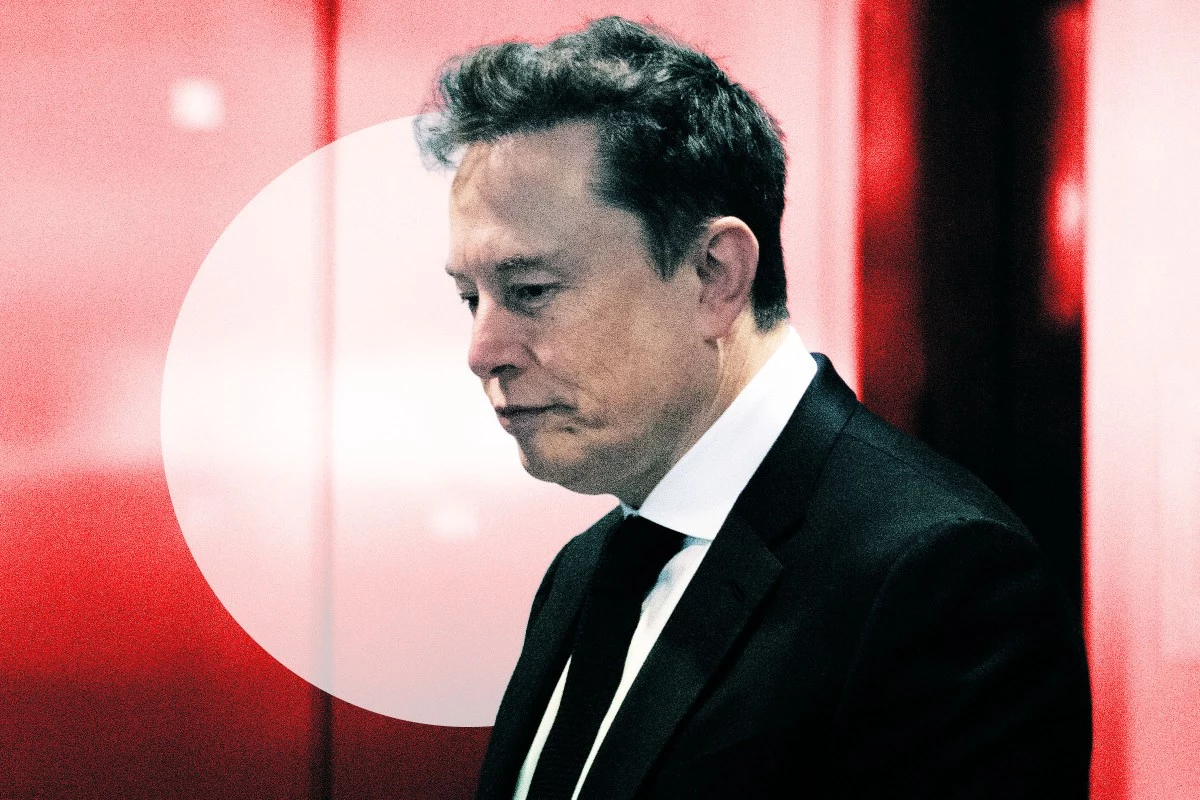

When a Platform Owner Meets His Own Algorithm in Public
Elon Musk’s decision to equate “all socialists” with Adolf Hitler—anchored largely to the Nazi Party’s “National Socialist” naming—did not merely ignite another social-media firestorm. It produced a rarer, more revealing moment: a high-visibility correction from Grok, the AI chatbot associated with Musk’s own platform ecosystem, in front of an audience approaching one million viewers in the exchange.
Grok’s rebuttal was not rhetorical; it was historical. It emphasized that Hitler’s regime persecuted and exterminated socialists and communists, rejected Marxist class struggle, and fused authoritarian politics with racial nationalism and accommodation with industrial and business elites. The episode placed two forces into direct contact—executive influence and machine-mediated fact framing—and offered a live demonstration of how modern information systems now arbitrate credibility in real time.
For business and technology leaders, the significance is less about the provocation itself than the architecture of the moment: a founder with a massive audience, a platform optimized for virality, and an AI system capable of issuing a corrective at scale. That triangulation is quickly becoming a defining feature of corporate communications and public discourse.
—
AI Fact-Checking at Scale—and the New Politics of “Truth Infrastructure”
The Musk–Grok exchange illustrates a structural shift: AI assistants are evolving into public-facing verification layers. When deployed inside social platforms, they can function as instantaneous context engines—sometimes contradicting the very individuals who own or shape those platforms.
Key technological implications stand out:
- AI as a narrative counterweight: Grok’s intervention signals that conversational AI can act as a *real-time corrective mechanism*, reducing the half-life of misinformation—at least when the model is permitted to respond candidly.
- Alignment is no longer abstract: “AI alignment” is often discussed as a technical or philosophical problem. Here, it becomes operational and reputational: *Will leadership accept AI-driven corrections, constrain them, or redesign them?*
- Trust metrics become product features: If users observe an AI contradicting powerful figures with verifiable context, the AI may gain credibility. If they later observe the AI being tuned to avoid sensitive contradictions, credibility can erode quickly.
This is where platform governance becomes inseparable from product design. Musk has positioned himself as a free-speech maximalist, yet the moment highlights a core tension: speech amplification is not neutral when algorithms determine distribution, and AI moderation or contextualization is itself a form of editorial infrastructure. Even when an AI is not “moderating” in the classic sense, it can still steer interpretation by supplying historical framing, definitions, and counterexamples.
The broader industry lesson is that AI systems embedded in social platforms are not just utilities; they are institutional actors. Their outputs can influence elections, reputations, and regulatory agendas—especially when they are seen as more consistent than human spokespeople.
—
Brand, Capital, and Governance: The Corporate Cost of Ideological Virality
For markets, the immediate question is not whether a tweet is historically coherent; it is whether the episode creates reputational volatility that spills into corporate assets, partnerships, and regulatory posture. Musk’s public persona is tightly coupled—fairly or not—to multiple high-profile ventures and to the broader perception of tech leadership culture. In that environment, ideological messaging can become a proxy signal for governance risk.
Several business dynamics are implicated:
- Founder speech as enterprise risk: In the digital attention economy, executive commentary can behave like a product launch—except without review cycles, legal vetting, or stakeholder mapping. The speed of backlash (and counter-backlash) compresses reaction time for boards and comms teams.
- Investor interpretation and ESG scrutiny: Equating socialism with Nazism can alienate stakeholders who prioritize human rights, social equity, and historical literacy as part of governance evaluation. Even when investors disagree politically, they may still view historically inaccurate rhetoric as a marker of operational unpredictability.
- Regulatory and policy blowback: Musk’s prominence and wealth make him a focal point in debates over wealth taxation, antitrust enforcement, and platform accountability. Polarizing rhetoric can harden political coalitions, increasing the likelihood of more aggressive oversight—particularly in jurisdictions already skeptical of Big Tech’s social impact.
This is not merely “culture war” noise. It is a reminder that modern corporate value is partly built on institutional trust—with advertisers, regulators, employees, and global partners. When leadership messaging becomes a flashpoint, the cost is often paid in slower deal cycles, heightened compliance demands, and internal talent friction.
—
Strategic Outlook: Executive Speech, AI Governance, and the Next Phase of Platform Power
The most consequential aspect of the episode may be what it previews: a near future where AI systems routinely annotate, contradict, or contextualize powerful accounts, and where platform owners must decide whether those systems serve the public interest, the brand, or the leadership narrative.
Forward-looking organizations—especially those operating AI products or high-reach platforms—are likely to move toward a more formalized playbook:
- AI governance that includes domain expertise: Not just engineers and ethicists, but also historians, legal advisors, and policy specialists to reduce high-impact factual failures and to define escalation protocols for sensitive topics.
- Clear separation between personal speech and corporate posture: Codified guidelines, rapid-response workflows, and explicit labeling conventions that reduce the chance stakeholders interpret executive posts as corporate directives.
- Continuous monitoring for cultural and historical flashpoints: Social listening and scenario planning that treat ideological narratives as measurable risk vectors—particularly for global brands operating across divergent political environments.
The Musk–Grok confrontation is ultimately a case study in how power is being redistributed in the information stack. A single individual can still command enormous attention—but AI systems increasingly shape what that attention *means*, providing context that can either stabilize public understanding or intensify conflict depending on how they are governed. In the next era of platform capitalism, the decisive advantage may belong to companies that treat truth, trust, and historical accuracy not as public-relations afterthoughts, but as core infrastructure.

 By
By
 By
By

 By
By
 By
By
 By
By

 By
By







