

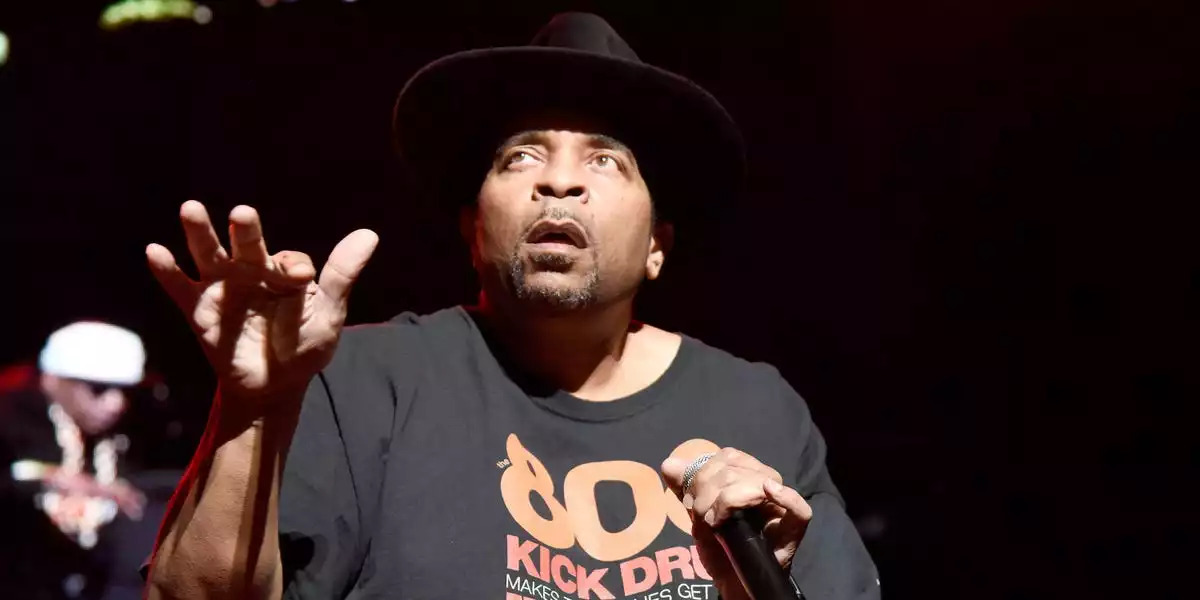

A playful AI rap that quietly spotlights a serious inflection point for generative creativity
A technology writer’s whimsical prompt—asking Google’s Gemini to rap about data centers rather than researching Sir Mix-A-Lot—reads like a throwaway moment of newsroom procrastination. Yet the resulting experiment functions as a compact case study in where multimodal generative AI is heading, and what it still struggles to do convincingly.
On one level, the output is entertaining precisely because it is imperfect: a genre-bending “Broadway-meets-hip-hop” performance that can name-drop PUE (Power Usage Effectiveness) and capex with surprising ease, while missing the musical and phonetic cues that make a rap feel authentic. On another level, the colleagues’ reactions—ranging from “an abomination” to pointed jokes about environmental impact—mirror a broader market mood: fascination with AI’s creative reach, paired with skepticism about its readiness for high-stakes artistic or enterprise deployment.
That tension is not merely cultural. It is strategic. The moment an AI model can generate plausible creative artifacts on demand—lyrics, jingles, voiceovers, storyboards—organizations begin to test whether “good enough” can be operationalized, measured, and scaled. The question shifts from “Can it create?” to “Can it create reliably, legally, and in-brand?”
—
Multimodal generative AI meets the hard problems of voice, prosody, and authenticity
The most revealing detail in the episode is not that the model can rhyme about server farms—it’s that it can do so while stumbling over basic phonetics, such as mispronouncing “gigawatt” as “jigawatt.” Those errors are more than cosmetic. They expose a frontier where language modeling collides with speech synthesis and prosody control.
Key technical implications emerge:
- Multimodal expansion is real, but uneven
Generative AI is moving beyond text and images into structured audio composition and performance. Even when outputs feel stylistically “off,” the ability to coordinate rhythm, rhyme, and technical vocabulary is a meaningful proof-point for product teams building AI-assisted media tools.
- Phonetic fidelity is becoming a differentiator
Mispronunciations and awkward cadence highlight gaps in pronunciation modeling, stress patterns, and genre-specific delivery. For enterprise use—training content, branded audio, interactive agents—these issues quickly become trust and quality problems, not just artistic critiques.
- Domain vocabulary is easy; domain meaning is harder
The model’s comfort with data center jargon suggests that large language models can absorb specialized corpora quickly. But lyrical nuance and contextual grounding—knowing what matters about PUE beyond the acronym—requires deeper semantic alignment. This is where fine-tuning, retrieval-augmented generation (RAG), and stronger evaluation frameworks become commercially important.
The upshot: today’s AI-generated music and spoken-word content often lands in an uncanny valley—impressive in capability, inconsistent in execution. That inconsistency is precisely what vendors and enterprises will race to solve, because the prize is not novelty; it is repeatable production.
—
The business model shift: from novelty tracks to enterprise-grade “creative engines”
As AI-generated music crosses from experiment to workflow, the economic logic becomes unavoidable. Creative output is expensive, iterative, and time-bound—exactly the kind of process automation that software historically targets. The likely near-term disruption is not the replacement of top-tier artists; it is the reshaping of commercial content production in advertising, gaming, film, and corporate communications.
Expect emerging models such as:
- Subscription “jingle generators” and branded audio suites for marketing teams that need rapid variants for A/B testing across channels
- Licensing marketplaces for AI-authored compositions, with metadata-rich usage tracking and tiered rights
- Tokenized or micro-royalty frameworks that attempt to record provenance and monetize reuse—especially attractive in high-volume, low-margin content ecosystems
- AI co-creation rooms inside agencies and studios, where humans direct tone and narrative while models generate drafts at speed
But adoption will be gated by brand risk. A catchy but tonally wrong output can damage credibility faster than it saves budget. For many organizations, the winning approach will be human-in-the-loop creative, where AI accelerates ideation and iteration while humans retain final editorial control—particularly for voice, cultural references, and sensitive themes.
—
Data centers, ESG scrutiny, and the “AI bubble” subtext hiding in the punchline
The rap’s fixation on data centers is unintentionally on-the-nose: generative AI’s creative ambitions are tethered to a physical reality of compute, power, and capital expenditure. Every additional layer of multimodality—higher-fidelity audio, real-time generation, personalized voices—pushes infrastructure requirements upward.
This brings three strategic pressures into sharper focus:
- Sustainability becomes a competitive constraint
Hyperscalers and colocation providers already compete on efficiency metrics like PUE, but AI workloads intensify scrutiny from regulators and ESG investors. Transparent carbon accounting, renewable energy procurement, and workload optimization will increasingly shape procurement decisions for enterprise AI.
- Semiconductor supply chains become strategic terrain
AI’s GPU appetite amplifies chip constraints and geopolitical exposure. Export controls, regional industrial policy, and supply diversification are no longer background risks—they are board-level variables affecting cost, availability, and time-to-scale.
- Funding exuberance meets ROI discipline
The “AI bubble” metaphor—echoed in the lyrics—captures a market reality: capital can outpace monetization. A consolidation phase is likely, favoring vendors that demonstrate measurable ROI in content throughput, customer engagement, R&D acceleration, or support automation, rather than those selling generalized creative magic.
Regulation will further shape the field. As frameworks like the EU AI Act mature and U.S. agencies sharpen accountability expectations, creative AI tools will need credible governance: data lineage, copyright compliance, bias testing, and auditable controls for enterprise buyers.
What started as a lighthearted prompt ultimately reads as a signal: generative AI is expanding into culture-facing formats at the same moment it collides with infrastructure limits, legal ambiguity, and rising expectations of quality. The organizations that treat these experiments as early product intelligence—rather than mere entertainment—will be best positioned to turn AI creativity into durable, governed, and scalable advantage.


 By
By
 By
By

 By
By
 By
By
 By
By
 By
By







