


What the research reveals about loyalty under pressure—and why it matters beyond politics
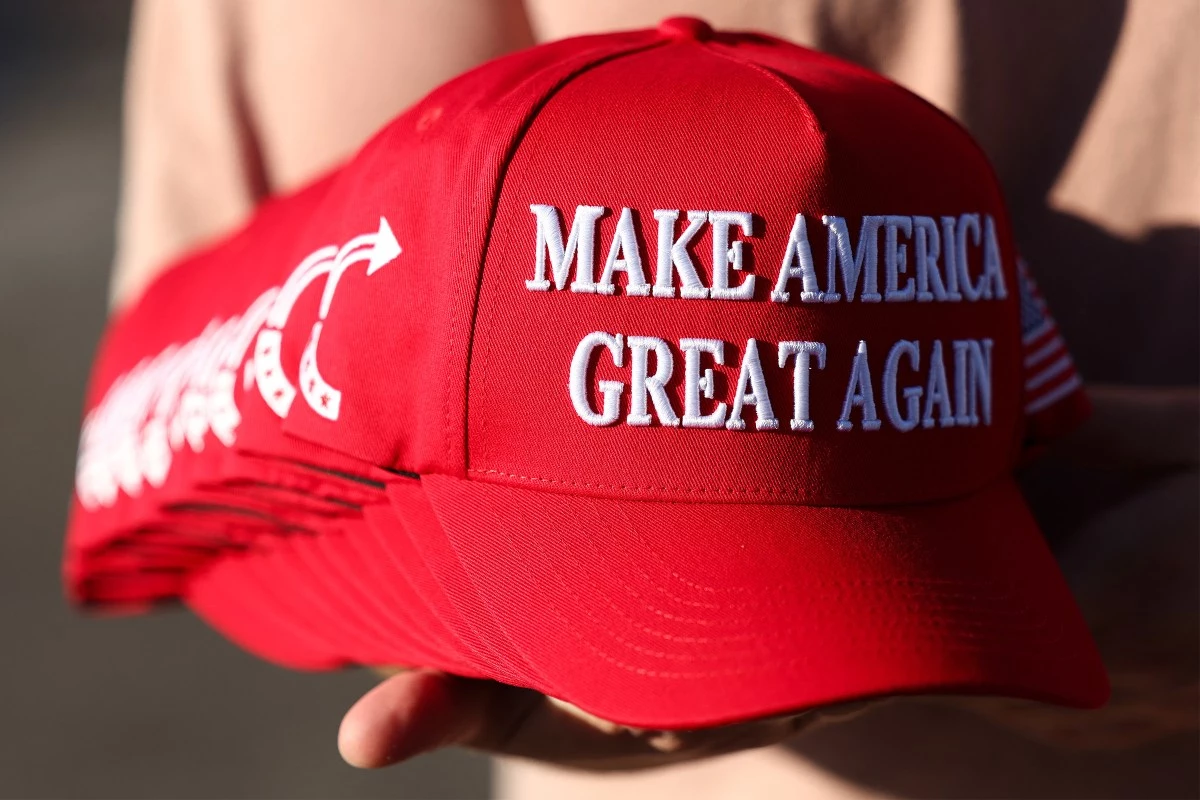
A new paper in the *Journal of Social and Political Psychology* offers a granular look at a question that has shaped public life for nearly a decade: how committed supporters of Donald Trump reconcile serious allegations with continued allegiance. Across three studies conducted in October 2019, December 2019, and mid-2022, researchers collected open-ended responses from 438 self-identified Trump backers, asking them to describe their reactions to accusations ranging from sexual misconduct to insurrection-related charges.
The topline pattern is striking for its consistency and its escalation over time. More than half of respondents denied the allegations outright or redirected attention to policy outcomes, while roughly one-fifth communicated indifference. By 2022, the share describing the charges as fabrications rose above 60 percent—an intensification that suggests not merely stable loyalty, but a hardening interpretive frame.
Lead investigator Cindy Harmon-Jones (Western Sydney University) situates these responses within the classic psychological concept of cognitive dissonance: when people hold two conflicting cognitions—such as “I support this leader” and “this leader is credibly accused of serious wrongdoing”—they often reduce discomfort by rejecting, minimizing, or reinterpreting the dissonant information. The study’s value lies not only in the concept, but in the method: open-ended prompts expose the texture of rationalizations that closed-choice surveys can flatten, making the findings especially relevant to any domain where identity, trust, and reputational threat collide.
Cognitive dissonance in the age of algorithmic media: a feedback loop, not a moment
In earlier eras, dissonance might have been resolved through interpersonal debate, institutional gatekeeping, or gradual opinion change. Today, the research sits inside a modern reality: information ecosystems are engineered for reinforcement. Social platforms, personalized feeds, and partisan media can create conditions where dissonance is not merely reduced—it is preempted by a steady supply of confirmatory narratives and a scarcity of shared factual baselines.
Several dynamics help explain why denial and reframing can become durable rather than temporary:
- Algorithmic curation and selective exposure: Users are more likely to encounter content that aligns with prior beliefs, reducing the frequency and credibility of countervailing information.
- Identity-protective cognition: When political support becomes intertwined with social identity, changing one’s mind can feel like betraying a community rather than updating a belief.
- Narrative substitution: Instead of engaging allegations directly, supporters may pivot to policy performance, perceived economic outcomes, or comparative claims about opponents—an approach the studies repeatedly surfaced.
- Mistrust as a stabilizer: If institutions (courts, media, academia) are framed as illegitimate, then allegations can be dismissed as “manufactured,” allowing loyalty to remain psychologically coherent.
For business and technology leaders, the key takeaway is that belief persistence is increasingly system-supported. The same mechanics that sustain political loyalty can also sustain consumer loyalty, investor narratives, and employee cultures—sometimes even when evidence points in the opposite direction.
Parallels for business leadership: scandals, governance, and the psychology of “staying in”
The most commercially relevant insight is that the study’s patterns resemble what organizations see during corporate crises. When stakeholders have invested—financially, emotionally, or reputationally—they often display a form of psychological inertia. This is familiar in brand ecosystems where customers defend products they’ve committed to, or in companies where employees rationalize leadership failures to preserve pride, stability, or career identity.
In corporate settings, cognitive dissonance can manifest as:
- Internal denial during leadership scandals, where teams minimize allegations to protect morale or avoid destabilizing change
- Investor reframing, emphasizing strategy and performance metrics to discount governance concerns
- Cultural polarization, where employees split into camps that interpret the same facts through incompatible narratives
- Erosion of institutional resilience, as trust in compliance, HR, or board oversight weakens when “truth” becomes factional
The research also underscores a methodological lesson: listening matters as much as measuring. Open-ended responses reveal how people *construct* legitimacy, not just whether they approve or disapprove. For enterprises, this points to the growing importance of advanced text analytics, qualitative intelligence, and AI-driven sentiment mining—not as surveillance tools, but as early-warning systems for reputational drift, employee disengagement, and stakeholder distrust.
Strategic implications for technology platforms and market planning in a polarized economy
Polarization is not only a civic concern; it is a strategic variable. When large blocs of consumers and voters interpret institutional actions as illegitimate, policy becomes more volatile and reputational risk becomes more asymmetric. Companies operating across jurisdictions—and across cultural fault lines—must plan for a world where perception can move faster than adjudication.
Three implications stand out for business and technology strategy:
- Platform design and algorithmic responsibility: If recommendation systems intensify echo chambers, they can inadvertently amplify denial dynamics. Product leaders face rising pressure to incorporate context-rich fact-checking, feed transparency, and explainability features that clarify why users see certain content.
- Governance architecture as a competitive asset: Firms that separate fact-finding from narrative control—through independent audits, empowered ethics offices, and credible whistleblower channels—are better positioned to withstand crises without triggering defensive tribalism among stakeholders.
- Scenario planning for policy whiplash: Persistent denialism and hardened identities can translate into abrupt regulatory swings in trade, antitrust, technology governance, sanctions, and election-related policy. This uncertainty affects capital allocation, supply-chain design, and M&A timing—especially for globally exposed sectors.
The deeper message of the research is not partisan; it is structural. In environments where identity, media systems, and institutional trust interact, facts compete with belonging. Leaders in business and technology cannot assume that transparency alone will change minds—but they can build systems that make trust easier to sustain: governance that is verifiable, platforms that are less reflexively polarizing, and strategies that treat public sentiment as a material risk signal rather than background noise.

 By
By
 By
By
 By
By
 By
By
 By
By
 By
By









