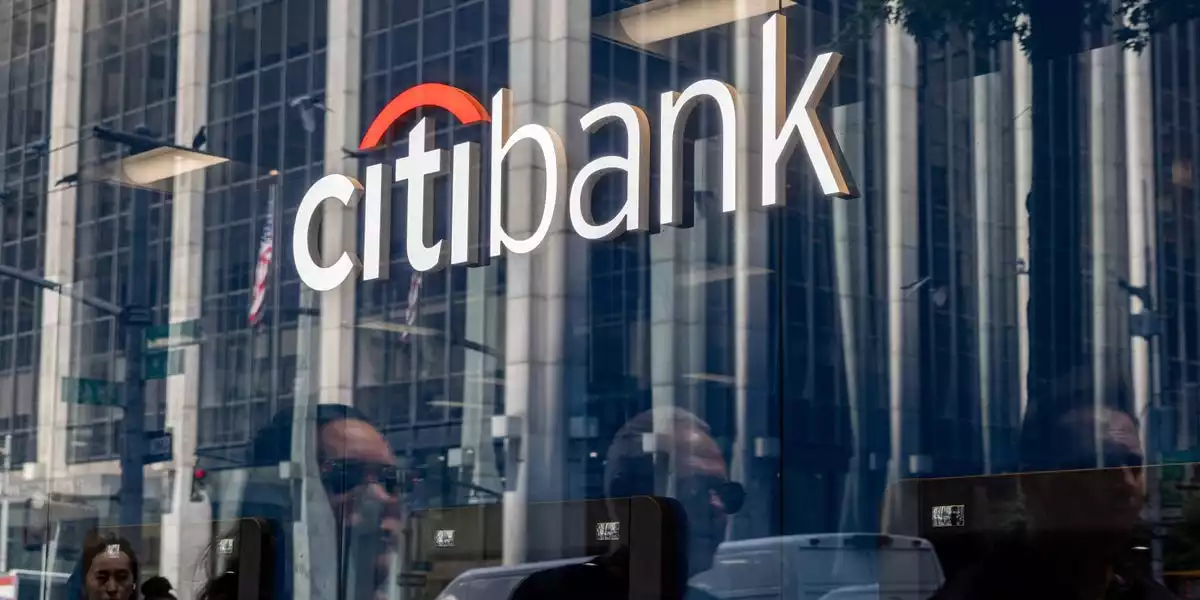

Citi’s AI Infrastructure push signals a new Wall Street battleground for data-center capital
Citi’s decision to launch a dedicated AI Infrastructure group is less a routine coverage tweak and more a statement about where the next decade of corporate and infrastructure finance is headed. With industry estimates pointing to roughly $3 trillion in data-center financing needs by 2030, the bank is explicitly organizing itself around the physical backbone of the AI economy: hyperscale campuses, power and cooling systems, and the real estate and grid interconnections that make advanced compute possible.
The unit—led by Achintya Mangla, recruited from JPMorgan—consolidates expertise that historically sat in separate silos: technology and communications, energy and power, and real estate and structured finance. That integration matters because modern AI data centers are no longer “just” property projects; they are hybrid assets where land, transmission capacity, equipment supply chains, and long-term customer contracts all determine bankability.
Citi’s early momentum is notable. Since forming the group in late February, it has climbed in data-center debt rankings and arranged more than $75 billion in construction financing, including an $18 billion facility tied to the Stargate campus in New Mexico. Those numbers underscore a broader market reality: the AI boom is translating into a financing boom, and the institutions that can underwrite complexity—fast—stand to capture disproportionate fee pools and influence.
—
Why AI compute is reshaping infrastructure finance: hyperscale, modular builds, and edge expansion
The technological driver behind Citi’s move is straightforward: generative AI workloads are compute- and power-intensive, and the industry is still early in the buildout required to serve model training and inference at scale. That buildout is changing what “data-center finance” means, pushing banks to evaluate projects through a multi-disciplinary lens.
Key technology-linked dynamics shaping financing demand include:
- Hyperscale acceleration and power density
– New AI clusters require high-density power distribution, advanced cooling (including liquid cooling), and resilient grid access.
– The result is a pipeline of projects that look increasingly like energy infrastructure as much as commercial real estate.
- Modular and distributed capacity
– Beyond mega-campuses, growth is emerging in modular/containerized facilities and smaller nodes designed to reduce latency.
– Financing models that work for a single large campus may not translate cleanly to geographically dispersed edge deployments, where underwriting must account for smaller ticket sizes, varied local permitting regimes, and different utilization patterns.
- Supply chain constraints and equipment economics
– AI-optimized hardware—GPUs, custom accelerators, high-performance networking—remains capital-intensive and, at times, supply-constrained.
– Banks that can combine construction lending with vendor finance, leasing structures, or equipment-backed facilities may help clients secure allocations and compress deployment timelines—turning financing into a strategic enabler rather than a back-office necessity.
For technology executives, the implication is that capital strategy is becoming part of product strategy. The pace of AI deployment increasingly depends on whether a company can align land, power, equipment procurement, and financing into a synchronized execution plan.
—
The economics behind “lead left”: fee pools, risk pricing, and the next credit cycle test
Citi’s ambition to win more “lead left” roles—the top-left position in syndicated loan league tables—highlights the competitive economics of this market. Lead arrangers typically gain:
- Higher origination and structuring fees
- Greater influence over covenants, pricing, and syndication strategy
- Follow-on opportunities in refinancing, hedging, capital markets issuance, and advisory
Yet the same forces creating opportunity also raise the bar on risk management. Data centers are capital-intensive, and AI-centric builds add new underwriting variables. In a higher-for-longer rate environment, the cost of debt can materially affect project returns, making credit discipline and structure design central to winning mandates without underpricing risk.
Core financial considerations now shaping AI data-center lending include:
- Funding mix innovation
– The scale of capex is pushing deals toward hybrid structures: bank debt plus project finance, institutional capital, infrastructure debt funds, and potentially asset-backed securitization tied to contracted cash flows.
– Banks that can “orchestrate” capital—rather than simply lend—may become preferred partners.
- Tenant concentration and lease durability
– Many hyperscale projects are effectively single-tenant or highly concentrated exposures.
– Underwriting must stress-test lease terms, renewal probabilities, counterparty strength, and what happens if a build-to-suit asset becomes mismatched to future compute requirements.
- Construction and delivery risk
– Timelines are sensitive to interconnection queues, transformer availability, permitting, and contractor capacity.
– Execution risk is not a footnote; it can be the difference between a stabilized asset and a stranded one.
As competition intensifies, pricing pressure is likely. Expect more co-lead structures, tighter spreads in marquee deals, and creative fee-sharing—especially as banks and nonbank lenders compete to be embedded early in the development cycle.
—
Citi’s strategic bet under Jane Fraser: integrated coverage, talent acquisition, and ESG-linked capital
Strategically, this initiative aligns with CEO Jane Fraser’s broader effort to focus Citi on areas where it can be structurally differentiated. A dedicated AI Infrastructure group suggests a deliberate choice: build a franchise around a fast-growing, technically complex segment where cross-sector integration is itself a competitive advantage.
Two elements stand out.
First, talent as a moat. By recruiting senior bankers from major competitors, Citi is not only buying relationships—it is importing underwriting playbooks, market intelligence, and execution muscle in a segment where learning curves are steep and credibility is hard-won.
Second, energy and sustainability are now inseparable from AI finance. Large AI campuses face scrutiny over electricity demand, water usage, and carbon footprint. This creates an opening for financing structures that reward measurable efficiency and decarbonization, including:
- Sustainability-linked loans tied to metrics such as PUE (power usage effectiveness)
- Renewable procurement and grid-support commitments
- Project designs that improve heat reuse, cooling efficiency, or on-site generation integration
For the industry, Citi’s move is a marker: AI infrastructure is becoming a distinct asset class with its own underwriting norms, capital stack templates, and competitive league tables. For corporate buyers of compute, it’s also a reminder that the next advantage may come not only from better models—but from securing the financing, power, and physical capacity to run them at scale.

 By
By
 By
By

 By
By

 By
By

 By
By