
A shattered bus shelter and a familiar question: who bears the risk in sidewalk automation?
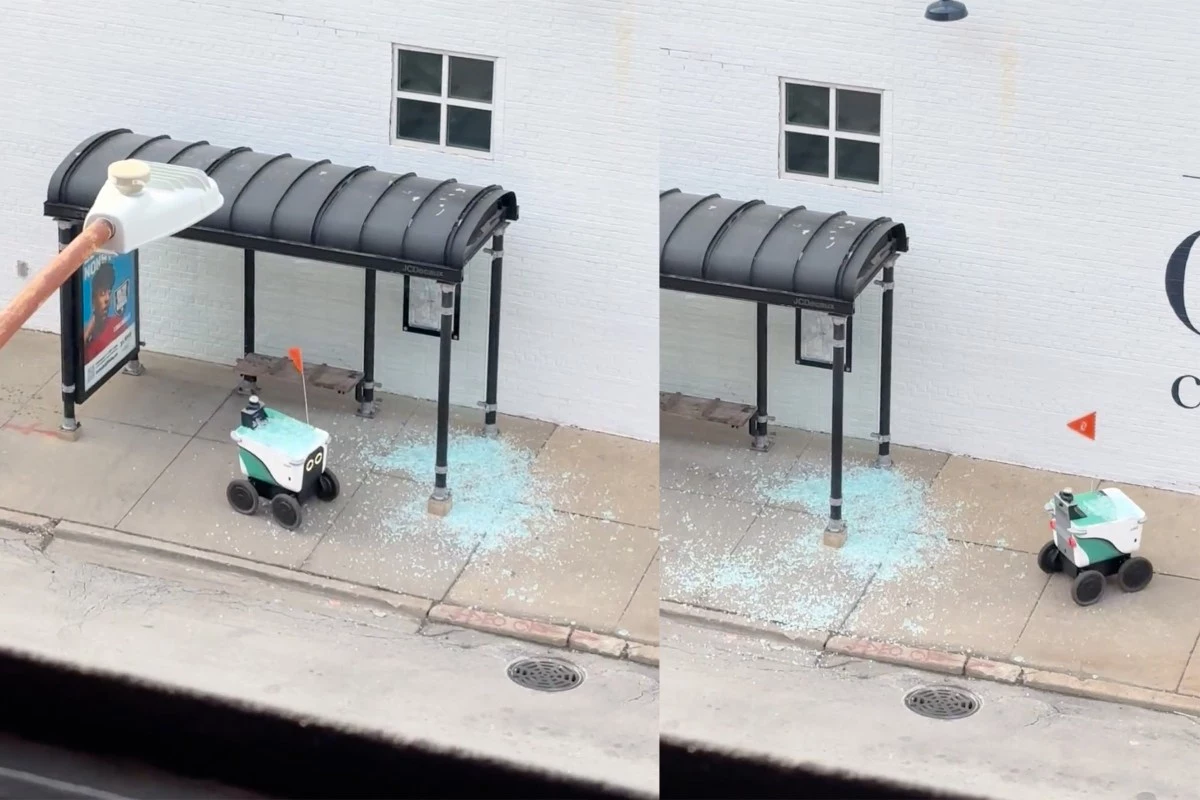
A short video circulating on r/chicago has become a fresh flashpoint in the debate over autonomous delivery robots in Chicago. The footage shows a Serve Robotics delivery vehicle positioned near a bus shelter with shattered glass—a visual that naturally invites inference, even as it stops short of proving causation. What has resonated most with local observers is not only the apparent incident itself, but the reported aftermath: a Serve employee retrieved the robot without cleaning up, leaving JCDecaux—the shelter’s owner and a major urban street-furniture operator—to intervene.
This is the kind of moment that shapes public perception faster than any product demo. In dense cities, the “last mile” is not just a logistics problem; it is a shared civic space where liability, accessibility, and trust are negotiated in real time. Chicago has already shown it is willing to draw hard lines. The city’s 1st Ward ban on robot deliveries—following survey results indicating over 80% opposition—signals that local tolerance can collapse quickly when residents feel they are absorbing the downsides of experimentation.
The Chicago episode also lands amid a broader pattern of highly shareable mishaps, including the recent example of a Coco delivery robot reportedly ending up on Miami train tracks. Each incident becomes a proxy battle over whether these machines are ready for complex streets—or whether they are being deployed ahead of social and technical maturity.
—
Why dense urban streets expose the limits of today’s delivery robot technology
Autonomous sidewalk robots are often marketed as a solved problem: small vehicles, low speeds, short routes. Yet cities like Chicago stress every weak seam in the stack—perception, planning, mechanical robustness, and human interaction.
Key technical fault lines highlighted by the Chicago discussion include:
- Perception and navigation gaps in cluttered environments
Most delivery robots rely on combinations of lidar, stereo cameras, and ultrasonic sensors. These systems can perform well in controlled settings, but urban sidewalks introduce constant edge cases: reflective surfaces, crowds, pets, construction barriers, curb cuts, and unpredictable pedestrian behavior. Even minor latency in object recognition or misclassification can produce awkward stops, sudden turns, or contact with fixed infrastructure.
- Reliability, compliance, and fail-safe behavior
Observers noted a “jerking” motion in the video. Whether that reflects a control-loop issue, traction loss, or a recovery routine, it points to a central requirement for scaled deployment: graceful degradation. In a public right-of-way, robots need robust emergency-stop responsiveness, mechanical compliance that reduces harm on contact, and real-time anomaly detection that errs on the side of safety.
- Operational maturity: incident response is part of the product
The retrieval-without-cleanup narrative matters because it reframes the robot as not merely a device, but a participant in city operations. A credible program needs clear protocols for:
– scene safety and cleanup
– rapid reporting to property owners and city agencies
– transparent documentation of what happened and why
In effect, the technology challenge is no longer just autonomy—it is autonomy plus accountability, delivered at the speed of social media.
—
The economics behind “cheaper last-mile delivery” look different after property damage and public backlash
The business case for autonomous delivery typically rests on a simple promise: reduce labor costs and improve unit economics for short trips. But the Chicago incident illustrates how quickly the cost equation can change when deployments move from campuses and controlled districts into complex downtown corridors.
Several economic pressures are converging:
- Property-damage liability and insurance drag
Even when causation is unclear, incidents create a liability cloud. The downstream costs can include claims, legal review, higher premiums, and contractual concessions to municipalities and property owners. For operators, reputational risk becomes a line item—because it can slow permits, constrain routes, or trigger bans.
- Labor displacement and political resistance
Robots are not entering a neutral market. In many cities, delivery work—often performed by low-paid couriers—sits at the intersection of labor advocacy and local politics. Where robots are perceived as direct substitutes, opposition can harden into policy, especially in labor-friendly constituencies.
- Scaling challenges from pilots to real streets
Sidewalk robots often succeed in low-entropy environments: campuses, business parks, planned communities. Dense urban neighborhoods introduce:
– higher pedestrian volumes
– more intersections and curb complexity
– more “unknown unknowns” that require human intervention
The result is that the true cost per delivery may rise—not fall—once human teleoperation, retrieval, and incident handling are fully accounted for.
The market signal here is subtle but important: automation savings are only durable if the externalities are contained. If cities and residents feel they are subsidizing risk—through clutter, safety concerns, or cleanup—political friction becomes a recurring operating cost.
—
What a workable path forward looks like: governance, trust, and measurable safety performance
Chicago’s debate is less about a single robot and more about the conditions under which autonomous delivery can earn a “social license” to operate. The most credible strategies emerging from this episode emphasize partnership and transparency as much as engineering.
Practical next steps that could reshape outcomes include:
- Municipal and infrastructure partnerships from day one
JCDecaux’s involvement underscores that sidewalk robotics touches a web of stakeholders: transit agencies, street-furniture operators, disability advocates, and adjacent businesses. Structured partnerships can enable:
– designated operating zones or “robot corridors”
– shared incident-response playbooks
– clear liability allocation when infrastructure is impacted
- Privacy-by-design commitments that are easy to verify
Onboard cameras raise persistent concerns about surveillance. Trust will depend on plain-language policies and technical safeguards such as:
– edge processing where feasible (minimizing data retention)
– strict limits on identifiable imagery storage
– auditable access controls and retention schedules
- Regulatory engagement anchored in metrics, not marketing
Cities are increasingly receptive to pilots only when companies can produce transparent safety metrics: disengagement rates, near-miss reporting, incident response times, and third-party audits. Without that, bans like the 1st Ward’s become the default risk-control mechanism.
Autonomous delivery robots may still find a durable role in urban logistics, but the Chicago moment clarifies the bar: the technology must not only navigate sidewalks—it must navigate civic expectations, property rights, and public trust with equal precision.

 By
By

 By
By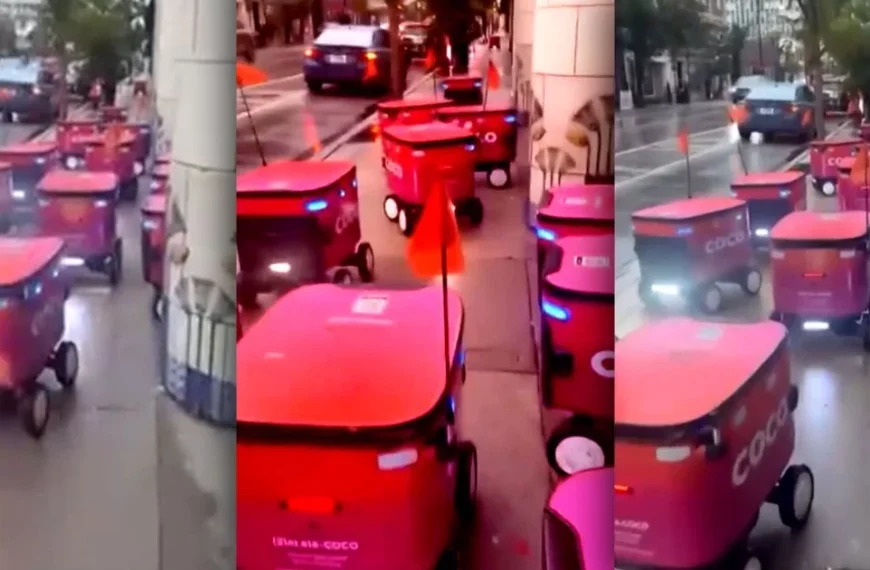
 By
By
 By
By

 By
By