


California’s proposed wealth tax and the new geography of capital mobility
California’s newly proposed wealth tax is doing more than igniting a policy debate—it is accelerating a familiar but newly intensified phenomenon: tax-policy arbitrage among ultra-high-net-worth individuals. In a post-pandemic economy where executive work can be partially unbundled from physical headquarters, the friction of relocation has fallen, while the stakes of state-level fiscal decisions have risen.
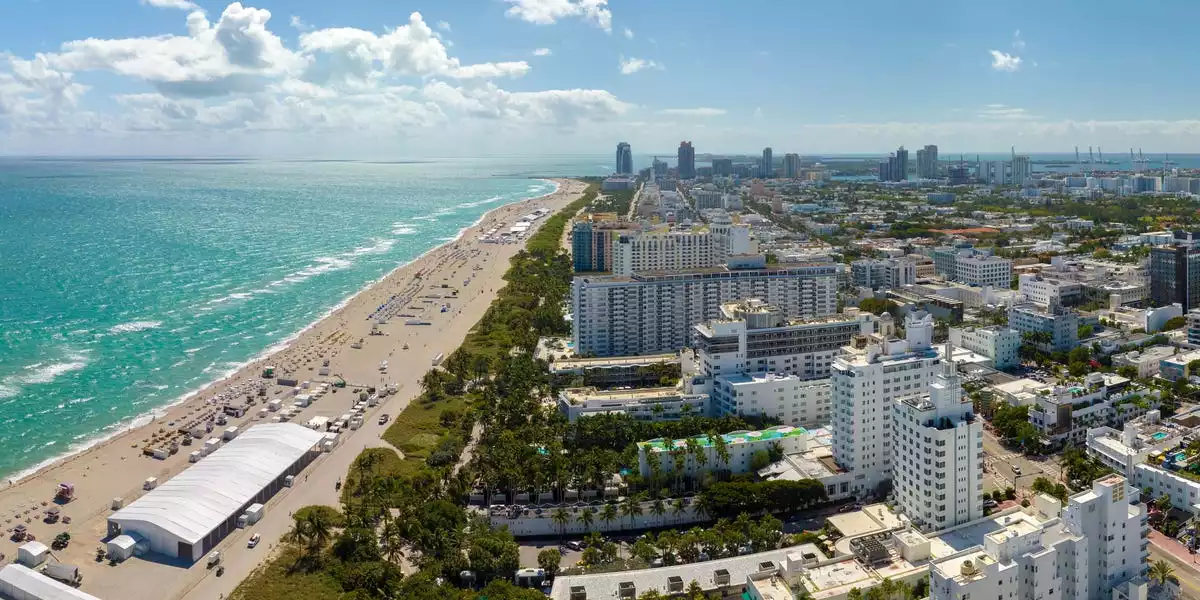
South Florida—especially Miami and Miami-Dade County—is emerging as a primary beneficiary. The appeal is straightforward and structural: no state income tax, a business-friendly posture, and a regulatory environment perceived as more permissive than coastal blue-state peers. For billionaires and founders whose wealth is often concentrated in equity and other mobile assets, the difference between jurisdictions is not merely marginal; it can be existential to long-term planning, liquidity strategy, and intergenerational wealth transfer.
This is not simply a story about individuals “moving.” It is a story about how modern wealth behaves—globally aware, politically sensitive, and increasingly willing to treat geography as a portfolio choice. The result is a competitive dynamic that resembles an arms race among states: high-tax jurisdictions seeking new revenue tools, and low-tax jurisdictions positioning themselves as safe harbors for capital, influence, and high-end consumption.
Miami’s super-prime housing boom signals a new asset class—and new vulnerabilities
The clearest data point is real estate. Since 2018, Miami-Dade County’s sales of single-family homes over $30 million have jumped from one to 19, a near 20-fold increase that reflects more than cyclical luxury demand. It suggests the formation of a super-prime micro-market increasingly driven by global wealth flows rather than local fundamentals.
High-profile purchases by tech leaders such as Larry Page, Mark Zuckerberg, and Sergey Brin have amplified Miami’s status as a destination for the ultra-wealthy, while also reshaping price discovery. In this tier, housing behaves less like shelter and more like a store of value, a status instrument, and a strategic domicile—a combination that can detach valuations from local income levels and traditional supply-demand constraints.
Miami’s geography intensifies this effect. Fragmented by water and defined by enclaves, the region offers a physical architecture for exclusivity. Islands such as Indian Creek—often dubbed “Billionaire Bunker”—function as gated micro-jurisdictions where privacy, security, and proximity to peers become part of the asset’s premium.
Yet this boom carries risks that sophisticated buyers will not ignore:
- Liquidity sensitivity: Ultra-luxury markets can turn quickly when capital markets tighten or risk appetite changes.
- Local inequality pressures: Rising valuations can cascade into broader affordability challenges, pushing essential workers farther from job centers.
- Public-service strain: Higher property values may expand tax bases, but they can also increase demand for infrastructure, policing, and resilience investments.
- Climate exposure: Coastal luxury assets sit at the intersection of prestige and vulnerability, with sea-level rise and hurricane risk increasingly priced into insurance and long-term planning.
Miami’s super-prime surge is therefore both a vote of confidence and a stress test—of governance capacity, infrastructure readiness, and the city’s ability to manage growth without fracturing its social compact.
From “Billionaire Bunker” to innovation corridor: tech, finance, and crypto converge
Miami’s ambition to be more than a luxury playground is central to this migration narrative. The city has marketed itself as a hub for finance, technology, and crypto, and the arrival of billionaire households can accelerate that trajectory—if it translates into durable institutions rather than episodic deal-making.
Corporate relocations and expansions—often cited in the same breath as Miami’s rise—signal the broader bet: firms and investors want a place that combines capital access, lifestyle appeal, and regulatory flexibility. Moves and footprints associated with companies like Citadel and Palantir reinforce the perception that Miami is competing not only with California and New York, but also with Austin, Dallas, Nashville, and Las Vegas for the next decade’s corporate geography.
The technology implications are nuanced. A critical mass of founders and investors can create:
- Informal networks that become formal ecosystems: private gatherings can evolve into venture funds, accelerators, and repeatable startup pipelines.
- A digital finance laboratory: Miami’s pro-crypto posture and openness to blockchain experimentation could position it as a test bed for tokenized assets, fintech, and decentralized finance (DeFi).
- Cross-border leverage: Miami’s cultural and commercial ties to Latin America make it a natural gateway for regional headquarters, M&A, and capital formation spanning the Americas.
But the same forces can also produce a two-track city: one optimized for global wealth, another struggling with workforce housing, transit capacity, and skills development. The long-term question is whether Miami becomes an innovation district with broad-based opportunity—or a high-gloss enclave where the economic upside is concentrated and politically brittle.
The next phase: institutional durability, social license, and climate-resilient competitiveness
The influx of ultra-wealth is poised to reshape Miami’s economic, cultural, and political landscape, particularly because this cohort is accustomed to influence, responsiveness, and tailored governance. That reality can be productive—unlocking philanthropic capital, funding civic projects, and accelerating modernization—or destabilizing if it deepens perceptions of unequal access and preferential treatment.
What will determine whether this moment becomes a lasting transformation is institutionalization. Miami’s opportunity is to convert high-profile arrivals into anchored commitments:
- Local headquarters and permanent campuses, not just secondary residences
- Workforce pipelines tied to universities, community colleges, and employer-led training
- Regulatory clarity and innovation, including sandboxes for fintech and digital assets that attract builders while protecting consumers
- Infrastructure and climate resilience as a civic value proposition—elevated roadways, flood mitigation, hardened utilities, and insurance innovation
At the same time, California’s wealth tax debate is likely to echo nationally. Other high-tax states will watch the outflows; low-tax states will refine their incentives; and cities will increasingly compete on a blended package of tax policy, quality of life, regulatory posture, and climate preparedness.
Miami’s current wave of billionaire migration is not merely a relocation trend—it is a live demonstration of how fast capital can reorganize itself around policy signals. The cities that win the next chapter will be those that can translate that mobility into durable growth, credible resilience, and a civic bargain that holds even when the headlines move on.

 By
By
 By
By

 By
By
 By
By

 By
By
 By
By







