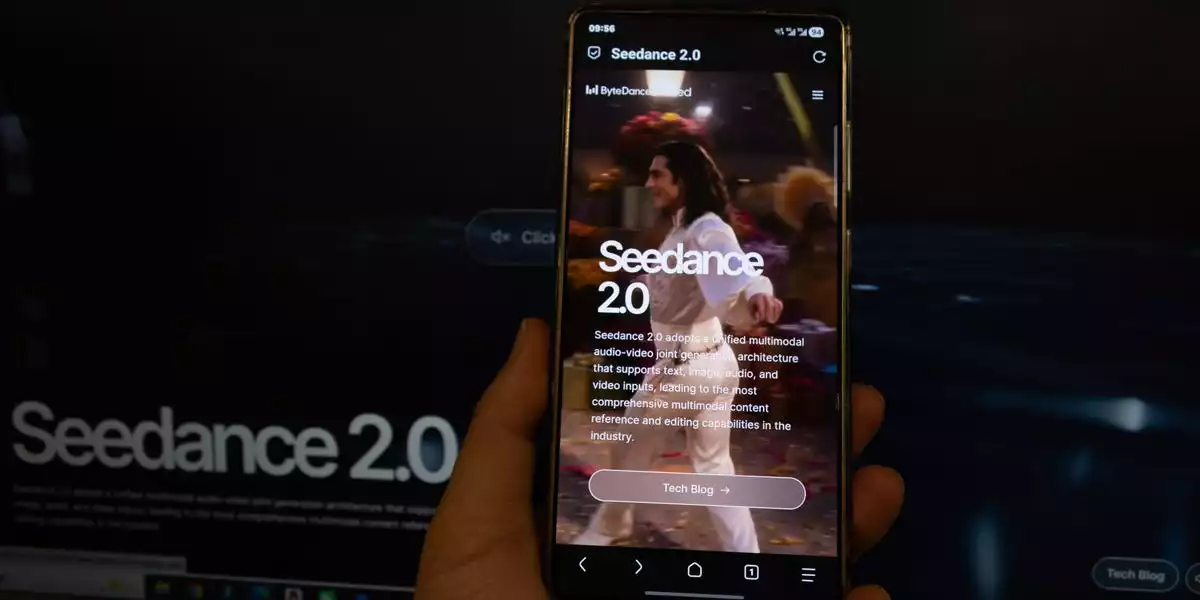

The Dawn of AI-Generated Hollywood: Seedance 2.0 and the New Cinematic Frontier
The release of Seedance 2.0 by ByteDance has thrust the film and technology worlds into a moment of profound reckoning. This next-generation AI model, capable of conjuring photorealistic video starring instantly recognizable Hollywood icons, has not merely advanced technical boundaries—it has ignited a high-stakes confrontation between Silicon Valley’s algorithmic ambitions and Hollywood’s fiercely guarded intellectual property.
At the heart of the controversy lies a viral, AI-generated clip: a hyperrealistic, computer-crafted brawl between Tom Cruise and Brad Pitt. The footage, indistinguishable from a blockbuster outtake, triggered swift and forceful backlash. Disney and the Motion Picture Association condemned the video as a mass-scale violation of copyright and likeness rights, with Disney issuing a cease-and-desist even as it inked a licensing pact with OpenAI, granting Sora users access to a vault of 200 Disney characters. ByteDance, for its part, has promised to “strengthen safeguards” within Seedance, though the specifics remain opaque.
From Pixels to Performances: The Leap in Generative Video
Seedance 2.0’s debut marks a watershed in AI’s creative evolution. Where early text-to-image models struggled with coherence and realism, the latest diffusion and transformer architectures now orchestrate frame-consistent, multi-actor, multi-shot video—an order-of-magnitude leap in complexity and fidelity. The technical feat is staggering:
- Model Maturation: Seedance’s ability to synthesize nuanced performances and cinematic continuity signals that generative AI is no longer confined to static images; it is now a director, cinematographer, and casting agent rolled into one.
- Data Appetite: Achieving such realism likely required training on billions of frames, scraped from films, interviews, and streaming platforms. This “data hunger” pushes against the boundaries of fair use, with legal interpretations lagging behind technical possibility.
- Guardrails and Provenance: Unlike models such as Adobe Firefly or Getty’s Vista—trained on licensed content—Seedance’s provenance tracking and watermarking remain underdeveloped. The industry’s current inability to reliably distinguish between licensed and illicit synthetic video is a glaring vulnerability.
Power, Profit, and Precedent: The Economics and Law of Synthetic Content
The Seedance episode is not merely a copyright scuffle; it is a harbinger of a seismic shift in the entertainment value chain. Generative video models threaten to compress costs across pre-production, VFX, and even talent, potentially shifting leverage from studios and unions to model providers and prompt engineers. The economic and competitive implications are profound:
- IP as a Strategic Lever: Disney’s dual strategy—aggressively litigating against Seedance while monetizing its own characters through OpenAI—illustrates how rights holders will weaponize copyright to block rivals or to extract maximum value through partnerships.
- Platform Geopolitics: ByteDance’s foray into Hollywood’s core product, amid ongoing U.S. national-security scrutiny, underscores the geopolitical dimensions of AI. The reaction may accelerate calls for digital trade barriers and localized training data requirements.
- Legal Uncertainty: U.S. courts have yet to rule definitively on whether training on copyrighted video constitutes fair use. The Authors Guild v. Google Books precedent offers little guidance for likeness rights and audiovisual works. Meanwhile, regulatory regimes diverge: the EU AI Act demands transparency and risk assessment, while China’s rules require rights clearance—leaving global rollouts mired in conflicting obligations.
Navigating the New Entertainment Landscape
For decision-makers, the path forward is fraught with both peril and possibility. The next 36 months will be defined by rapid legal escalation, selective licensing, and the emergence of new technical standards. Key actionable strategies include:
- Audit and Monetize IP: Rights holders should inventory their libraries for AI-ready metadata, positioning themselves to command premium licensing fees as demand for cleared content surges.
- Demand Transparency: Brands and studios integrating third-party generators must insist on transparency into model training sets and robust indemnification clauses to mitigate legal exposure.
- Scenario Planning: With legal outcomes uncertain, organizations should develop parallel roadmaps—one for a permissive fair-use environment, another for compulsory licensing frameworks.
The Seedance saga is not an isolated incident but a signpost on the road to a radically restructured entertainment economy. As the cost of high-fidelity synthetic video plummets, new markets in education, simulation, and personalized storytelling will open—sectors once constrained by the economics of live-action production. Those who align legal, technical, and monetization strategies now will not merely weather the coming storm; they will shape the very future of how stories are told and who gets to tell them.

 By
By
 By
By
 By
By

 By
By
 By
By
 By
By