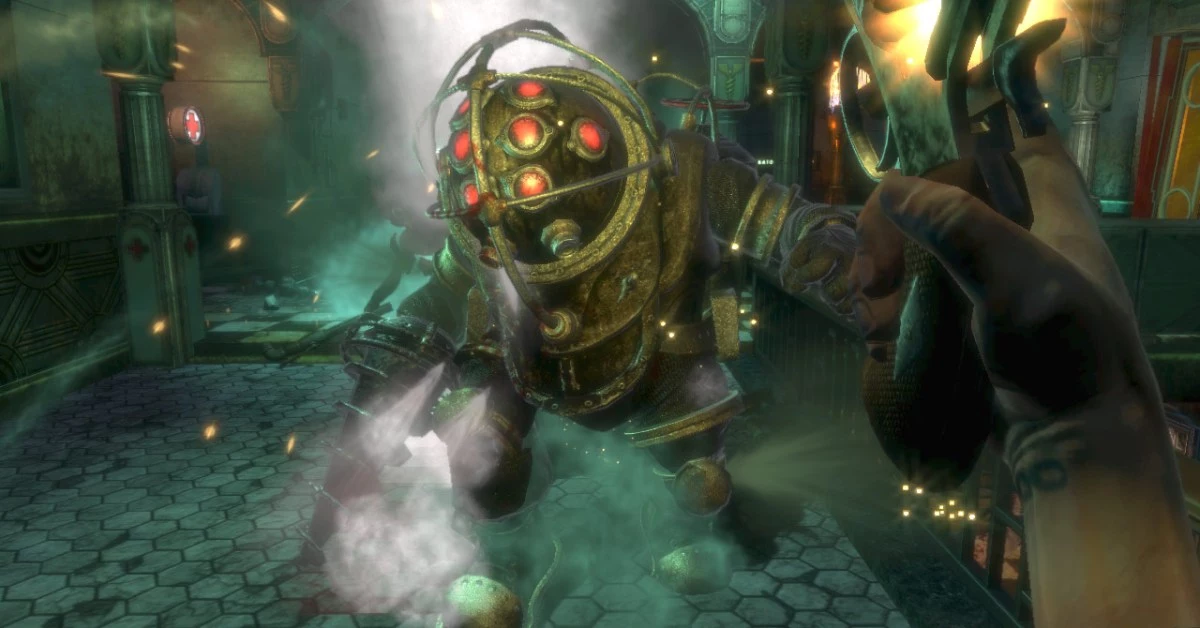

Navigating the Crossroads: BioShock’s Delay and the Shifting Terrain of AAA Game Development
The recent restructuring at Take-Two Interactive’s Cloud Chamber studio—marked by a significant workforce reduction, a delayed BioShock release, and the appointment of Rod Fergusson as project lead—serves as a revealing lens into the evolving landscape of AAA game development. This moment is not merely a studio’s internal reckoning; it is a reflection of the sector’s mounting pressures, from technological upheaval to capital discipline and the relentless pursuit of event-level franchises.
Complexity, Contraction, and the New Economics of Game Production
Cloud Chamber’s decision to cut over 80 roles, roughly a third of its workforce, is emblematic of a broader industry pivot. The AAA sector, once defined by ever-expanding teams and ballooning budgets, is now contending with the hard realities of rising production costs and investor scrutiny. With the Federal Reserve’s policy rates hovering near 5%, the net present value of a $150–200 million, multi-year project like BioShock erodes rapidly. Delays, while painful, become a lever for smoothing cash flow and protecting margins—especially as publishers recalibrate for profitable resilience rather than unchecked growth.
The extension of BioShock’s release horizon past fiscal year 2027 underscores the high-stakes calculus at play. Each year of delay not only increases opportunity cost but also risks ceding ground to emergent IPs and live-service juggernauts such as NBA 2K and GTA Online. The tension between nurturing a legacy franchise and chasing new revenue streams will shape Take-Two’s strategic posture through the next console cycle.
Technological Ambition Meets Organizational Flux
Underpinning these financial maneuvers is a deepening technological challenge. Cloud Chamber’s reported migration to Unreal Engine 5 is illustrative: mastering bleeding-edge toolchains like Nanite and Lumen can dramatically increase vertical-slice burn rates, especially as teams grapple with the demands of AI-driven NPCs and expansive, immersive environments. Paradoxically, downsizing may offer a path to greater focus, curbing feature sprawl and restoring architectural coherence to a project at risk of losing its identity.
Yet, this contraction is not without peril. The loss of institutional memory—particularly around BioShock’s intricate, emergent gameplay systems—could hamper progress. Here, the appointment of Rod Fergusson, a veteran renowned for rescuing troubled AAA projects, signals a tactical shift. By leveraging a leaner core team augmented with specialized co-development partners, Cloud Chamber may sidestep the pitfalls of overextension while tapping external expertise—a model increasingly favored across the industry.
Strategic Ripples: Portfolio Bets, Transmedia Synergy, and Labor Dynamics
BioShock’s protracted development is more than a single title’s saga; it is a bellwether for the sector’s broader realignment. As development budgets soar and player attention fragments across platforms, publishers are forced to bet big on a shrinking slate of blockbuster releases—each akin to a Hollywood tentpole. Missing the market window can render years of R&D inert until launch, intensifying pressure to get it right.
The shifting sands of industry consolidation further complicate the picture. With Microsoft’s acquisition of Activision and Sony’s aggressive PC strategy, the competitive landscape grows ever more forbidding. Displaced talent from Cloud Chamber may become prized assets for mid-tier publishers seeking to bolster their narrative credentials, fueling a fresh wave of M&A activity and talent arbitrage.
Meanwhile, the specter of transmedia expansion looms large. Rumors of a Netflix BioShock adaptation highlight the stakes: a successful game relaunch can anchor cross-media deals, while a misstep risks eroding brand equity. Take-Two’s leadership pivot is a tacit acknowledgment that the value of the BioShock IP now extends well beyond the confines of the console.
Labor dynamics, too, are shifting. Industry-wide layoffs are catalyzing unionization efforts, particularly in North America. How Take-Two manages severance and contractor relationships will be closely watched, potentially setting precedents that reverberate across U.S. studios in the coming years.
The Road Ahead: Lessons and Leverage Points for an Industry in Flux
For publishers, the BioShock episode is a clarion call to diversify portfolios and experiment with modular production models—episodic releases, cloud streaming, and earlier monetization could mitigate risk and smooth revenue volatility. Platform holders and subscription services, meanwhile, may seize the opportunity to fill the AAA content gap left by BioShock’s delay through aggressive co-marketing or exclusivity deals.
Investors would do well to monitor key performance indicators—headcount, milestone pacing, and outsourcing ratios—as leading signals of project health. For displaced talent, the current turbulence presents a rare window: immersive-sim expertise is in high demand among emerging studios targeting VR, AR, and cloud-native experiences.
As the industry stands at this inflection point, the BioShock restructuring is less a retreat than a recalibration. By tightening scope and entrusting creative stewardship to a proven closer, Take-Two seeks to safeguard one of gaming’s most storied franchises without losing sight of fiscal reality. The outcome will resonate far beyond a single studio, shaping the strategies and fortunes of the entertainment software sector for years to come.

 By
By
 By
By
 By
By
 By
By
 By
By
 By
By

 By
By