


When a Media Empire Meets a Subversive Script: The Murdoch–Mechanic Fault Line
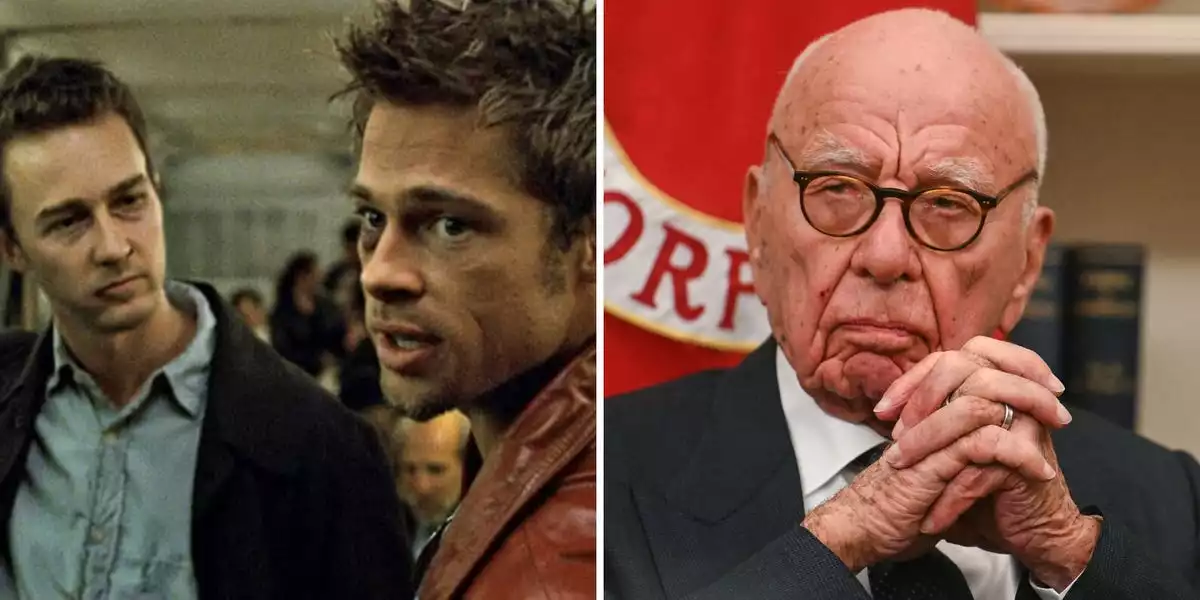
Bill Mechanic’s recollection of his confrontation with Rupert Murdoch over David Fincher’s *Fight Club* offers a rare, high-resolution view into how creative governance collides with corporate oversight inside a major studio. At the time, 20th Century Fox was not merely a film factory; it was a strategic asset within a broader conglomerate—one whose principal, Murdoch, reportedly viewed the film’s anti-consumerist provocation as both morally suspect and commercially hazardous, particularly amid heightened cultural sensitivity following the Columbine tragedy.
The dispute underscores a structural reality that still defines entertainment economics: studio leadership often functions as a buffer layer between artists pursuing cultural impact and owners optimizing for reputational stability, political risk management, and predictable returns. Murdoch’s skepticism—framed around “morality” and marketability—reads less like a single executive’s taste and more like a governance reflex: when a narrative threatens to destabilize mainstream norms, the perceived downside can outweigh even a plausible upside.
Mechanic’s defense of the film, alongside Fincher, also highlights the role of the senior studio executive as a translator and advocate—someone who must argue that provocative storytelling can be a durable asset, even when short-term optics look unfavorable. That advocacy becomes especially consequential when the content is designed to unsettle rather than reassure.
“Brand Demolition” as Strategy: The Fox Plaza Tower Moment
Mechanic’s reported suggestion to include Fox’s own Plaza Tower in the film’s climactic destruction is more than a colorful anecdote. It functions as a case study in symbolic brand disruption—a willingness to let a corporate emblem be implicated in the story’s critique. In modern brand architecture terms, it resembles an early form of what marketers now recognize as high-risk, high-attention positioning: allowing the brand to be part of the cultural argument rather than standing safely outside it.
This is where the *Fight Club* episode becomes instructive beyond Hollywood. In today’s business and technology landscape, companies routinely navigate the tension between:
- Brand safety (avoiding controversy that could trigger advertiser, regulator, or stakeholder backlash)
- Cultural relevance (earning attention in an environment where safe messaging is often ignored)
- Narrative authenticity (the credibility that comes from acknowledging the anxieties of the moment)
Murdoch’s reputed preference for more status-quo affirming, sensationalist media is also a reminder that portfolio curation can be shaped by a small number of powerful decision-makers. That concentration of taste and veto power is not unique to legacy studios; it echoes in modern streaming platforms and tech companies where a handful of executives can tilt an entire content slate—or product roadmap—toward caution or provocation.
For contemporary media firms, the lesson is less about choosing “edgy” over “safe,” and more about building resilient decision systems that don’t depend on one person’s risk tolerance. Diversification across genres, tones, and audience segments becomes a governance tool, not just a creative one.
From Box Office Underperformance to Long-Tail Dominance
*Fight Club*’s initial underperformance—and its reported role in Mechanic’s departure from Fox in 2000—illustrates a persistent measurement problem: opening-weekend economics often fail to capture cultural half-life. The film’s later evolution into a cult phenomenon demonstrates the long-tail value of content that is polarizing at release but enduring in conversation.
In the current era of streaming, social media discourse, and algorithmic discovery, the long tail is not an afterthought—it is frequently the main event. A title can move from “commercial disappointment” to “library cornerstone” as audiences recontextualize it over time, and as distribution channels multiply. What once depended on DVD word-of-mouth now compounds through memes, video essays, reappraisals, and community identity.
The announced 4K reissue as a one-night event, followed by digital and Blu-ray editions, reflects a matured monetization playbook that studios increasingly apply to catalog IP:
- Eventization to restore scarcity in an on-demand world (limited screenings, premium formats)
- Remastering and reformatting to create new reasons to pay for old assets
- Coordinated release windows that turn a library title into a multi-channel revenue funnel
- Collector economics that reward fandom with tangible ownership in an era of licensing uncertainty
This strategy also speaks to theatrical exhibition’s search for new footing. One-night rereleases of culturally significant films are not simply nostalgia plays; they are attempts to rebuild cinema-going as a premium, communal product—closer to live events than routine consumption.
What the Fight Club Saga Signals for Streaming Platforms and Tech-Led Studios
The Mechanic–Murdoch clash reads today like a prototype for the dilemmas facing Netflix, Amazon, Disney+, and other platform-scale content operators: how to greenlight provocative IP while protecting brand equity in a hyper-reactive media environment. The difference is that modern executives have a broader toolkit—though not necessarily clearer answers.
Where 1999 relied heavily on executive instinct and limited audience testing, today’s decision-making can incorporate:
- Real-time sentiment analysis across social platforms
- Predictive modeling for churn, backlash, and virality
- Geo-targeted marketing and staggered releases to manage reputational risk
- Scenario planning that treats controversy as a variable to be priced, not merely avoided
Yet the core tension remains unchanged: certain stories are designed to challenge the consumer order, and that can be uncomfortable for corporations whose business models depend on it. *Fight Club* endures partly because it articulates anxieties that persist—about identity, consumption, alienation, and institutional trust—making it perpetually “current” even as the economic machinery around it evolves.
Mechanic’s experience also offers a career-level insight for modern media leadership: portfolio resilience matters. Executives who can move across genres, formats, and business models are better positioned to survive strategic misalignment with ownership—and to capitalize later when yesterday’s risky bet becomes today’s indispensable asset. The industry rarely rewards certainty; it rewards the capacity to recognize cultural durability before the metrics catch up.

 By
By
 By
By
 By
By
 By
By
 By
By


 By
By







