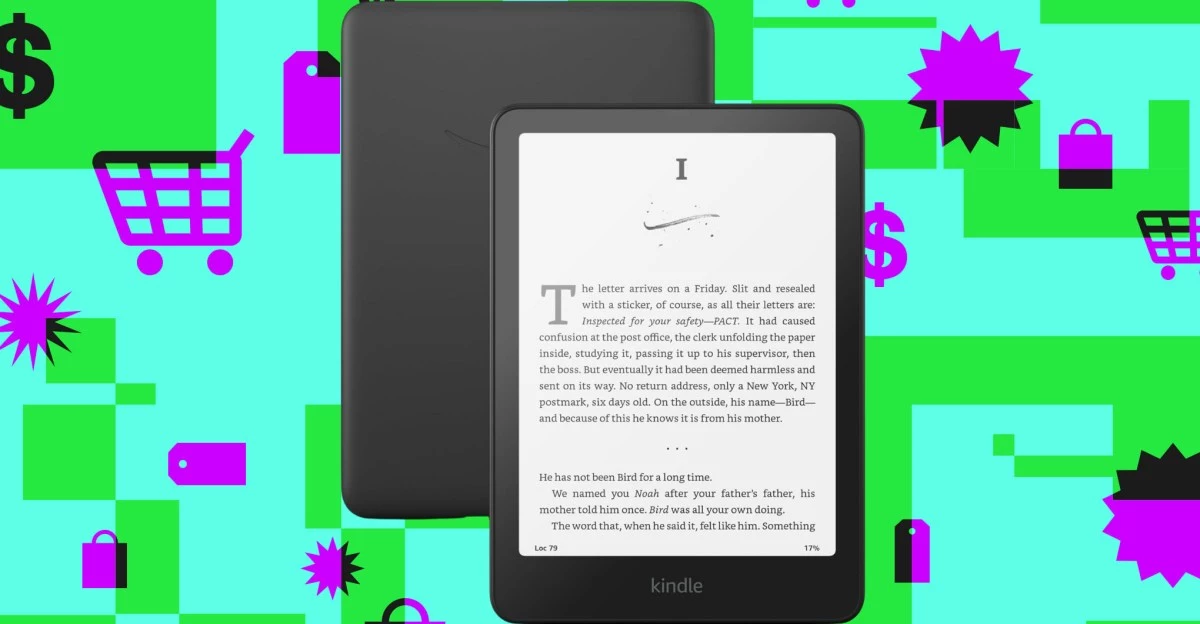

Amazon’s Kindle Paperwhite discount signals a mature-device playbook: comfort, durability, and ecosystem gravity
Amazon’s steepest Kindle Paperwhite price cut of the year—$134.99 for the 12th-generation Kindle Paperwhite (16 GB, ad-supported)—reads as more than a seasonal bargain. It is a clear example of how leading consumer-tech platforms are managing mature hardware categories: refine the experience, widen the funnel, and monetize downstream through content and services. The near-Black-Friday pricing is especially notable because it arrives in a period when discretionary spending remains selective, and retailers are leaning on targeted promotions to keep demand elastic.
On the product side, the Paperwhite’s feature set underscores the industry’s incremental innovation cycle: waterproofing, a 7-inch 300 ppi e-ink display, adjustable warm frontlight, USB‑C, and months-long battery life. These are not headline-grabbing reinventions; they are improvements that reduce friction in daily use—eye comfort, durability, charging standardization, and portability. In categories where form factors have stabilized, the competitive edge often shifts toward reliability and habit formation, not novelty.
The Kindle Paperwhite Signature Edition at $164.99 (32 GB plus wireless charging) further illustrates Amazon’s segmentation strategy: keep an aggressively priced entry point while upselling convenience features that feel “premium” without requiring a new platform. For consumers, the value proposition is straightforward; for Amazon, the more strategic value is that each discounted device is a potential long-term subscriber and content buyer.
Key elements shaping the Kindle strategy include:
- Hardware as an acquisition channel: discounted devices expand the addressable base for Kindle Store purchases and subscriptions.
- Ecosystem reinforcement: integration with Prime Reading, Kindle Unlimited, and Audible increases switching costs and deepens engagement.
- Standard-driven convenience: USB‑C aligns with broader consumer expectations and reduces accessory friction, supporting higher satisfaction and retention.
The economics of Mother’s Day promotions: margin compression in exchange for lifetime value
This promotional cycle highlights a recurring theme in consumer technology: price is the most immediate lever when budgets tighten and upgrade cycles slow. Heavy discounting ahead of Mother’s Day suggests retailers and platform owners are competing not just for transactions, but for share of mind during gifting moments—a period when shoppers often prioritize “useful joy” over luxury.
For Amazon, the margin-versus-volume trade-off is particularly rational. E-readers are well-suited to a model where hardware margins can be thinner because the recurring revenue—books, audiobooks, subscriptions—can be substantial over the device’s lifespan. This is the same playbook seen across the industry, from game consoles to streaming sticks: subsidize the endpoint to secure the relationship.
The broader retail mix in the briefing reinforces how gifting is evolving toward experiential and utility-driven tech:
- Newegg’s markdown on the *Marathon* PC game speaks to digital entertainment as a giftable category with low fulfillment friction and high impulse potential.
- Moft’s Mother’s Day sale on MagSafe-compatible accessories reflects the accessory market’s role as a “mid-ticket” gifting sweet spot—practical, brandable, and easier to justify than a flagship device.
- The $150 discount on Apple’s 13-inch MacBook Air M5 (listed at $949.99 with 16 GB RAM, 512 GB SSD, and Wi‑Fi 7) shows how even premium vendors and channel partners are using selective price cuts to stimulate upgrades without broadly resetting price expectations.
What emerges is a retail environment increasingly defined by promotional pulsing—multiple smaller peaks across the calendar rather than a single dependence on Black Friday/Cyber Monday. For supply chains and merchandising teams, that implies more dynamic inventory planning, faster creative cycles, and tighter coordination between hardware, accessories, and subscription bundles.
Apple’s Wi‑Fi 7 MacBook Air and the quiet start of a connectivity upgrade cycle
While the Kindle discounts spotlight ecosystem monetization through content, Apple’s inclusion of Wi‑Fi 7 in the MacBook Air points to a different strategic axis: network capability as a productivity feature. Wi‑Fi 7 is not merely a spec-sheet upgrade; it is a signal that high-end notebooks are preparing for workflows where bandwidth, latency, and reliability matter more—real-time collaboration, cloud-based creative pipelines, and large-file transfers in distributed work environments.
This matters because connectivity upgrades tend to unfold in waves: endpoints first, infrastructure later. As more premium laptops ship with Wi‑Fi 7, enterprise IT leaders and advanced home users will face a practical question: when does the productivity gain justify router and access-point refreshes? The answer will vary by environment, but the direction is clear—wireless performance is becoming a core part of the “new computer” justification, especially as CPU gains become more incremental for many mainstream workloads.
From a market perspective, the MacBook Air discount also reflects a nuanced reality: consumers may delay discretionary upgrades, but they will still invest in devices perceived as work-enabling essentials. That dynamic supports steady demand for well-positioned laptops even when tablets, premium accessories, or secondary devices see more volatility.
What these deals foreshadow: software differentiation, bundling battles, and the next phase of device ecosystems
Taken together, these promotions illuminate the strategic interplay between device affordability, ecosystem lock-in, and connectivity modernization. As e-readers and laptops mature, differentiation increasingly shifts away from radical industrial design and toward software, services, and integration.
Several forward-looking implications stand out for executives, retailers, and platform strategists:
- E-ink’s next frontier is software: expect competitive pressure for features such as AI-assisted annotation, smarter search across personal libraries, adaptive reading modes, and real-time translation—capabilities that can justify subscriptions and deepen engagement.
- Bundling will intensify: hardware discounts will increasingly be paired with trials, credits, or exclusive content windows, pushing publishers and content platforms into more complex negotiations for placement inside dominant ecosystems.
- Gift economics will keep reshaping the category mix: value-oriented, leisure-enabling devices (e-readers, accessories, games) are well positioned to capture seasonal demand, especially when paired with flexible pricing and targeted bundles.
- Wi‑Fi 7 will pull infrastructure forward: as endpoints proliferate, network upgrades will become less optional for organizations that rely on high-throughput collaboration and cloud-first workflows.
The immediate story may be attractive pricing on a Kindle Paperwhite and a discounted MacBook Air, but the deeper signal is structural: consumer tech is increasingly sold as a long-term relationship, where the device is the entry point and the real competition plays out in subscriptions, services, and the invisible architecture of connectivity.

 By
By
 By
By


 By
By

 By
By
 By
By