


When Robot Dogs Defecate Certificates: The Art, Economics, and Provocation of Beeple’s “Regular Animals”
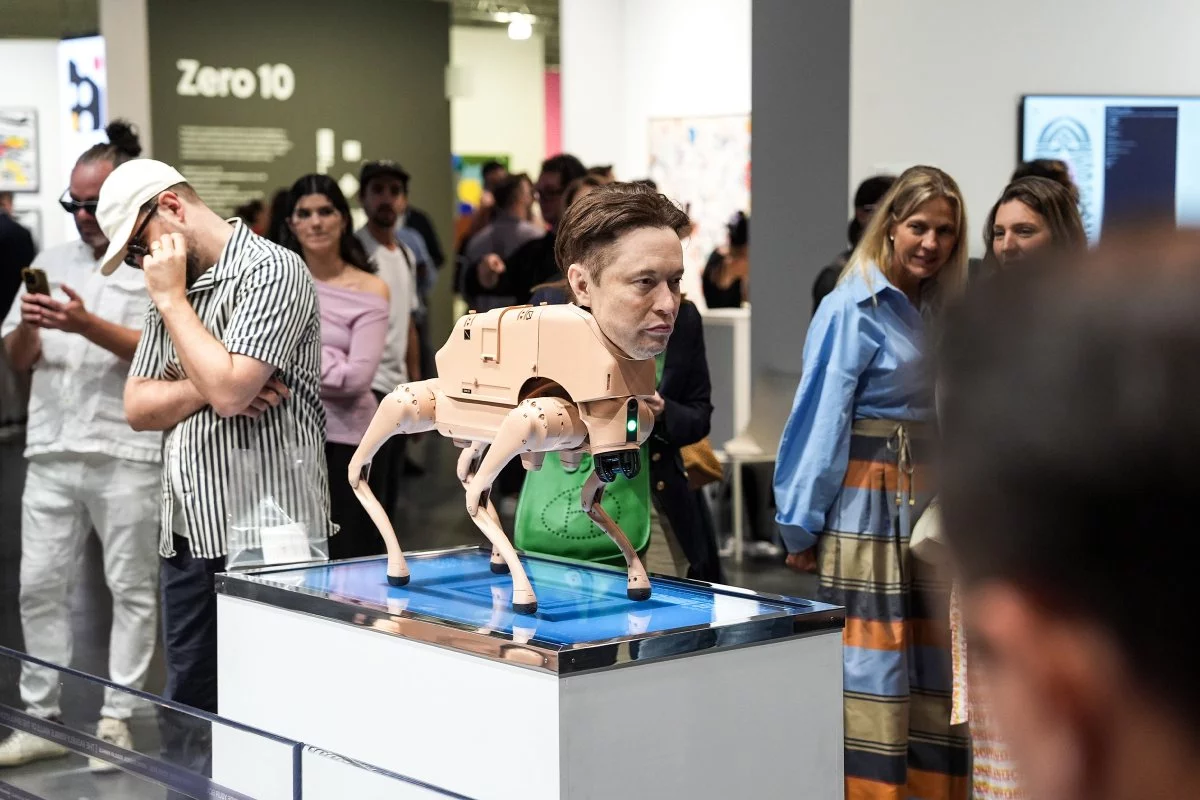
At the intersection of robotics, generative AI, and the fevered marketplace of contemporary art, Mike Winkelmann—better known as Beeple—has once again detonated a cultural flashbang. At Art Basel Miami Beach, his “Regular Animals” installation presented not just a spectacle, but a provocation: eight flesh-toned, quadrupedal robots crowned with 3-D-printed busts of tech and art-world luminaries, each priced at $100,000. These machines do not merely pace and pose—they perform, expelling capsules that serve as both physical artifacts and on-chain certificates of authenticity for unique digital images. The result is a phygital chimera: part kinetic sculpture, part generative NFT, part luxury collectible, and, inevitably, a mirror held up to the anxieties and appetites of our technological era.
Phygital Alchemy: Robotics and Generative AI Escape the Screen
Beeple’s work is not merely a commentary on the NFT craze or the cult of the billionaire; it is a demonstration of how generative AI is breaking free from the confines of the digital and inhabiting the physical world. The installation’s technical stack is formidable:
- Quadruped Robotics: Drawing on Boston Dynamics’ playbook, the robots are agile, expressive, and uncannily lifelike.
- Real-Time Computer Vision: The dogs’ behaviors are responsive, blurring the line between programmed choreography and emergent performance.
- GPT-Driven Style Transfer: Each digital certificate is algorithmically unique, blending the aesthetics of its namesake with generative flair.
- On-Chain Minting: The act of “defecation” is not just theatrical—it is a local, edge-minted event, producing a blockchain-registered artifact autonomously.
This convergence signals a future in which devices—whether in galleries, warehouses, or homes—will not merely sense and act, but also create, authenticate, and transact. The notion of “data exhaust” as art, here literalized in the robots’ waste, hints at broader possibilities: could the byproducts of AI (from synthetic medical data to telemetry logs) become securitized, traded, or even fetishized as collectibles?
The New Luxury: Experiential Collectibles and Market Dynamics
The economics of “Regular Animals” are as telling as their aesthetics. In a post-NFT bubble landscape, the appetite for purely digital assets has cooled, but the hunger for objects that are both scarce and story-rich remains voracious among ultra-high-net-worth buyers. Beeple’s robotic dogs, with their blend of physical presence and algorithmic uniqueness, exemplify the emerging formula for luxury in the AI age:
- Experiential Pricing Power: At $100,000 per unit, these robots compete with high-end vehicles and exclusive hospitality, not merely paintings or sculptures.
- Hedge Against Intangibility: In an era of macroeconomic volatility and softening tech valuations, affluent collectors are drawn to hard-backed cultural assets that also signal technological savvy.
- Veblen Goods for the Algorithmic Era: The installation is less a product than a performance—a Veblen good whose value is amplified by spectacle, scarcity, and the whiff of the forbidden.
The robust sales at Art Basel, even as interest rates remain high, suggest that cultural capital retains its allure as both a store of value and a status symbol. For galleries, auction houses, and even luxury consumer brands, the lesson is clear: the future of collectibles is interactive, algorithmic, and deeply performative.
Strategic Ripples: Brand, Regulation, and the Next Wave of Phygital Innovation
The implications of “Regular Animals” extend far beyond the art fair. For corporates and investors, the installation is a harbinger of new risks and opportunities:
- Brand Volatility: The involuntary starring roles of Musk, Zuckerberg, and Bezos highlight the thin line between satire and reputational risk in an era of cheap synthetic media. Narrative control is increasingly a C-suite concern.
- Robotics as Luxury Platform: Limited-run, consumer-facing robots open new markets for component suppliers and OEMs, echoing the smartwatch–fashion collaborations of the last decade.
- Tokenizing Externalities: The parody of ESG certificates in the form of “organic dogshit” capsules is more than a joke—it previews how negative externalities, or their mitigation, might be tracked, tokenized, and traded.
- Legal and Compliance Frontiers: As devices begin to mint and transact autonomously, questions of securities law, KYC/AML, and IP ownership will move from the theoretical to the urgent.
For Fabled Sky Research and its peers, the lesson is one of timing and positioning: those who can blend technical mastery with cultural resonance will define the next chapter of human–machine interaction.
Beeple’s “Regular Animals” is not simply a spectacle—it is a live experiment in the monetization of the uncanny, the tokenization of the ephemeral, and the relentless march of AI from the screen into the world. As the boundaries between art, technology, and commerce continue to blur, those who can read the signals embedded in such provocations will be best positioned to shape, and profit from, the phygital future.

 By
By
 By
By
 By
By

 By
By
 By
By
 By
By
 By
By







