

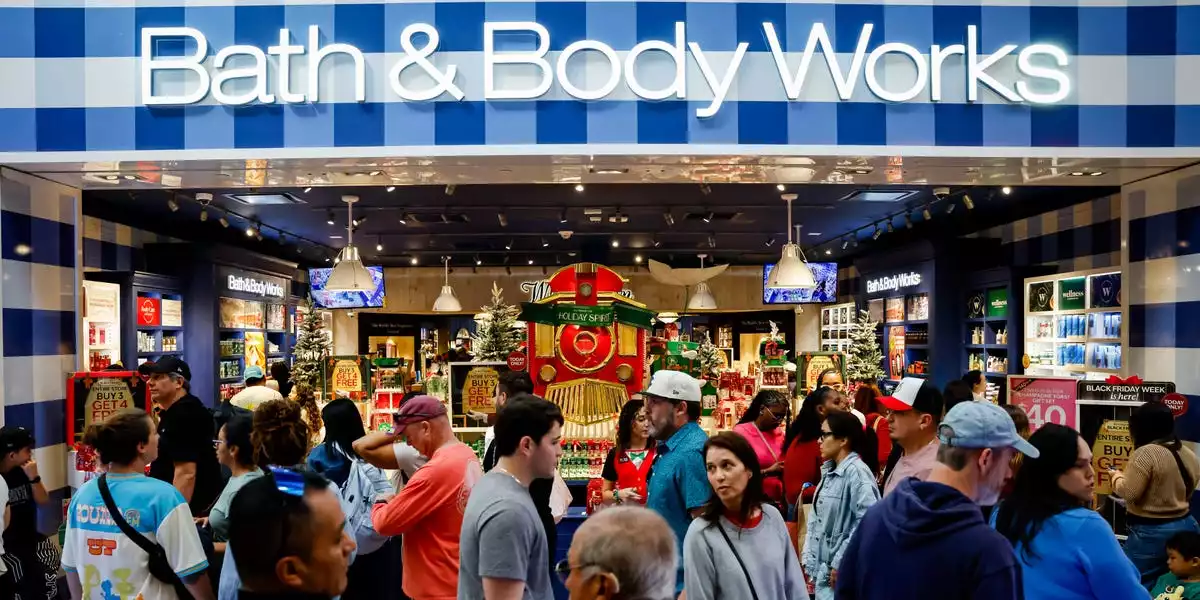

A marketplace pivot that signals a new era for Bath & Body Works’ growth model
Bath & Body Works’ decision to launch an official U.S. presence on Amazon’s marketplace—a move initiated under newly appointed CEO Daniel Heaf—reads less like a tactical channel expansion and more like a strategic admission about where consumer discovery and conversion now happen in beauty and personal care. For years, the company’s posture reflected a familiar premium-brand concern: marketplaces can invite counterfeits, price erosion, and brand dilution, especially when third-party sellers shape the customer experience.
Yet the commercial gravity of Amazon has become difficult to ignore. Beauty is one of the platform’s most resilient categories, and Amazon’s role in search-driven product discovery increasingly influences what consumers buy—even when the final transaction occurs elsewhere. By stepping onto the marketplace directly, Bath & Body Works is effectively choosing to compete where demand already exists, while attempting to convert a long-standing leakage point—unauthorized Amazon sales—into controlled, measurable revenue.
Early performance indicators are particularly telling: products that may have been peripheral within Bath & Body Works’ roughly 2,500-store footprint are reportedly outperforming on Amazon. That suggests the marketplace is not merely duplicating in-store demand; it is surfacing a different kind of basket—one shaped by search terms, replenishment behavior, convenience thresholds, and algorithmic merchandising rather than mall traffic patterns.
The technology layer: omnichannel data, logistics leverage, and brand protection tools
From a business and technology perspective, the most consequential shift is not the storefront itself, but the operating system required to make Amazon additive rather than corrosive. Integrating a legacy DTC stack with Amazon’s marketplace infrastructure demands a more mature omnichannel architecture—one capable of synchronizing inventory, pricing, and content at speed and at SKU-level granularity.
Key technology implications stand out:
- SKU-level analytics and demand sensing: Amazon provides unusually granular signals—buy-through rates, search-term affinity, price elasticity, and conversion drivers—that can feed back into Bath & Body Works’ assortment planning and product development. This can sharpen decisions on which fragrances, formats, and seasonal items deserve broader distribution versus limited runs.
- Fulfillment as a competitive feature, not a cost center: Amazon’s logistics—especially fast shipping—can support premium pricing by compressing the time between intent and gratification. That convenience dividend may reset expectations for Bath & Body Works’ own channels, implicitly pressuring its internal fulfillment capabilities to match higher service benchmarks.
- Brand integrity enforcement becomes more feasible: A formal presence unlocks tools such as Amazon Brand Registry and anti-counterfeit programs (including Project Zero-style mechanisms). For brands historically wary of marketplaces, this is a pivotal point: enforcement is never perfect, but it becomes operationally actionable in a way it often isn’t from the sidelines.
This is also where Daniel Heaf’s background matters. Having led digital and direct-sales initiatives at Nike, he arrives with a playbook shaped by data-driven merchandising, digital engagement loops, and channel orchestration—skills that translate directly to the complexities of marketplace participation.
The economics: balancing incremental reach with margin discipline and inventory risk
The central financial question is whether Amazon becomes a net-new growth engine or a redistribution of existing demand. Some cannibalization of Bath & Body Works’ direct-to-consumer e-commerce is likely. But the more strategic target appears to be recapturing demand that already existed on Amazon through gray-market and third-party sellers, where Bath & Body Works captured little value and had limited control over pricing or presentation.
Several economic dynamics will shape outcomes:
- Pricing architecture vs. promotional legacy: Bath & Body Works has long relied on a promotional cadence in stores to drive traffic. Amazon’s convenience-driven willingness-to-pay—amplified by fast shipping—creates room for higher effective pricing, but it also forces a reconciliation: consumers will compare channels. The company may need clearer value-tier segmentation, preserving promotions for price-sensitive cohorts while maintaining stronger base-price integrity on Amazon.
- Margin trade-offs and fee structures: Marketplace participation introduces referral fees, fulfillment costs (if using Amazon logistics), and performance-related constraints. The upside is reach and conversion; the downside is that profitability becomes more sensitive to operational precision—content quality, inventory health, and advertising efficiency.
- Supply-chain agility and working-capital pressure: Amazon demand can spike quickly, and inventory performance regimes can penalize stockouts or excess. Bath & Body Works will need more responsive forecasting, flexible supplier arrangements, and carefully managed buffer inventory—balancing cash efficiency against the reputational and algorithmic costs of being unavailable.
The early signal that “non-core” store SKUs are outperforming on Amazon is economically meaningful: it implies Amazon may function as a long-tail monetization engine, where niche preferences can be profitably served without demanding prime shelf space in every physical location.
Competitive positioning: younger customers, mall headwinds, and the premium-brand migration to Amazon
Strategically, the Amazon move aligns Bath & Body Works with a broader industry reality: premium and prestige players—from global beauty conglomerates to heritage brands—are increasingly accepting that marketplaces are not optional. They are infrastructure for modern retail discovery.
For Bath & Body Works, the implications are multi-layered:
- Demographic repositioning toward younger, mobile-first shoppers: Amazon’s ecosystem—search, subscriptions, voice interfaces, and influencer-driven discovery—can accelerate relevance with consumers who may not browse malls or brand sites directly.
- A pressure valve for mall-based retail: This is not a retreat from stores so much as a hedge against declining foot traffic. If Amazon captures replenishment and convenience purchases, physical stores can be reimagined toward experiential formats, gifting, sampling, and seasonal theater—roles that malls can still perform well when executed deliberately.
- A new baseline for channel coherence: The long-term risk is not simply counterfeit goods; it is fragmented customer experience. If loyalty, personalization, and product storytelling diverge across Bath & Body Works stores, BBW.com, and Amazon, the brand’s lifetime-value strategy weakens. The opportunity is to build a unified commerce layer that harmonizes identity, offers, and insights across channels—even when the transaction happens on a third-party platform.
Bath & Body Works’ Amazon launch is ultimately a bet that the company can turn marketplace scale into a controlled asset—using official distribution, better data, and stronger enforcement to capture demand that was already there, while modernizing its omnichannel playbook for a retail landscape where convenience, search visibility, and logistics excellence increasingly define who wins.

 By
By
 By
By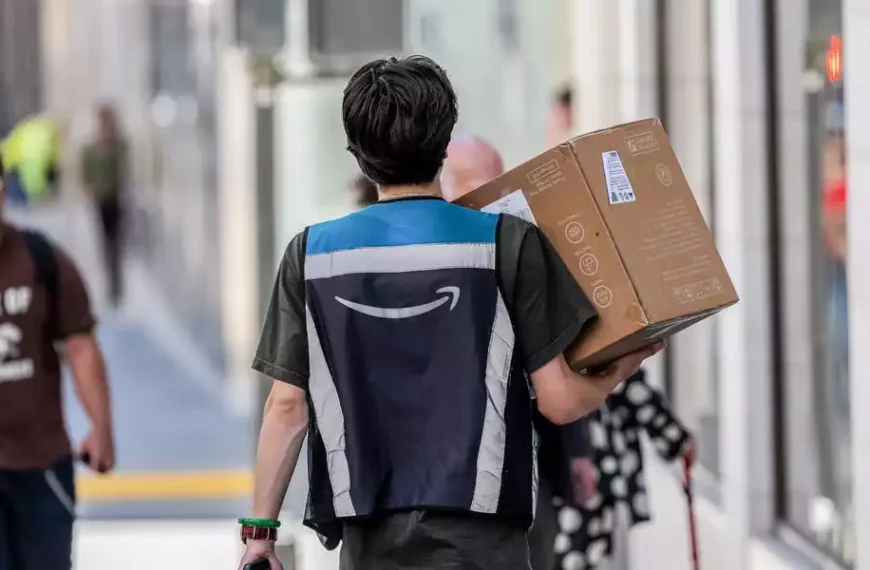
 By
By

 By
By

 By
By
 By
By







