


Physical AI moves from demo reels to industrial balance sheets
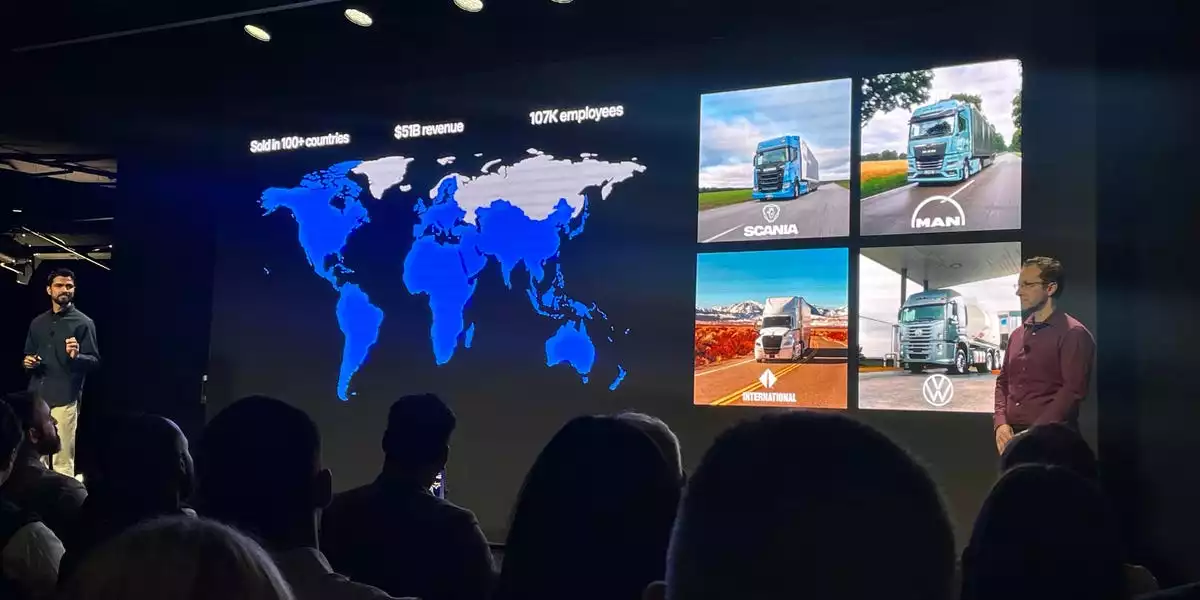
Applied Intuition’s inaugural Physical AI Day signaled a deliberate pivot: from being best known as a simulation and cloud-infrastructure provider for autonomous vehicles to positioning itself as a software control layer for real-world machines—mining trucks, agricultural equipment, and logistics fleets that operate amid dust, rain, uneven terrain, and human co-workers. The market is rewarding that ambition. With a reported $15 billion valuation (June 2025) and momentum from U.S. military and major automaker contracts, the company is framing “physical AI” as the next platform shift—one that is less about chat interfaces and more about automation that touches labor markets, safety regimes, and capital investment cycles.
Marc Andreessen’s characterization of physical AI as “order-of-magnitude more complex” than virtual AI is not rhetorical flourish; it’s a concise description of why industrial autonomy has progressed more slowly than consumer-facing AI. In the physical world, errors are not merely incorrect outputs—they can become equipment damage, operational downtime, injuries, or liability events. That reality changes everything: development timelines, validation standards, procurement scrutiny, and the economics of deployment.
Joe Forcash’s remarks about “undesirable” roles in heavy industry highlight a parallel truth: the adoption driver is not novelty but necessity. Across logistics, mining, and agriculture, operators face a tightening constraint set—aging workforces, chronic shortages (notably in trucking), and rising expectations around safety and ESG performance. Physical AI is emerging as a response to structural pressures rather than cyclical experimentation.
—
The simulation-to-reality gap becomes the central technical battleground
Applied Intuition’s roots in simulation are not incidental; they are strategic. The most stubborn challenge in physical AI is the transfer problem: models trained in controlled settings must remain reliable when confronted with the messy variability of real sites—mud, glare, sensor occlusion, shifting loads, unpredictable human behavior, and equipment wear.
To bridge that gap, the industry is converging on a few technical imperatives:
- High-fidelity digital twins that replicate not just geometry and physics, but operational nuance—site-specific workflows, vehicle dynamics under load, and rare-but-critical edge cases.
- Domain adaptation and robustness techniques that help perception and control systems tolerate environmental drift (weather, dust, lighting) and hardware drift (sensor degradation, calibration shifts).
- Real-time safety architectures—fail-operational and fail-safe behaviors, redundancy strategies, and verifiable constraints that can be audited by regulators and customers alike.
- Edge compute resilience, because many industrial environments cannot assume perfect connectivity. Autonomy must degrade gracefully, not collapse when bandwidth drops.
Applied Intuition’s emphasis on modular, middleware-style architecture is a bid to become the “AI operating system” for heavy equipment—an abstraction layer that can sit above heterogeneous sensors, actuators, and OEM-specific vehicle platforms. If that strategy succeeds, the company’s leverage will come from standardization: APIs, tooling, validation pipelines, and a repeatable safety case that can be ported across fleets and geographies.
Yet modularity also exposes friction. Retrofitting legacy fleets is attractive because it avoids the capital intensity of building hardware from scratch, but it introduces integration complexity: inconsistent sensor suites, varied maintenance histories, and OEM-specific constraints. Partnerships with incumbents such as Komatsu and Isuzu suggest Applied Intuition is choosing the hard path—industrial interoperability—because it is also the path to scale.
—
Economics: from labor arbitrage to platform lock-in
Physical AI’s business case is often introduced as labor substitution, but the deeper economic story is risk and throughput. In mining, agriculture, and freight, the cost of downtime, accidents, and missed delivery windows can dwarf hourly wages. Automation therefore competes not only on headcount reduction, but on:
- Higher asset utilization (more operating hours, fewer stoppages)
- Lower incident rates (safety improvements and reduced liability exposure)
- Predictable performance (less variance from staffing volatility and fatigue)
- Operational continuity in labor-constrained regions
The mention of second-generation autonomous Isuzu trucks operating freight routes in Japan is particularly telling. Japan’s driver shortage is not a temporary dislocation; it is a demographic reality. That makes the country a natural proving ground where the value proposition is immediate and measurable—an environment where autonomy is less a futuristic add-on and more a continuity plan for national logistics capacity.
Applied Intuition’s dual-use posture—commercial deployments alongside U.S. military contracts—adds another layer of economic advantage. Defense work can underwrite R&D, impose rigorous safety and reliability disciplines, and accelerate maturity in testing and validation. Those capabilities can then translate into commercial credibility, shortening procurement cycles in conservative industries that demand evidence over aspiration.
Over time, the most consequential economic dynamic may be platform-driven lock-in. Once an OEM or fleet operator integrates a control stack deeply—into maintenance workflows, training, telemetry pipelines, and compliance reporting—switching becomes expensive. The value migrates from the initial deployment to the lifecycle: updates, monitoring, incident analysis, and continuous improvement. This is where software economics—subscriptions, usage-based pricing, and outcomes-based contracts—begin to reshape industrial capex/opex models.
—
Strategy and governance: standards, liability, and the race to define “safe enough”
Physical AI is not merely a technology rollout; it is a governance negotiation. The winners will not only ship capable autonomy—they will help define the rules by which autonomy is certified, insured, and trusted. Early deployments in Japan and within U.S. military corridors position Applied Intuition and its partners to influence:
- Safety standards and validation protocols (what evidence is required, and how it is measured)
- Liability frameworks (operator vs. OEM vs. software provider responsibility)
- Interoperability expectations (data formats, APIs, audit logs, and incident reporting norms)
For business leaders, the strategic takeaway is that physical AI adoption is becoming a board-level topic because it touches workforce planning, capital allocation, and regulatory exposure simultaneously. The most prepared organizations will:
- Rebuild total cost of ownership models to include software, data services, and risk reduction
- Invest in digital twin capability and edge infrastructure as foundational assets
- Participate early in standards consortia to reduce future compliance friction
- Treat workforce transition as a productivity program—reskilling into monitoring, maintenance, and systems operations rather than framing automation as pure displacement
Applied Intuition’s Physical AI Day ultimately underscored a broader market shift: the easiest AI applications are already crowded, while the physical world remains the largest under-automated frontier. The companies that can translate autonomy from controlled demos into audited, insurable, interoperable systems will not just capture new revenue—they will help redraw how heavy industry operates, competes, and staffs itself in the decade ahead.

 By
By
 By
By
 By
By

 By
By
 By
By
 By
By
 By
By







