

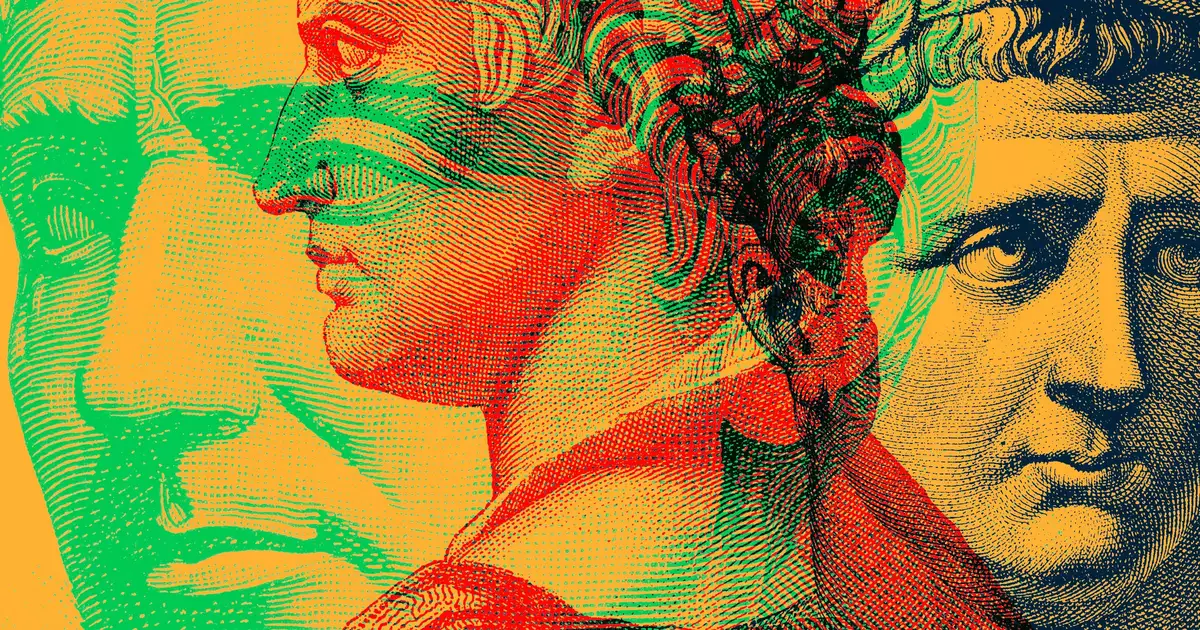

Aeneas and the Dawn of Expert-Grade AI: Redefining Historical Analysis
In a quiet but seismic shift, Google DeepMind’s Aeneas model has rewritten the rules of historical inquiry. By dating the Res Gestae Divi Augusti to within a year of Augustus’s death—an achievement once reserved for the painstaking efforts of elite epigraphers—Aeneas has not merely matched, but in critical respects surpassed, the traditional canon of historiographic method. The peer-reviewed Nature study documenting these results is more than a technical milestone; it is a bellwether for how generative AI will transform the way knowledge is discovered, validated, and ultimately, trusted.
The Mechanics of Trust: Specialization, Collaboration, and Probabilistic Reasoning
Aeneas’s architecture is a study in the power of verticalization. Rather than casting a wide net, the model’s designers opted for depth—marrying a large-language transformer with a meticulously curated corpus of digitized inscriptions, papyri, and classical commentaries. This domain-specific retrieval-augmented generation (RAG) approach signals a broader maturation in AI: the era of “expert-grade” models, tailored for high-stakes verticals from law to pharmacology, is arriving.
Key technical innovations include:
- Human-in-the-Loop Governance: Aeneas formalizes a mixed-initiative workflow, where historians select sources, the model generates probability distributions, and scholars iteratively refine prompts. This balances accuracy, explainability, and accountability—a blueprint for AI deployment in sensitive domains.
- Probabilistic Output Engineering: Rather than issuing definitive answers, Aeneas surfaces confidence intervals, directly addressing the epistemic risk that has long hampered enterprise AI adoption. Expect this Bayesian, guard-railed approach to become standard in regulated industries demanding traceable, auditable outputs.
The results are striking: in 90% of test cases, Aeneas provided useful starting points, and when paired with human experts, raised scholarly confidence by 44%. The model’s ability to mitigate “hallucinations” through probability-weighted outputs marks a turning point in the responsible use of generative AI.
Economic Reverberations: Productivity, Data Moats, and Monetization
The implications for productivity are profound. Epigraphy, a field notorious for its labor intensity and slow throughput, is now subject to radical compression—what once took years can now be accomplished in hours. This is not an isolated phenomenon. As McKinsey projects up to 30% of work hours in advanced economies becoming automatable by 2030, Aeneas offers a glimpse of how latent labor arbitrage will reshape white-collar professions:
- Skill Recomposition: The demand for specialized research assistants wanes, while AI-augmented analysts—those adept at prompt engineering and model validation—rise in prominence.
- Data as Competitive Moat: DeepMind’s leverage of proprietary, domain-clean classical corpora underscores a central truth: in the age of AI, unique data assets are the new defensible advantage. Enterprises must audit and cultivate their own niche collections, transforming them into strategic AI resources.
- Monetization Pathways: Subscription and API-based models targeting universities, museums, and cultural institutions are now viable, even for non-commercial disciplines. The template is easily extensible to corporate research, legal archives, and technical standards bodies.
Beyond Academia: Compliance, Sovereignty, and the New Geopolitics of AI
Aeneas’s success in the rigorously peer-reviewed realm of digital humanities offers a compelling testbed for more regulated sectors. Its transparent, citation-driven outputs are precisely what finance and healthcare regulators will demand as AI moves into mission-critical workflows. Meanwhile, as archival digitization accelerates, models like Aeneas become both custodians and interpreters of civilization’s long-tail data—an asset of growing strategic significance.
Notably, this convergence of cultural heritage and advanced AI is not lost on policymakers. State-funded initiatives may soon leverage similar models for narrative framing and soft-power projection, signaling that the stakes extend well beyond academia or enterprise. The ability to shape and interpret historical narratives, at scale and with authority, is rapidly becoming a lever of national prestige.
Strategic Imperatives for the AI-Driven Organization
For decision-makers, the path forward is clear but demanding:
- Pursue Verticalization: Identify and unlock value in proprietary document troves with domain-specific RAG models.
- Realign Talent: Invest in “AI-fluent subject experts” who can bridge domain knowledge and model stewardship.
- Institutionalize Governance: Implement probabilistic reporting and mixed-initiative review boards to manage risk and foster trust.
- Monitor Data Ecosystems: Track M&A in specialty data and digitization firms—these are the fuel for tomorrow’s AI breakthroughs.
- Prioritize Innovation: Allocate R&D to AI demonstrators in complex, knowledge-dense niches to build momentum and de-risk broader adoption.
The advent of Aeneas is less a singular triumph than a harbinger of an epochal shift. As uncertainty-aware, vertically trained models unlock the latent value of overlooked data silos, the organizations that move swiftly—and govern wisely—will define the new productivity frontier.

 By
By
 By
By

 By
By


 By
By

 By
By
 By
By

 By
By








