


From Boardrooms to the Sidewalk: The AGI Reckoning Moves Into Public View
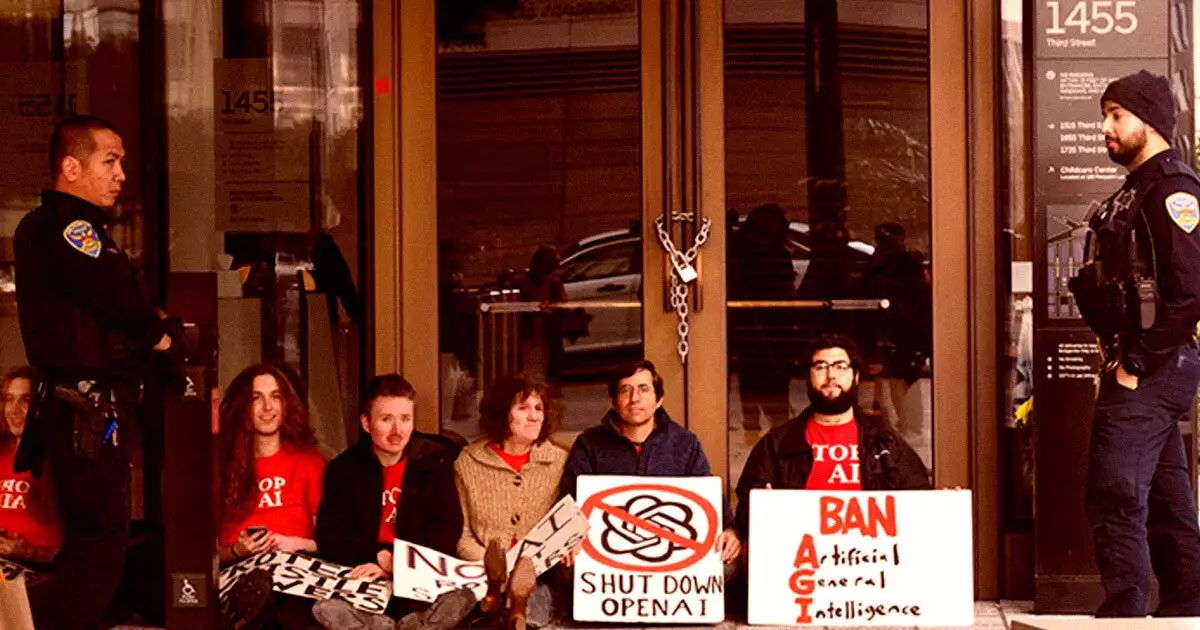
On a windswept patch of concrete outside Anthropic’s San Francisco headquarters, the abstract specter of Artificial General Intelligence (AGI) has acquired a human face. Guido Reichstadter’s solo hunger strike—now entering its second week—transforms the AGI debate from the rarefied air of technical papers and venture term sheets to the immediacy of street-level activism. His protest, demanding transparency about AGI risks, is more than a personal act of defiance; it is a potent symbol of a widening chasm between the architects of frontier AI and the society that must live with its consequences.
This moment crystallizes a set of interlocking dilemmas: the growing perception gap between AI developers and the public, the intensifying reputational and regulatory exposure for AI firms and their backers, and the accelerating influence of grassroots activism in shaping the policy agenda—often well before the technology itself matures.
The Perception Gap: From Technical Alignment to Public Anxiety
For years, labs like Anthropic have positioned themselves as stewards of AI safety, emphasizing technical alignment research and internal governance structures. Yet, from the outside, the optics tell a different story. The company’s recent $2 billion-plus fundraising spree—backed by titans like Amazon and Google—reads less like prudent stewardship and more like an arms race. Each press release touting the capabilities of Claude, Anthropic’s flagship model, collides with growing public unease about the pace and direction of AGI development.
- Symbolic Protest as Tipping Point: Reichstadter’s hunger strike, echoed by parallel demonstrations at Google DeepMind’s London offices, marks a shift in the narrative. No longer confined to think tanks or regulatory hearings, the AGI debate now unfolds in public view, with activists leveraging the power of symbolism to force a reckoning.
- Historical Resonance: This pattern is not new. Anti-nuclear and anti-GMO movements began on the margins, only to reshape global regulation and investment flows. The image of a lone protester fasting outside a multi-billion-dollar AI lab may prove similarly catalytic, reframing AGI not as a technical inevitability, but as a societal choice.
Capital, Liability, and the New Social License
Anthropic’s meteoric rise—fueled by strategic investments and structured “safety” covenants—highlights a paradox at the heart of the industry. While internal controls and private agreements abound, activists argue that self-regulation is no substitute for public accountability. The hunger strike dramatizes this tension, raising uncomfortable questions for investors, insurers, and boards.
- Investor Exposure: Minority stakes in AI labs, once viewed as pure upside, now transmit reputational risk. ESG committees are beginning to treat frontier AI exposure with the same caution reserved for fossil fuels or tobacco, demanding scenario analyses for potential social backlash.
- Insurance and Boardroom Calculus: As claims of “foreseeable harm” enter the discourse, directors and officers will face new scrutiny over their oversight of advanced AI systems. D&O insurance policies may soon include explicit exclusions—or premiums—for AGI-related liabilities.
Regulatory Winds and the Activist Accelerator
The hunger strike’s true impact may lie in its ability to shift the Overton window for AI governance. Lawmakers in the EU, deep in negotiations over the AI Act, are watching closely as grassroots activism lends political cover to stricter guardrails. In the U.S., the Biden Administration’s executive order on AI safety—already referencing “catastrophic and existential risks”—is likely to echo and amplify the language of protest.
- Catalysts for Policy Action: The optics of public protest accelerate the timeline for enforceable moratoria, licensing regimes, or phased “sandbox” approaches akin to pharmaceutical trials.
- Procurement and Compliance: Enterprise buyers are quietly rewriting procurement language, moving from service-level agreements to “alignment-level agreements” that demand transparency on model autonomy, interpretability, and kill-switch mechanisms.
Navigating the New Reality: Action and Adaptation
For AI developers, the era of academic PDFs and internal audits is drawing to a close. The hunger strike signals a new expectation: verifiable, third-party validated safety milestones, and a willingness to engage with public skepticism head-on. Investors and cloud partners, too, must recalibrate—treating AI exposure as a potential source of reputational contagion, and demanding external certifications for safety commitments.
Policymakers, emboldened by visible activism, are poised to move faster than many in the industry expect. The next phase of AI governance may well be shaped not in the corridors of power, but on the sidewalks outside the labs themselves.
The hunger strike outside Anthropic’s headquarters may not halt the march toward AGI, but it has already redefined the stakes. The question is no longer whether society will have a say in the future of AI, but how—and how soon—its voice will be heard. For those at the frontier, the message is clear: the social license to operate is now as critical as the technology itself.

 By
By
 By
By

 By
By
 By
By
 By
By

 By
By







