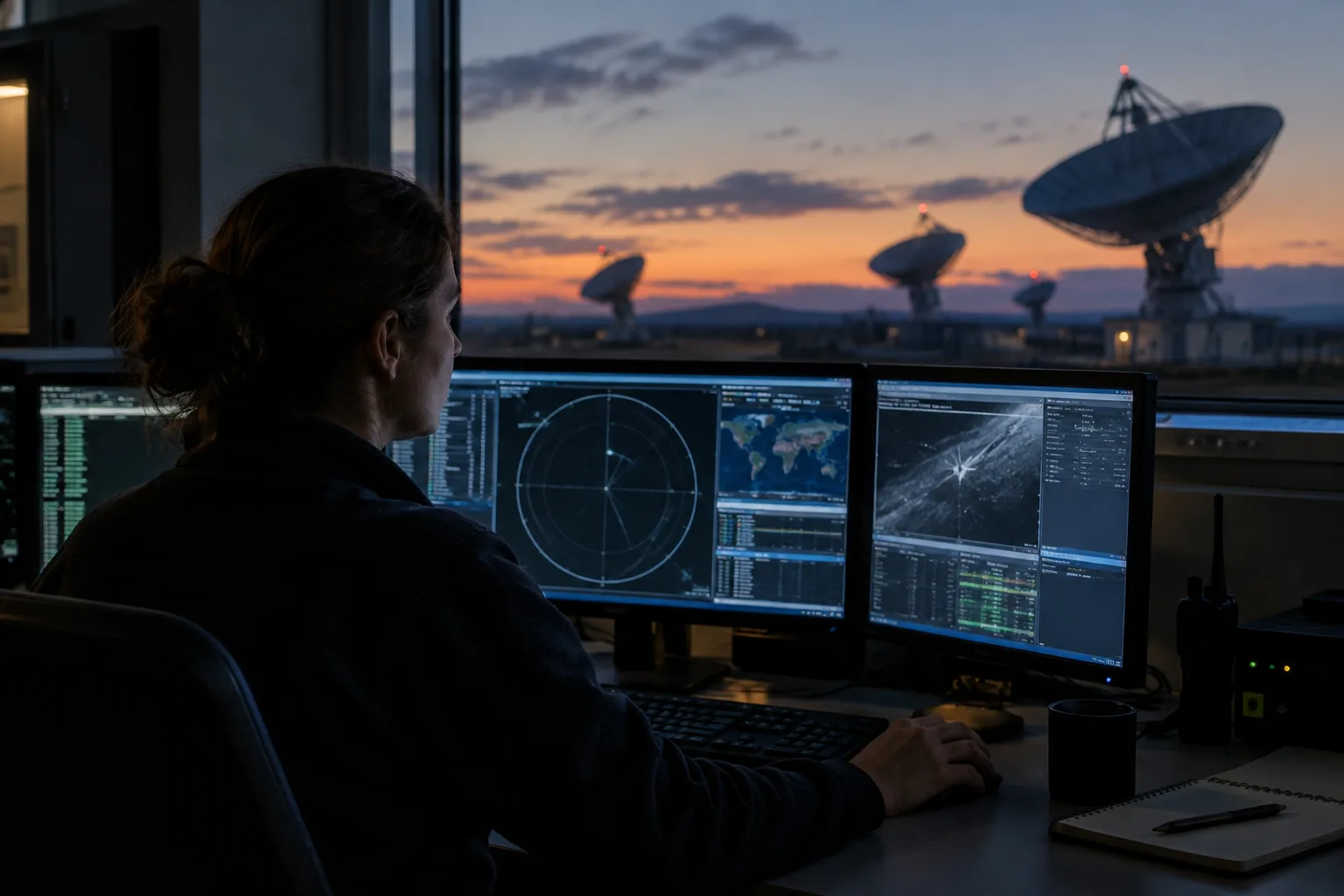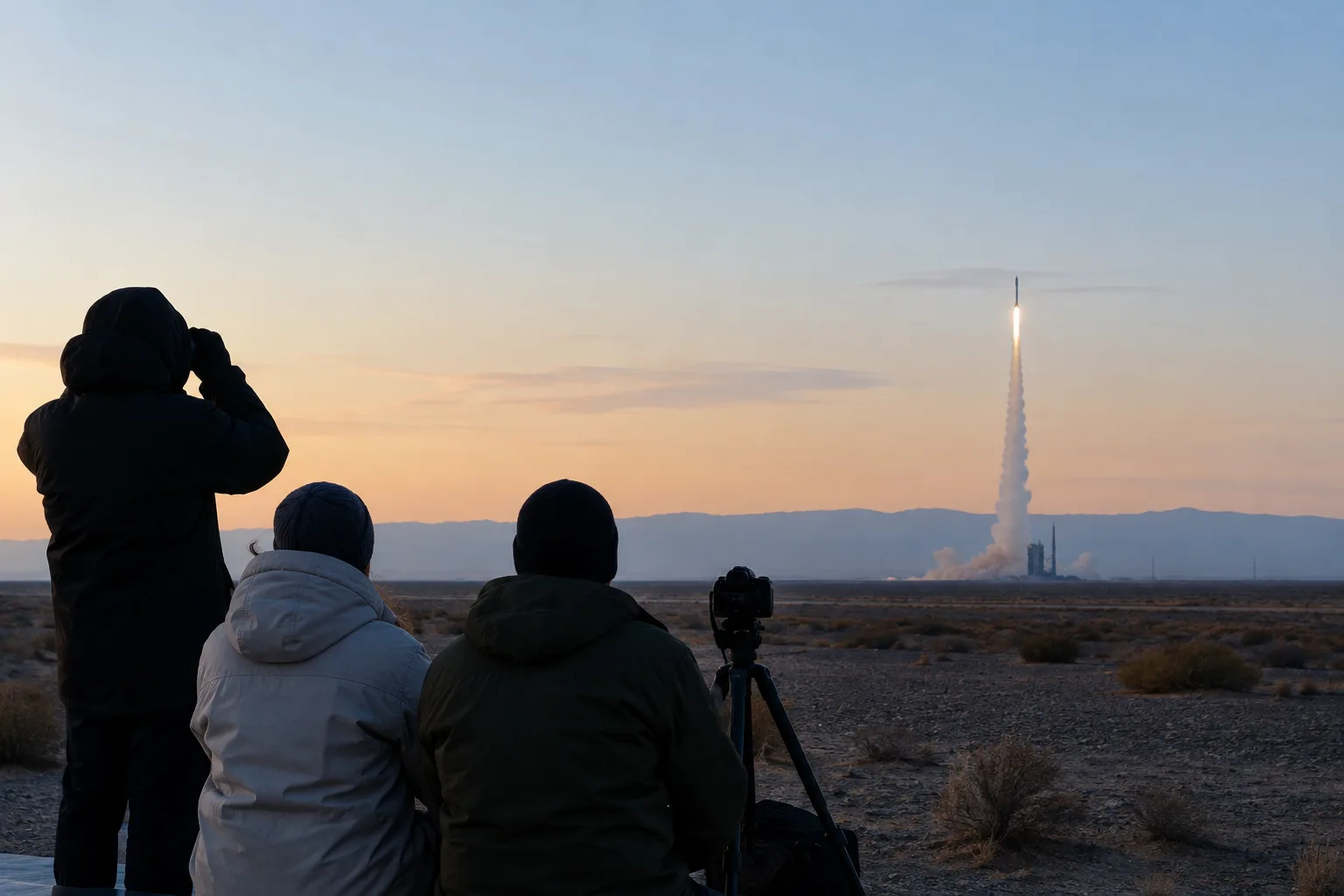

China has launched its first crewed space mission with a foreign astronaut, a milestone that matters not just for diplomacy but for operations. Shenzhou-24 lifted off from Jiuquan at 08:18 Beijing time on November 25 and docked with Tiangong’s Tianhe core module at 11:56 after a rendezvous of about three and a half hours. On board were Chinese astronauts Tang Hongbo and Wu Yi and Pakistan’s Muhammad Zeeshan Ali, the first foreign crew member to reach China’s space station.
That makes Shenzhou-24 more than a symbolic first. It is a live test of whether Tiangong can function as a controlled international research platform rather than only a nationally run orbital outpost. The crew is expected to carry out more than 90 scientific experiments and technology tests, and AP reports that Ali will conduct a photosynthetic cyanobacteria experiment before returning on Shenzhou-23.
The real question for researchers, aerospace suppliers and would-be station customers is straightforward: does this mission mark the start of a scalable access model around Tiangong, or is it primarily a selective China-Pakistan partnership that will stay tightly state-managed?
What Shenzhou-24 actually proves
The strongest case for broader significance is operational, not rhetorical. A foreign astronaut inside an active space station means China and Pakistan had to make a long list of systems work across institutions: crew selection, training, language, medical support, experiment planning, safety procedures, communications and return logistics. Those are the hidden layers that have to function before any station can serve outside users with predictable results.
Shenzhou-24 is also not a sightseeing flight. China’s manned-space agency describes it as the eighth crewed mission in Tiangong’s application-and-development phase, the 41st launch mission of the overall program and the 680th flight of the Long March rocket family. The mission joined an existing orbital laboratory already occupied by three astronauts from Shenzhou-23, and the station is being used for ongoing science and technology work rather than a one-off demonstration.
That matters because a credible research platform depends on routine. Tang Hongbo, now aboard Tiangong for the third time, brings repeat-flight experience. Wu Yi and Ali are on their first spaceflight. Together, the crew composition suggests China is testing both continuity and expansion: keeping experienced operators in the system while integrating a new international participant into station life and experiment execution.
Pakistan’s role also looks substantive enough to matter. The mission follows a bilateral cooperation agreement signed in February 2025, and Pakistan’s government has cast the flight as both a national milestone and a technology aspiration project. For Pakistan, human spaceflight access arrives without the cost of building a domestic crewed launch system. For China, the mission demonstrates that Tiangong can host outside personnel within Chinese mission architecture.
Why that matters for business and research
If China can repeat this process, Tiangong starts to look less like a closed national asset and more like a partnership platform with practical commercial spillovers. Not necessarily an open market, and not yet a station with standardized public pricing, but a place where foreign institutions might eventually buy or negotiate real services.
Those services are more mundane than the launch footage suggests. A university or biotech lab does not mainly need prestige; it needs a payload slot, certified hardware, crew time, power, communications, data return and, in many cases, a reliable path for samples or equipment to come back. Aerospace contractors need stable integration requirements and predictable launch schedules. Training organizations need a repeatable astronaut-preparation process. Insurers and procurement teams need to know who is responsible if hardware fails or an experiment is delayed.
Shenzhou-24 shows that at least one foreign partnership can be integrated into that chain. That is useful in itself. It gives Chinese operators and suppliers experience serving a non-Chinese institution in human spaceflight, one of the hardest kinds of cross-border technical work to standardize. It also gives outside observers a first real operating case to measure, rather than a policy statement.
This is where the mission’s timing matters. China is preparing for a crewed lunar landing it says it aims to achieve by 2030, while NASA is widely reported as targeting a crewed lunar landing in 2028. Tiangong is therefore not just a science platform but part of a larger national space program. Demonstrating international interoperability in low Earth orbit can strengthen China’s position as it builds the political and technical relationships that often shape later exploration projects.
What the mission does not prove
The biggest restraint on the story is also the most important one for the market: there is still no public access model.
The available reporting does not disclose what Pakistan paid, if anything, for astronaut training, experiment integration or station access. There is no published tariff for crew seats, payload services or crew time. China has not publicly laid out how many foreign astronauts it plans to fly, whether universities or companies can apply directly, or whether every future mission will require bespoke government-to-government negotiation.
That leaves a large gap between demonstrated capability and usable service. One foreign astronaut aboard Tiangong proves China can do this. It does not prove that a biotech startup in Singapore, a materials lab in Europe or an education program in the Gulf can purchase access on standard terms.
There are other unresolved questions that matter just as much. Public coverage does not say how foreign hardware is certified, how experiment priority is decided when national, scientific and commercial goals compete, what data-sharing rules apply, or how intellectual property is handled. Nor is there a clear picture of how much experiment data will be shared internationally, how failures will be disclosed, or how much return capacity can be offered reliably to outside users.
Those are not minor details. They are the difference between a diplomatic exception and a service layer that businesses and researchers can plan around.
For now, the most practical scorecard is simple. Watch for a repeatable application process, transparent terms for payload and astronaut participation, evidence that foreign experiments can move from contract to orbit without custom political negotiation, and proof that launch, communications and return capacity can be scheduled predictably. Also watch what happens after the headlines fade: whether results from the 90-plus experiments are shared in ways that outside institutions can evaluate and build on.
Shenzhou-24 has already achieved something important. It put the first foreign astronaut aboard Tiangong and did so as part of an active research mission, not a ceremonial visit. That makes the station more credible as an international platform than it was a week ago. But the mission’s larger business significance still depends on what China does next. If Beijing turns this one-off success into repeatable access rules and dependable support services, Tiangong’s role in global research could widen quickly. If not, Shenzhou-24 will stand mainly as a consequential China-Pakistan milestone inside a system that remains selective by design.

 By

 By
 By

 By

 By