
ABB has confirmed the clearest setback yet to SoftBank’s planned purchase of its Robotics division: China has prohibited the acquisition of ABB Robotics in China. In a Nov. 5 update, ABB said SoftBank informed it that China’s Office of the Working Mechanism for Foreign Investment Security Review had blocked that part of the transaction.
That matters well beyond one merger. The planned sale, announced in October 2025 at an enterprise value of $5.375 billion, was supposed to give SoftBank a global industrial-robotics platform to pair with its AI, robotics and next-generation-computing ambitions. Now the central question is not just whether the deal survives, but whether a cross-border technology acquisition can still close when one country blocks ownership of the target’s business inside its borders.
ABB’s wording is precise, and the precision is the story. The company did not say the entire global sale has been terminated. It said the acquisition of the Robotics business in China was prohibited, and added that the wider transaction still remains subject to regulatory approvals and customary closing conditions. ABB also said SoftBank is managing the approval process and that the parties remain in close dialogue and are working constructively on the transaction.
A country-level block is not automatically a global collapse
That leaves an awkward but important middle ground. The Chinese decision is clearly serious: it directly changes the closing risk on a transaction that was already contingent on approvals. Reuters Breakingviews treated the move as Beijing nixing the offer and placed it in a broader climate of tighter scrutiny around strategic technologies. But ABB’s official statement is narrower than a full-deal obituary, and that distinction matters to investors, customers and dealmakers.
What is missing from the public record is almost as important as what ABB confirmed. There is no disclosed text of the prohibition, no published list of affected entities or assets, no public remedy deadline, and no update on whether regulators in the U.S., EU or other jurisdictions have signed off. ABB has not said whether the China issue touches local subsidiaries, manufacturing assets, service operations, software rights, data flows, customer contracts or some mix of them.
That is why the headline number from the original October 2025 announcement is no longer enough to describe the situation. A $5.375 billion enterprise value reflects the deal as signed, not necessarily the business SoftBank could end up buying if China must be excluded or reorganized.
The practical question is whether China can be carved out cleanly
In theory, a cross-border acquisition can still close after a country-level block. In practice, that depends on whether the blocked business is legally and operationally separable from the rest of the target.
That is the checklist executives and advisers will now be working through. First is basic materiality: how much of ABB Robotics’ value sits in China? Publicly, that is unknown. There is no disclosed breakdown of China revenue, installed base, manufacturing footprint, supply-chain role or customer commitments. Without those numbers, outside investors cannot judge whether a China-only exclusion would be painful but manageable or severe enough to force a repricing.
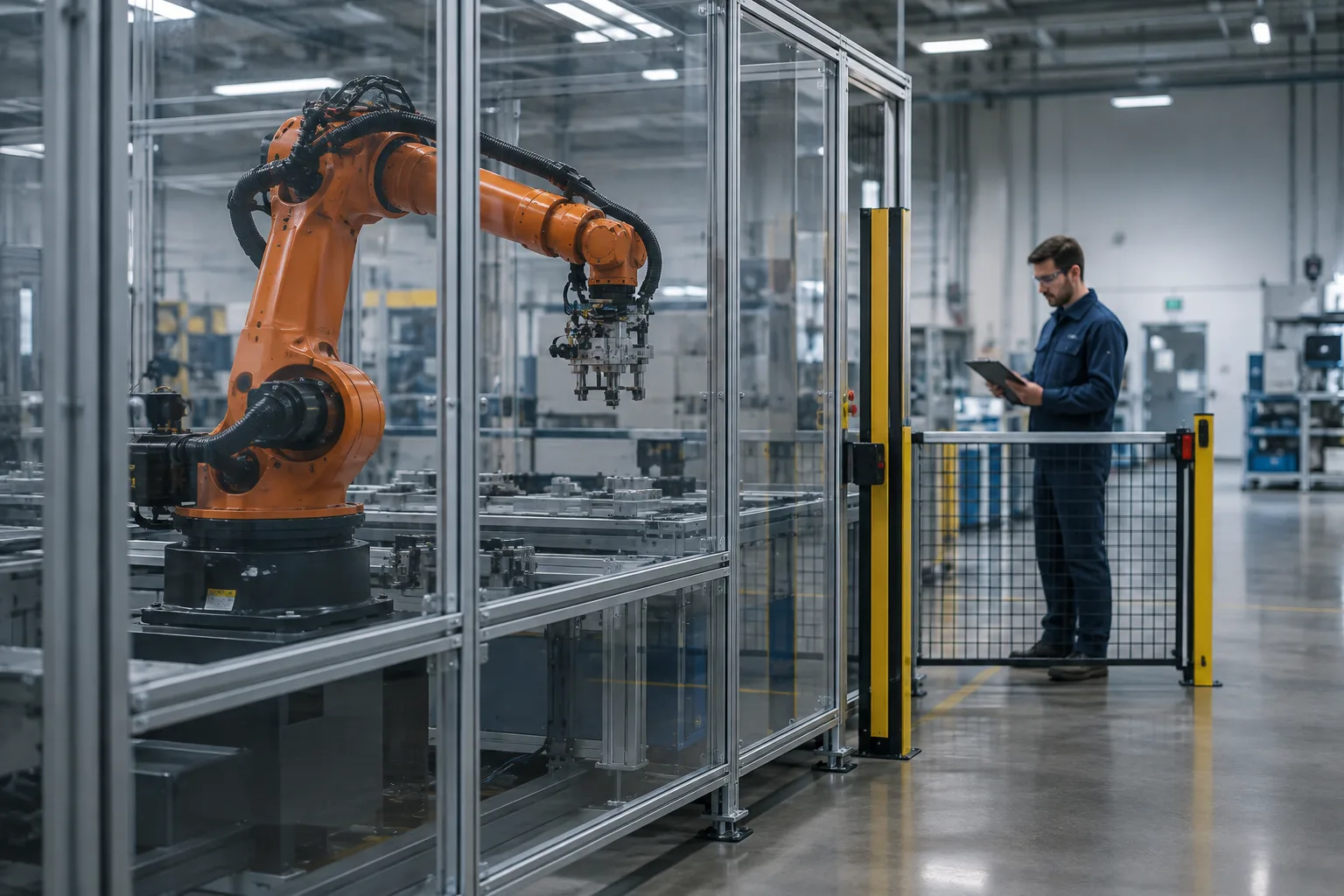
Second is technical separability. Robotics is not just a collection of factory machines. ABB’s unit sells industrial robots, automation systems, software and related services. Those pieces can cross borders in messy ways. Hardware may be installed locally, while software updates, remote diagnostics, parts support, workflow data and engineering know-how may be shared across the global business. A regulator may be comfortable blocking direct ownership of Chinese entities but still worry about information flows, control rights or access to strategically relevant operational data.
Third is customer continuity. Industrial robotics comes with long service tails: maintenance, spares, upgrades and uptime commitments. If ABB retains China while SoftBank buys the rest, the parties would have to decide who supports multinational customers, how warranties are honored, and whether any shared platforms or code bases must be split. Those are solvable problems in some transactions, but they take time and usually reduce simplicity, speed and sometimes value.
The result is that a carve-out can preserve a deal only if it also preserves the buyer’s strategic thesis. SoftBank’s stated logic was to combine ABB Robotics’ industrial technology with its own AI and computing capabilities. If the China business is central to product development, manufacturing scale, customer data or future growth, then a reduced transaction may still close but no longer deliver the same strategic control or expected returns.
Why industrial robotics is now being treated more like infrastructure
This is the broader significance of ABB’s update. Industrial robotics is increasingly being treated less like ordinary factory equipment and more like strategic infrastructure: a layer that touches manufacturing capacity, automation software, factory data, supply chains and the physical deployment of AI.
China’s security-review mechanism does not need to publicly explain every concern for the market to absorb that message. The point is not that all China-linked technology deals are now doomed. It is that boards can no longer assume an industrial-automation business will be reviewed mainly as a commercial asset. Ownership, control and data access can matter as much as market share.
That changes incentives for everyone around a deal. Sellers want valuation and certainty. Buyers want strategic control and integration. Regulators may accept a smaller or restructured transaction only if ownership boundaries and information flows are altered enough to meet security concerns. Those goals often pull in different directions.
For manufacturers and robotics customers, the immediate concern is continuity rather than geopolitics. They want to know who will own the installed base, who will service equipment, and whether product road maps remain intact. For investors, the key question is whether the remaining business—if there is a remaining business to buy—still justifies anything close to the original price.
The next useful disclosures will be procedural, not rhetorical: whether the parties pursue a carve-out, revised ownership structure or some other remedy; whether the merger agreement allows a partial closing; whether the timetable slips beyond the original mid-to-late 2026 target; and whether the economics are reset. Until one of those pieces becomes public, the most accurate description is not that the ABB Robotics-SoftBank transaction is dead, but that a China block has turned a global sale into a test case for how strategic industrial technology can still be bought across borders.

 By

 By

 By

 By

 By


 By