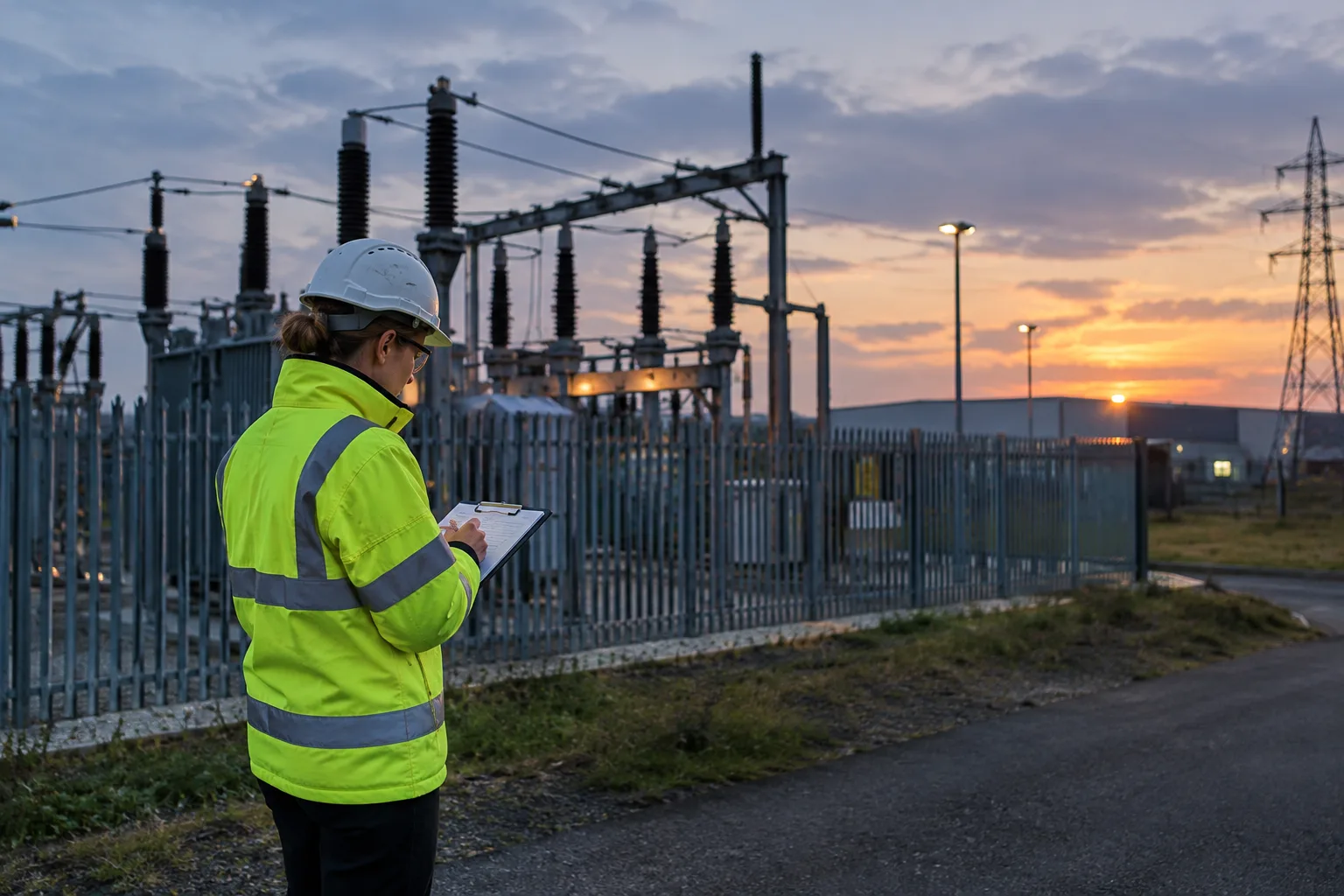

HM Treasury on 28 October published the UK’s Data Centre Covenant, offering large AI-ready projects a bargain: meet a new set of tests on costs, local benefits and resource use, and the government will try to move them faster through Britain’s hardest infrastructure bottlenecks. The immediate significance is not that new compute has been built. It is that ministers are trying to use scarce grid access and planning coordination as leverage.
That makes the real question quite practical. Can priority treatment for strategic data centres speed up AI capacity without shifting the costs of power, water, planning and local disruption onto other businesses, councils and households? The covenant’s design suggests that is the intention. Whether it works will depend less on the headline promise than on queue discipline, credible project screening and enforceable reporting.
Compute for concessions
The covenant is best understood as conditional acceleration. Operators are encouraged to satisfy a common set of tests; projects classed as strategic would need to meet them in order to qualify for extra government action. The support on offer includes reserved or reallocated grid capacity, more flexible connection arrangements, and planning support. The government also says it will stand up a Ministerial Control Centre for strategic projects, produce a draft Data Centre National Policy Statement, implement Ofgem commitment fees and queue-management rules, and continue work through five AI Growth Zones.
Ministers are making that offer because they say Britain will need 6 gigawatts of AI-capable data-centre capacity by 2030 to preserve secure domestic access to compute and reduce reliance on overseas infrastructure. The sovereignty case is explicit: domestic compute matters for sensitive public workloads including health, defence and other services where resilience matters as much as raw capacity.
That does not mean every data-centre project is now in a fast lane, or that planning permission is guaranteed. The exact threshold for a “strategic data centre” is still to come, along with additional criteria. That missing definition matters because the value of the covenant lies precisely in who gets accelerated and who does not.
Reuters’ reporting helps explain why ministers are intervening now. Britain already has more than 520 data-centre facilities, the largest market in Western Europe, but much of that estate is not designed for power-hungry AI workloads. Reuters also reported that Microsoft abandoned plans to anchor an Nvidia-backed Nscale project in Essex after a grid-connection delay pushed expected power availability into the 2030s. That does not prove the covenant will fix the problem. It does show how grid timing, not just investor appetite, can decide where AI infrastructure gets built.
The queue is the real policy
The most consequential part of the covenant is not the rhetoric about AI leadership. It is the queue. If strategic projects can receive reserved or reallocated capacity, someone else may wait longer or lose priority. That is why the covenant couples faster treatment to tests intended to filter out speculative demand and force developers to show that a project is serious, financeable and system-aware.
Those tests are broader than a standard connection application. Operators are expected to pay a fair share of energy-system costs, make credible commitments for the grid capacity they request, support grid resilience and clean power, agree a Local Benefit Plan with host communities, create local employment and supplier opportunities, support skills and training, use water and energy efficiently, and publish annual total and peak water and power use.
For developers, that starts to turn UK capacity into a more explicit trade: faster state coordination in exchange for clearer obligations. For utilities and system planners, the attraction is obvious. If queue management is backed by commitment fees and stronger viability tests, capacity can be steered toward projects that are more likely to be built and operated. Flexible connections could also reduce peak-system risk if they are used to shape demand rather than simply wave projects through.
But the covenant is not yet detailed enough to settle the hardest ranking questions. It does not say exactly how projects will be ordered against one another, what evidence will count as a credible commitment, or what happens if a developer misses a pledge after securing support. Those are not technical footnotes. They determine whether the covenant becomes a disciplined infrastructure policy or another discretionary layer on top of an already complex approvals process.
Accountability, local benefits and the unresolved bill
The most politically astute feature is the Local Benefit Plan. The government says host communities should receive substantial local investment linked to project size, potentially covering transport, parks and town centres. That could improve the social licence for large facilities that consume visible amounts of land, power and water while employing fewer people than a factory of similar electrical scale.
It also raises a practical issue: how much is “substantial,” who negotiates it, and how it sits beside existing planning obligations such as Section 106 agreements and the Community Infrastructure Levy. The covenant does not yet provide a formula, a fixed payment level or a clear enforcement route. So the idea is intelligible, but its commercial impact remains open. If negotiations become slow or unpredictable, a policy meant to accelerate projects could add a new point of friction.
The same is true for resource accountability. Requiring annual publication of total and peak water and power use is a meaningful step because it forces operators to disclose the size and shape of their demand, not just their headline capacity. That is useful for councils, residents, investors and public-sector buyers deciding whether domestic compute resilience is worth the cost. Yet the covenant does not set out a single comparable reporting standard or a shared method for measuring indirect system costs. It also leaves unanswered how water-constrained regions will be treated.
That limits what anyone should assume about household impacts. Ministers argue that fair cost allocation and fuller use of infrastructure could support lower system costs over time, but the covenant does not estimate any realised effect on bills. Nor does it show that local benefits would compensate for congestion, noise, land-use pressure or electricity-price effects around a project.
For now, the covenant is best read as a mechanism for converting state help into measurable concessions from developers. Its success will be visible in a handful of concrete indicators, not in the announcement itself: whether the government defines “strategic” tightly enough to keep the queue credible; whether projects given priority actually hit earlier connection dates; whether Local Benefit Plans become standard and enforceable rather than symbolic; and whether annual water and power disclosures are detailed enough to let communities and buyers judge the trade. Britain may need more domestic AI compute. The covenant’s test is whether it can procure that capacity without hiding the true costs somewhere else.

 By

 By

 By


 By

 By

 By