
Microchip Technology on Sept. 21 completed its acquisition of Hailo, bringing an edge-AI chip specialist into a much larger embedded-systems supplier at a moment when more industrial and automotive devices want local inference rather than a permanent trip to the cloud. In its completion notice, Microchip said Hailo adds accelerated edge-AI processors, vision processors, robotics processors and AI software technologies to its portfolio. It did not disclose terms and said the deal is not expected to have a material impact on financial results.
That makes this less a near-term earnings story than a product-infrastructure test. The question customers care about is straightforward: can Microchip make Hailo’s technology feel like a dependable embedded component category, not just a promising accelerator startup?
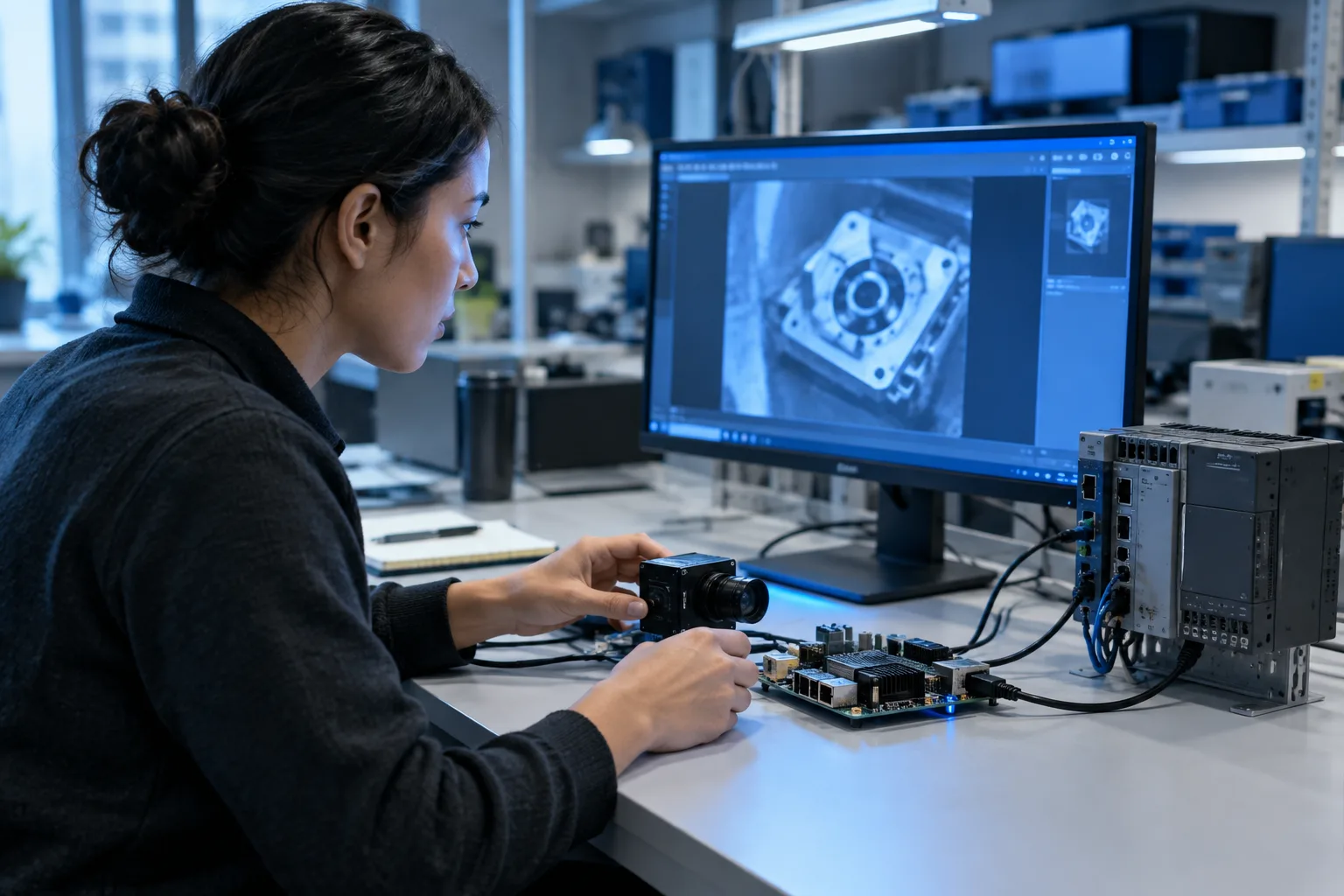
The answer matters because edge AI succeeds or fails in production for reasons that go well beyond peak inference claims. A camera, vehicle, robot or industrial controller needs low latency, controlled power draw, manageable thermals, security updates, software tools and a supply commitment that can last through a long field life. In those markets, the accelerator is only part of the bill of materials. The real platform includes compilers, model-conversion tools, drivers, runtimes, development kits and support teams that can still answer the phone years after the initial design win.
Why this matters beyond one chip deal
Microchip says it plans to keep supporting Hailo’s existing products, software environment and customer engagements while pushing into edge AI, machine vision, robotics, intelligent transportation, smart infrastructure and what it calls Physical AI. That promise is important because Hailo’s value is not just the silicon; it is also the software path customers already use to get models onto devices.
The timing is not a surprise. Industry coverage said Microchip first announced the transaction in July and expected it to close by the end of the third quarter, so a Sept. 21 completion fits the earlier schedule. The larger significance is the consolidation pattern. As EE Times noted, Hailo has been focused mainly on industrial and automotive markets and had about 100 customers in those sectors. That reported footprint is useful context, but it is not the same thing as confirmed production volume, market share or profitability.
What it does show is that accelerator startups are no longer selling only a future idea. They are being evaluated as part of real embedded programs. The same coverage points to a broader shakeout: NXP has acquired Hailo rival Kinara, while other accelerator vendors remain independent. For buyers, that creates a familiar tradeoff. A large incumbent can reduce supplier-risk anxiety and improve lifecycle support, but consolidation can also narrow architecture choices and shift more leverage to one vendor’s roadmap.
The production gap Microchip might close
Microchip’s strongest argument is not that it suddenly “wins” edge AI. It is that it may be able to solve the boring, difficult parts that often keep an AI accelerator stuck in pilot projects.
Microchip already sells into high-reliability embedded markets where products can stay in the field for 10 or 20 years or more. It also brings adjacent parts that many edge systems already need: embedded processing, connectivity, security and other supporting silicon. If Hailo technology can be sold through that installed customer base and packaged with the rest of a design, the acquisition could make edge AI easier to source, qualify and support.
That mechanism is more important than the headline. Many customers do not want to assemble an AI system from a startup accelerator, a separate controller supplier, third-party connectivity, external security elements and a patchwork software stack. They want reference designs, known support channels and fewer integration points. Microchip can plausibly offer that completeness in a way a standalone accelerator company struggles to match.
Still, the main risk is obvious. AI software changes much faster than traditional embedded product cycles. Industrial and automotive buyers often resist changing a qualified architecture unless the gains in performance, power and tooling are clear. Microchip’s long-life support model helps with procurement and lifecycle confidence, but it does not automatically solve model portability, compiler maturity or the need to keep up with rapidly changing neural-network workflows.
There is also an architectural unknown at the heart of the deal. Microchip has not said whether Hailo processors will remain mostly standalone components, be folded into future SoCs or FPGAs, or serve mainly as a reference-platform layer across Microchip systems. Each option implies a different adoption curve, software burden and competitive position.
What buyers should demand before redesigning around it
Because Microchip called the financial impact immaterial and offered no new customer wins, revenue targets or integration milestones, the acquisition’s strategic logic remains plausible rather than proven. That does not diminish the deal’s relevance; it sharpens the checklist.
Customers considering Hailo under Microchip ownership should want concrete answers on six points.
First is performance at the target power envelope. In edge systems, an accelerator that looks strong in isolation can still miss a design if thermals, power delivery or latency under real workloads do not fit the enclosure.
Second is the software path: which models are supported, how model conversion works, what the compiler workflow looks like, and how much code must change to preserve existing applications.
Third is maintenance. Security updates, runtime support and toolchain longevity matter at least as much as first-silicon benchmarks when a device may be deployed for a decade.
Fourth is qualification. Industrial and automotive buyers will want to know what functional-safety and automotive support will be offered, and on what timetable.
Fifth is supply availability and lifecycle pricing. A long-lived design can be sunk by uncertain allocation or shifting cost structures even if the technology performs well.
Sixth is buyer choice. If the value proposition depends on adopting a broader Microchip stack, some customers will welcome the simplification, while others will worry about lock-in and reduced flexibility.
Those are not abstract concerns. Edge AI is attractive precisely because it moves inference closer to the sensor or machine, where latency, privacy, bandwidth and resiliency can matter more than raw cloud scale. But that local-processing advantage only turns into infrastructure if the surrounding platform is stable enough for production engineers, not just data scientists.
Microchip now has a chance to prove that an edge-AI accelerator can be sold like a durable embedded building block rather than a venture-backed point product. Hailo gives it more direct AI capability. Microchip gives Hailo a distribution engine and a support model built for cautious industrial buyers. Whether that combination changes design decisions will depend on the evidence that follows: preserved toolchains, visible software maintenance, qualification progress and supply commitments that make redesign risk feel manageable.
 By
By

 By
By
 By
By

 By
By

 By
By