
Rune has raised a $40 million Series A and used the financing to debut RELIC, a modular compute system meant to run at operating solar plants on electricity that would otherwise be curtailed, clipped or left undelivered to the grid. The timing matters because AI infrastructure is running into a problem bigger than GPU supply alone: power delivery, interconnection queues and conventional data-center construction can take years.
The reader’s real question is straightforward: does putting modular AI compute next to a renewable-energy asset actually bypass the data-center bottleneck, or does it mostly relocate the hard parts into intermittency, networking, cooling, uptime and contract design? Right now, Rune looks more like a serious test of that idea than a settled answer.
Faster deployment is the clearest part of the pitch
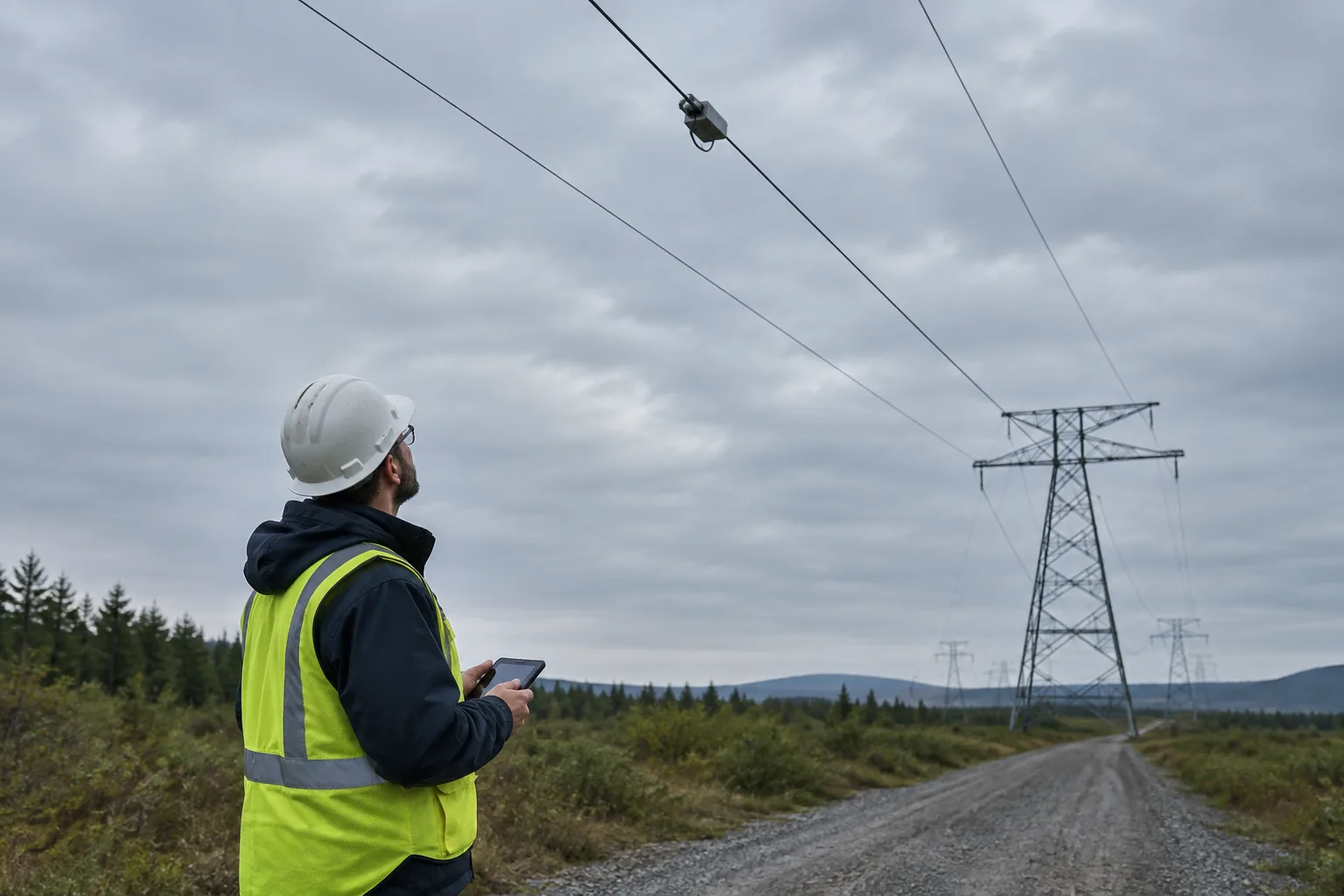
In its Business Wire announcement, Rune said RELIC can be deployed in about 60 minutes and can bring compute customers online in as little as six weeks after contract signing. The company describes the system as a modular package of compute, cooling and power-management equipment designed to connect directly to a solar plant’s DC output, without a grid connection, transformers, utility approvals or heavy site preparation. Rune also says it uses no water and already has a live installation at a 200-megawatt solar facility in Texas with no site modifications, grid work or new construction.
That is the strongest part of the model. If a developer can place compute behind an existing generation asset, it may avoid some of the slowest steps in building a conventional AI site: utility studies, substation work, transmission upgrades, large civil construction and the long wait for a fully permitted grid-connected campus. SiliconANGLE reported that a RELIC unit can include up to 1,024 graphics cards, which helps show the product is aimed at meaningful AI workloads rather than a small edge-computing niche.
But speed to installation and speed to useful capacity are not the same thing. A six-week customer timeline says something important about deployment friction. It does not, by itself, answer whether the resulting service behaves like customer-grade compute.
The bottleneck does not disappear; it moves
Rune’s core insight is commercially plausible. Solar plants can produce electricity that is curtailed, clipped or otherwise unusable by the grid at a given moment. The company says that can amount to as much as 20% of generation at some sites and estimates more than 50 terawatt-hours a year in the United States. If that energy already exists but cannot be sold conventionally, placing flexible compute on site could create a new revenue stream for the power producer and a faster path to capacity for AI customers.
The catch is that useful compute depends on the hourly shape of available power, not the nameplate size of the solar farm. A 200-megawatt solar site does not mean a 200-megawatt compute installation, and it certainly does not imply continuous output. Curtailment varies with location, weather, market rules, interconnection rights and local grid conditions. Public materials so far do not show how much curtailed power the Texas installation actually consumes, whether it runs through nights and cloudy periods, or whether batteries, backup generation or workload migration are part of the operating plan.
That makes workload fit central, not incidental. This model is naturally better suited to jobs that can pause, move or tolerate variable availability: batch training, rendering, data processing and some inference. It is less obviously suited to always-on, latency-sensitive enterprise services unless there is backup power, redundant capacity elsewhere or a contract structure that accepts interruptions. Behind-the-meter design can remove some equipment and approvals. It does not remove the need for physical security, cooling performance, fiber access, hardware replacement, cybersecurity, maintenance crews and a reliable path for data in and results out.
Networking may prove just as important as power. A remote solar site with cheap electrons but weak connectivity can still be an awkward place to run valuable AI work. For many buyers, the relevant output is not megawatts on paper but delivered GPU-hours with acceptable latency, failure handling and egress cost.
The savings claim needs a tougher denominator
Rune says RELIC can reduce non-compute infrastructure costs by 85%, including an illustrative $620 million in savings on a 100-megawatt deployment. Some of that logic is easy to understand. Skipping major grid interconnection work, some power-conversion equipment, water systems and heavy site preparation could materially lower upfront infrastructure spending.
The missing piece is the denominator. The company has not published the full baseline, financing assumptions or operating model behind the 85% figure, and that matters because AI infrastructure economics are determined by useful work delivered over time, not simply by avoiding certain pieces of balance-of-plant cost. Low utilization, intermittent operation, remote maintenance, insurance, network backhaul, field service logistics and hardware refresh can quickly eat into apparent savings.
The same caution applies to Rune’s broader operating claims. On its site, the company currently cites 80 megawatts of contracted power, more than 1 gigawatt of capacity coming soon, more than 40,000 fleet operating hours and a 99.5% service-level availability figure. Those numbers may indicate early momentum, but they do not yet come with the customer, measurement or contract detail a buyer would need to compare RELIC with a conventional data-center offering.
What a serious pilot should prove
For both compute buyers and power producers, the next step is not admiration or dismissal. It is measurement.
A credible pilot should answer a short list of practical questions:
- What is the site’s hourly generation and curtailment profile across real operating conditions?
- How many delivered GPU-hours does the system produce against that power profile?
- What workloads complete successfully, on what schedule, and with what interruption handling?
- What are the network path, latency and data-egress costs from the site?
- How are maintenance, hardware replacement, cybersecurity and physical access handled?
- What backup, migration or service-credit terms apply when solar output drops?
- What is the all-in cost per useful unit of compute, not just the avoided infrastructure line items?
That is where Rune’s launch becomes important beyond one startup financing. The company is arguing that location can beat construction: put compute at an existing energy asset, use direct-current power and target flexible AI jobs that do not need a perfect 24/7 profile. If that works at transparent cost, it would open a meaningful new slice of capacity without waiting for the full traditional data-center pipeline to catch up.
If it does not, the reason will probably not be a lack of panels or GPUs. It will be that the old data-center problems still exist, just in a different order. The prize is not the nameplate size of a solar farm or the speed of an equipment drop. It is reliable, contractible work delivered from variable power, and that remains the proof Rune still has to show in public.
 By
By
 By
By

 By
By
 By
By
 By
By
 By
By
 By
By