
New York’s legal wardrobe shift signals a broader recalibration of professional authority
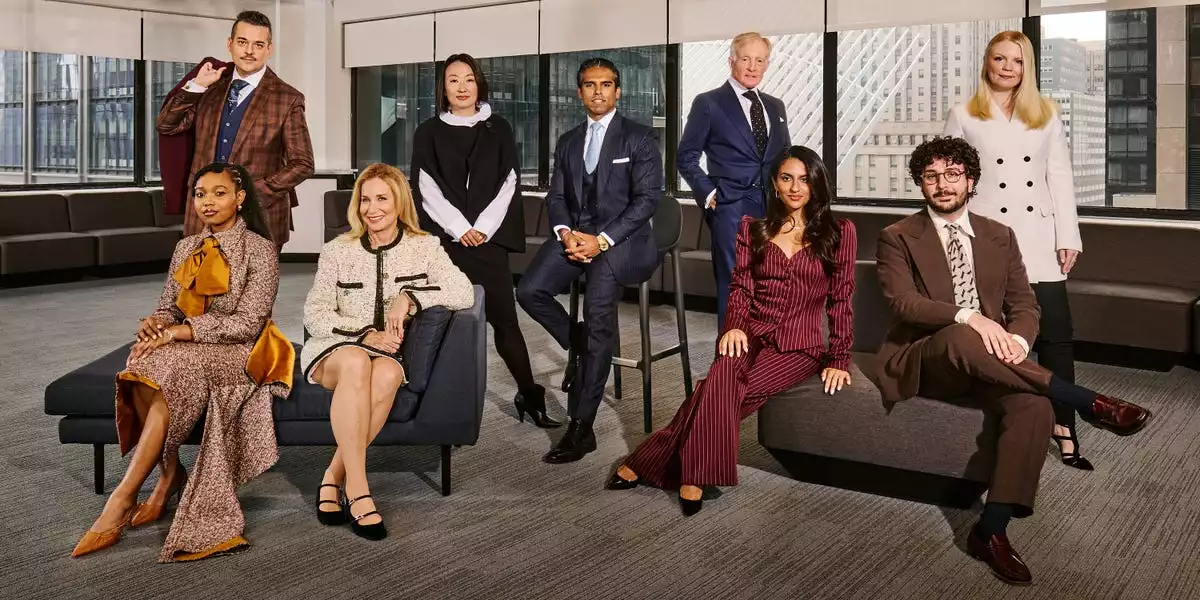
For decades, the visual language of New York law was deliberately uniform: navy and charcoal suits, conservative ties, restrained heels—an aesthetic designed to project seriousness and minimize distraction. That consensus is now loosening in a way that feels less like a trend and more like a strategic adaptation. A new generation of attorneys is treating attire as a form of professional communication, using vintage sport coats, designer footwear, heritage textiles, and carefully chosen accessories to convey identity, confidence, and client alignment.
Business Insider’s “best-dressed lawyers” profiles—spanning practitioners such as Vanessa Ajagu (noted for Nigerian-inspired ensembles at Gibson, Dunn & Crutcher) and William Brewer III (tailoring punctuated by vintage watches)—illustrate how style has become an intangible asset in both courtroom and conference-room dynamics. The point is not flamboyance for its own sake; it is differentiation in a market where many traditional signals of competence are increasingly standardized.
This evolution also mirrors a wider professional convergence. Finance, consulting, and tech have already moved toward “casual customization,” where individuality is permitted so long as performance remains unimpeachable. Legal—long the holdout—now appears to be adopting a similar logic: authority can be expressed through precision and authenticity, not only through uniformity.
AI in legal work is commoditizing technical output—making “human signals” more valuable
The timing of this sartorial shift is not incidental. As artificial intelligence in legal services accelerates—automating document review, contract analysis, and legal research—core technical tasks become faster, cheaper, and more comparable across firms. When clients can access competent work product more easily, differentiation migrates to what is harder to replicate: trust, judgment, empathy, cultural fluency, and relationship-building.
In that environment, personal style functions as a tactile, immediate proxy for these “soft” competencies. Clothing and grooming choices can communicate:
- Approachability and confidence (reducing perceived distance between counsel and client)
- Cultural literacy (especially relevant for cross-border matters and diverse stakeholder groups)
- Attention to detail (a trait clients often associate with risk management and diligence)
- Personal brand consistency (a signal of reliability in high-stakes advisory relationships)
There is also a subtler dynamic at play: as AI systems raise concerns about opacity and bias, clients may look for reassurance in the visible presence of human judgment. An attorney whose presentation conveys authenticity and cultural competence can act as a counterweight to fears that legal outcomes are becoming overly mechanized or impersonal. In other words, the more automated the back office becomes, the more the front office must excel at being unmistakably human.
The business of “looking the part” is becoming measurable—and potentially platformized
What was once dismissed as vanity is increasingly treated as relational capital: discretionary spending that supports client acquisition, retention, and referrals. The emerging niche economy around professional attire—bespoke tailoring, vintage resale, designer capsule wardrobes, artisanal accessories—benefits from a clientele that views wardrobe as a business tool rather than a personal indulgence.
This is where the story becomes distinctly business-and-technology oriented. The same data-driven systems that power consumer retail personalization could plausibly be adapted for professional services. A near-future “style-tech” stack for attorneys is not difficult to imagine, particularly in firms already investing heavily in legal operations and analytics:
- AI-driven wardrobe recommendations based on meeting type, client profile, firm culture, and venue norms
- Image analysis and color guidance tuned to credibility cues (while raising important questions about bias and stereotyping)
- Calendar-integrated attire planning that treats wardrobe selection as part of engagement preparation
- Sustainability scoring that aligns with firm ESG commitments through vintage, upcycled, or traceable sourcing
If these tools emerge, they will sit at an unusual intersection: legal tech, fashion tech, and professional branding. That convergence could also create new vendor ecosystems—stylists specializing in regulated industries, platforms offering “courtroom-ready” capsules, and partnerships between law firms and heritage or luxury brands seeking high-trust professional audiences.
Just as importantly, firms may begin to formalize what has historically been informal. If style demonstrably supports business development, it becomes easier to justify wardrobe-related spending as marketing or professional development rather than personal overhead—especially for client-facing partners and rising rainmakers.
Talent, culture, and the next battleground for client trust
The implications extend beyond individual lawyers. Recruitment and retention are increasingly shaped by whether firms feel culturally modern, not merely prestigious. Millennial and Gen-Z attorneys often expect autonomy and self-expression, and a rigid dress code can read as a proxy for rigid thinking. Firms that allow curated individuality—while maintaining standards—may gain an edge in attracting talent that also expects advanced tooling, including AI-enabled workflows.
On the client side, visual cues are becoming more consequential as decision cycles compress and first impressions occur across hybrid settings. An attorney who can calibrate presentation—startup-casual for a venture-backed founder, traditional polish for a blue-chip board, culturally resonant elements for cross-border stakeholders—may shorten the trust-building curve. In competitive pitches, that can matter as much as credentials.
The deeper narrative is not that law is becoming fashion-forward. It is that the profession is renegotiating how authority is signaled in an era where AI can draft, summarize, and predict, but cannot fully replicate presence. As legal work becomes more technologically augmented, the differentiator shifts toward the human layer—where authenticity, cultural intelligence, and personal brand operate as strategic assets, not superficial choices.

 By
By
 By
By
 By
By


 By
By
 By
By