
A “GPT moment” meets the unforgiving optics of real-time graphics
Nvidia’s unveiling of DLSS 5, framed as a breakthrough in AI-driven upscaling, was designed to signal a new era: neural networks not merely reconstructing pixels, but generating plausible visual detail at scale. In a market where “AI” has become both a rallying cry and a valuation driver, CEO Jensen Huang’s rhetoric positioned DLSS 5 as a step-change—an inflection point comparable to the leap large language models delivered in text.
Yet the early public reception has exposed a familiar fault line in consumer technology: the gap between demo-grade promise and player-grade reality. Initial demonstrations and an unfinished leaked build circulating among modders have drawn unusually sharp criticism, with players describing the output as “disjointed,” “hyperreal,” and unfaithful to the original art direction—an aesthetic drift some have derisively labeled “slop tracing.” When the conversation shifts from “more detail” to “wrong detail,” the debate stops being about resolution and starts being about authorship, intent, and trust.
The fact that Huang felt compelled to publicly defend DLSS 5 is itself notable. Nvidia’s recent communications have typically stayed at altitude—AI platforms, data centers, and ecosystem flywheels. This episode pulled the company back into the granular, emotionally charged arena of gaming perception, where screenshots travel faster than benchmarks and reputational damage can compound in a weekend.
—
The core technical dilemma: fidelity gains that can erode artistic truth
At the heart of the backlash is a tension that upscaling has always carried, but that generative methods intensify: fidelity versus authenticity. Prior DLSS iterations were largely judged on whether they preserved edges, reduced shimmer, and improved temporal stability while delivering performance headroom. DLSS 5’s more generative posture appears—at least in early form—to risk “improving” scenes into something that is statistically plausible but artistically incorrect.
Several technical dynamics help explain why this is so difficult:
- Model generalization vs. game-specific aesthetics: Training across broad datasets can bias outputs toward an “average” look—textures, lighting cues, and micro-contrast that read as modern and sharp, but not necessarily consistent with a given title’s intentional style. Legacy franchises and remakes are especially sensitive because their visual identity is part of the brand contract with fans.
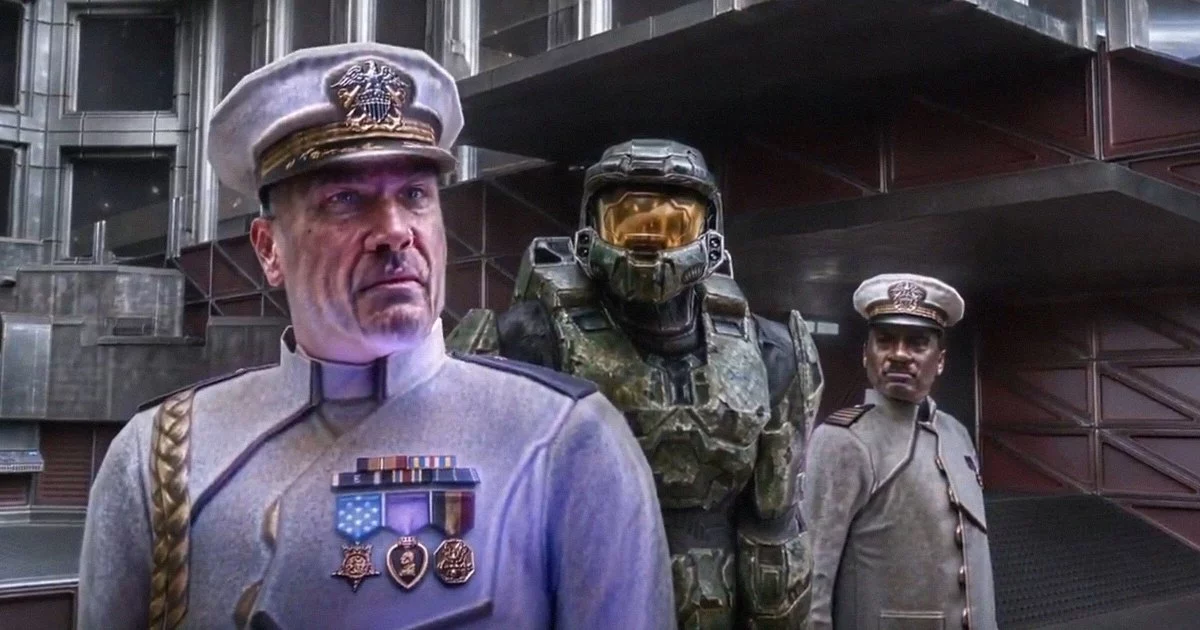
- Uncanny coherence artifacts: Reports from leaked builds in titles such as *Halo: Combat Evolved* and *Final Fantasy VII Rebirth* describe grotesque or inconsistent artifacts—symptoms often associated with generative reconstruction that struggles with motion, depth ambiguity, or stylized assets.
- Performance overhead that contradicts the category promise: Perhaps most damaging are claims of steep frame-rate penalties, in some cases dropping performance by more than half. Upscaling’s consumer value proposition is straightforward: better image quality for the same cost, or similar quality for less cost. If the neural network’s compute footprint eclipses its rendering savings, DLSS 5 risks being perceived not as an accelerator, but as a tax on the GPU’s budget—compute, memory bandwidth, and power.
This is not merely a tuning issue; it’s a product-definition issue. If DLSS 5 is effectively a new class of generative graphics enhancement, then it must be evaluated with a different rubric—one that includes art direction preservation and predictability, not just sharpness and temporal stability.
—
Market and ecosystem stakes: RTX halo, upgrade incentives, and developer alignment
Nvidia’s gaming leadership has long benefited from a reinforcing loop: RTX branding, developer integrations, influencer validation, and consumer upgrade cycles. DLSS has been a cornerstone of that loop. A high-profile stumble therefore carries implications beyond one feature release.
Key business risks and pressures include:
- Brand equity and mindshare: Core gamers are a vocal constituency and an informal QA network. If DLSS 5 becomes shorthand for “AI overreach,” Nvidia risks ceding narrative ground to AMD FSR, Intel XeSS, and emerging open-source approaches that may be framed as more transparent or less stylistically invasive.
- Hardware demand elasticity: In a cautious consumer environment, GPU upgrades must justify themselves quickly. If DLSS 5 is perceived as unreliable—or worse, as degrading both performance and aesthetics—the incentive to move to the latest RTX generation weakens, with downstream effects on OEM configurations, channel sell-through, and co-marketing bundles.
- Developer relations and pipeline hedging: Studios integrate Nvidia technologies not just for performance, but for marketing lift and platform support. A misaligned launch can encourage studios to adopt vendor-agnostic upscaling layers by default, reducing Nvidia’s leverage in the rendering stack and shifting DLSS from “must-have” to “optional.”
There is also a subtler strategic concern: intellectual property and artistic control. Publishers and IP holders may scrutinize any technology that materially reinterprets visual assets. If generative upscaling is seen as altering the “look” of a franchise, contracts and SDK terms may evolve toward stricter controls, auditability, and opt-out mechanisms—especially for premium remasters and culturally significant titles.
—
What Nvidia’s next moves signal for AI graphics—and for AI product credibility
DLSS 5’s early turbulence lands at a moment when the broader AI sector is grappling with expectation management. The industry has learned that “AI-first” messaging can backfire when users encounter edge cases that feel less like bugs and more like betrayals of intent. Real-time graphics is particularly unforgiving because the output is continuously visible and emotionally judged.
A pragmatic path forward would likely emphasize control, transparency, and phased validation:
- Phased rollout with community and studio feedback loops, treating early adopters as co-innovators rather than passive recipients.
- User-facing toggles and stylistic presets that allow players to choose between conservative reconstruction and more aggressive generative detail—making DLSS 5 a preference, not a mandate.
- Developer toolkits for fine-tuning on proprietary assets, reducing the “generic AI” look and aligning outputs with a game’s art bible.
- Benchmark transparency across varied scenarios—GPU tiers, resolutions, ray tracing loads—so performance trade-offs are framed honestly and predictably.
If Nvidia can translate the backlash into a disciplined recalibration—tightening quality gates, restoring aesthetic fidelity, and clarifying performance economics—DLSS 5 could still mature into a meaningful platform advantage. But the episode already delivers a durable lesson for AI in consumer-facing media: the future isn’t just higher resolution; it’s higher accountability to the original creative vision, delivered at frame-rate budgets that players can feel, measure, and trust.




 By
By
 By
By
 By
By
 By
By