
A political rename meets the hard edges of geospatial data governance
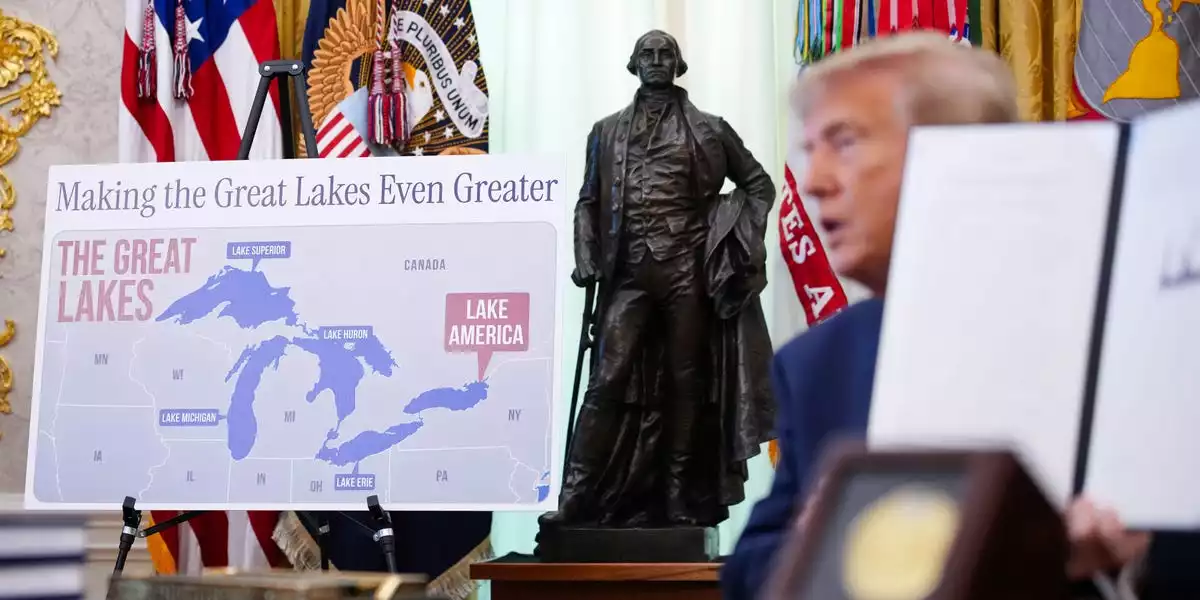
President Donald Trump’s unilateral order to rename Lake Ontario as “Lake America” may look, at first glance, like a symbolic flourish. Yet the episode quickly became a revealing stress test for the modern mapping stack—where place names are not merely labels, but data objects that flow through government registries, platform pipelines, and consumer interfaces at global scale.
Google Maps’ near-immediate update—aligned with the U.S. Geographic Names Information System (GNIS)—highlights how deeply major platforms have optimized for authoritative-source synchronization. In operational terms, this is rational: a single canonical feed reduces conflicts across search, routing, local listings, and third-party APIs. But the same efficiency creates a reputational vulnerability: when the authoritative source is perceived as politically motivated, automated compliance can look like automated endorsement, even if the platform’s intent is procedural rather than ideological.
This is the core tension the incident surfaces for business and technology leaders: geospatial truth is increasingly mediated by governance choices, not just cartography. The question is no longer “What is the correct name?” but “Which authority is the system designed to treat as correct—and how visibly does it explain that choice?”
—
Google’s compliance model: consistency at scale, controversy at speed
Google’s justification—compliance as a matter of policy and data governance—fits a platform that must keep billions of users on a consistent map. For a global mapping provider, the advantages of tight coupling to government databases are substantial:
- Operational consistency: one update propagates across products (Maps, Search, local business info, voice assistants).
- Reduced editorial overhead: fewer manual interventions and fewer internal disputes about edge cases.
- Defensibility through process: “we follow the registry” can function as a standardized rationale.
Yet the same architecture can amplify political volatility. A unilateral directive, once reflected in a federal database, can cascade into consumer products with little friction. That creates two strategic risks:
- Perception risk: users may interpret the change as corporate deference to political power rather than neutral data hygiene.
- International trust risk: global audiences may view U.S.-centric naming as a form of digital unilateralism, especially when geographic features are culturally and economically shared.
For dominant platforms, this is not a niche concern. Maps are critical infrastructure for commerce—logistics, tourism, advertising, and local discovery. When naming becomes contested, the platform is pulled into a debate about sovereignty and legitimacy, even if it never sought that role.
—
MapQuest’s defiance: turning nomenclature into a competitive wedge
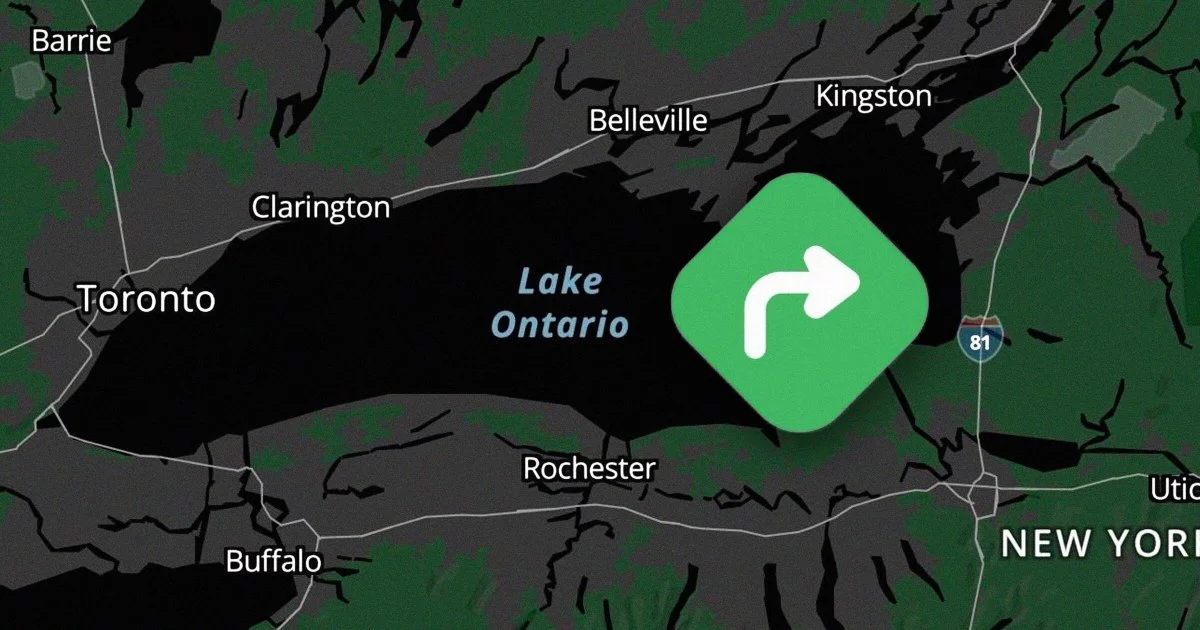
MapQuest’s decision to retain “Lake Ontario,” then publicly frame that stance as a commitment to accuracy and user choice, demonstrates how smaller players can exploit moments when the market leader’s scale becomes a constraint. The company’s response was not merely editorial; it was strategic positioning.
The results—top U.S. navigation-app rankings, broader App Store visibility, and a reported ten-fold global download increase in a week—underscore a recurring pattern in platform competition: when consumer sentiment spikes, distribution can shift faster than network effects predict, at least temporarily. MapQuest effectively converted a naming dispute into a viral acquisition funnel by offering users something Google could not easily provide without undermining its own governance model: visible dissent and participatory control.
Two elements made the play particularly potent:
- Narrative clarity: “We’re keeping the established name” is instantly legible, even to non-technical audiences.
- Productized protest: introducing a feature that allows anyone to rename the lake reframed maps as a space for co-creation, not just consumption.
That last move is especially notable. It signals a broader industry possibility: maps as community platforms where labels can be annotated, contextualized, or pluralized—without necessarily replacing official names. In other words, open nomenclature can become an engagement layer, not just a gimmick, if it is governed well.
—
What this episode signals for mapping platforms, regulators, and enterprise buyers
Beyond the immediate headlines, the Lake Ontario/Lake America dispute illustrates how mapping providers are becoming arenas where politics, product design, and data provenance collide. Several forward-looking implications stand out for executives, policymakers, and enterprise customers who rely on geospatial services.
Relying on a single authoritative feed—however reputable—creates a single point of reputational failure. More robust systems ingest multiple sources (federal, local, international, crowdsourced) and reconcile them with transparent rules. The competitive differentiator is not just accuracy, but explainability of accuracy.
Mapping companies increasingly need codified playbooks for politically sensitive changes: when to comply, when to delay, when to annotate, and when to offer parallel naming conventions. This is not “virtue”; it is enterprise governance, akin to incident response in cybersecurity.
MapQuest’s surge shows that trust narratives can translate into downloads, engagement, and potentially improved leverage with advertisers and data partners. For incumbents, the lesson is that brand trust is not a soft metric; it can become a direct acquisition driver when the public perceives a platform as either captive to power or independent of it.
As governments scrutinize platform dominance, a precedent of rapid alignment with political directives can invite criticism from multiple angles—free expression, consumer protection, and competition policy. Conversely, selective non-compliance can also trigger legal and diplomatic pressure. The center of gravity is shifting toward transparent provenance and user-facing context, not silent updates.
What looks like a dispute over a lake name is, in practice, a live demonstration of how digital maps have become a contested layer of modern infrastructure—where the most consequential product decision may be not what the label says, but who gets to decide, how fast it changes, and whether users are told why.

 By
By
 By
By
 By
By
 By
By



 By
By