
A visitor’s-eye audit of Scotland’s castle economy
Lorna Wallace’s reflections read less like a simple travel diary and more like a field report on how cultural assets perform under modern tourism pressures. Scotland’s castles are not interchangeable attractions; they are competing “experience products” shaped by interpretation quality, crowd dynamics, and the delicate balance between conservation and commercialization.
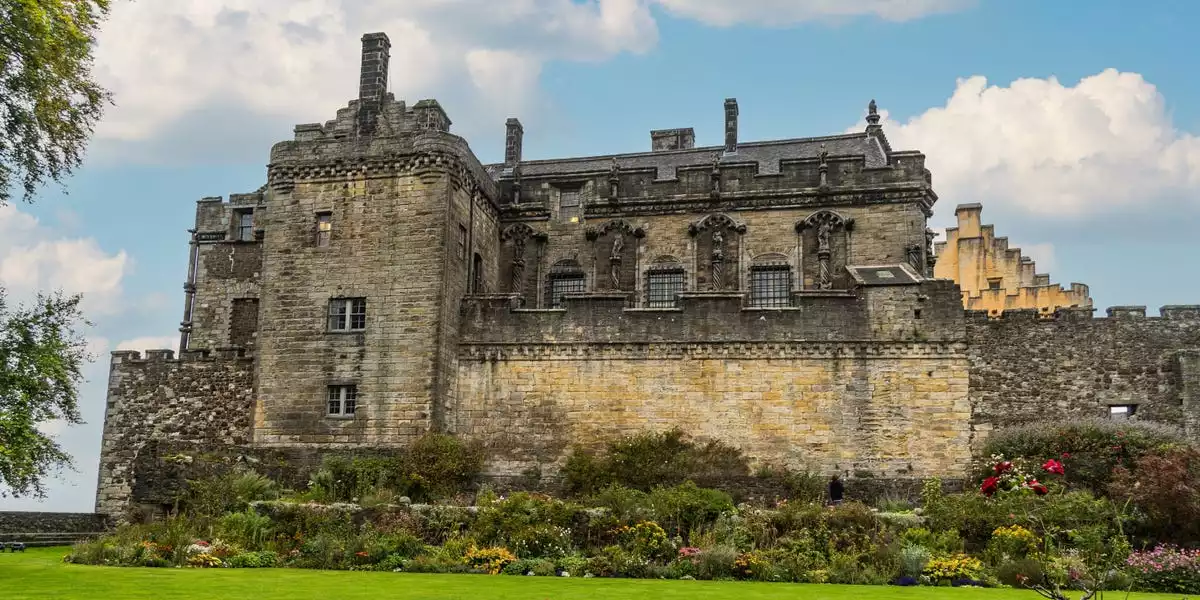
Her praise for Stirling Castle is telling. The appeal is not only the obvious—panoramic views and beautifully restored 16th‑century interiors—but the operational reality: guided tours that feel spacious, legible, and human-scaled. That combination signals a castle that is succeeding at the fundamentals of visitor experience design:
- Clarity of narrative (what you’re seeing and why it matters)
- Perceived authenticity (restoration that supports, rather than overwhelms, the story)
- Comfort and flow (a sense of access rather than congestion)
By contrast, Wallace’s critique of Edinburgh Castle—overcrowding, underwhelming interpretation, and a tilt toward military exhibition at the expense of everyday life—highlights a common failure mode for “must-see” heritage icons: when demand becomes the product, meaning becomes secondary. In business terms, Edinburgh Castle risks drifting from cultural landmark to high-throughput venue, where the visitor’s primary memory is queueing rather than discovery.
Interpretation is becoming the differentiator—and technology is the lever
Wallace’s enthusiasm for Doune Castle’s audio guide, voiced by talent associated with *Outlander* and *Game of Thrones*, underscores a shift in cultural tourism: visitors increasingly value story delivery systems as much as the stones themselves. The site’s success suggests that “interpretation” is no longer a static plaque-and-map exercise; it is a media layer that can transform ruins into lived experience.
This is where technology moves from novelty to necessity. Several implications emerge:
- Immersive audio and multimedia storytelling: Doune demonstrates that well-produced audio can create intimacy, pacing, and emotional texture—especially in partially ruined spaces where imagination must do the heavy lifting.
- Augmented reality (AR) and contextual overlays: For castles with fragmented structures, AR can reconstruct rooms, rituals, and daily routines without physically rebuilding them—supporting conservation while enhancing comprehension.
- Digital twins and remote access: High-fidelity 3D scanning can create “virtual replicas” that serve education, accessibility, and global audiences—while also reducing physical strain on high-traffic sites.
Wallace’s comparison between Stirling’s curated interiors and Edinburgh’s less satisfying interpretive mix also points to a strategic truth: heritage value is increasingly mediated value. The visitor does not simply consume history; they consume a *version* of history shaped by curatorial choices, production quality, and narrative scope. Sites that foreground only one dimension—such as military history—may inadvertently narrow their audience, especially when travelers are seeking quotidian narratives: how people ate, worked, celebrated, and endured.
Crowds, capacity, and the business case for smart visitor management
Overcrowding at Edinburgh Castle is not merely an inconvenience; it is an operational and reputational risk with measurable consequences. High-density visitation can degrade:
- Visitor satisfaction and dwell time (shorter stays, fewer secondary purchases)
- Interpretive absorption (less attention, more fatigue)
- Conservation outcomes (wear on surfaces, pressure on staff and infrastructure)
This is where data-driven visitor management becomes central to heritage strategy. Real-time crowd analytics—using IoT sensors, timed entry, and app-based wayfinding—can help operators shift from reactive crowd control to proactive experience shaping. Combined with AI-powered demand forecasting, castles can implement:
- Dynamic ticketing and time-slot pricing to smooth peaks
- Route optimization to distribute visitors across rooms and grounds
- Targeted nudges toward quieter sites and off-peak windows
Wallace’s preference for Stirling and Doune over Edinburgh also hints at a broader economic opportunity: redistributing demand across Scotland’s castle network. If secondary destinations are packaged as curated “heritage corridors,” regional economies benefit through accommodation, dining, transport, and retail—while flagship sites gain relief. In practical terms, Scotland can treat castles not as isolated attractions but as a portfolio, managed for both cultural impact and system-wide resilience.
Screen tourism, authenticity tensions, and the next competitive frontier
Doune’s film-and-TV resonance illustrates the economic multiplier of media-driven tourism. When a castle becomes a recognizable setting, it gains a ready-made narrative hook—one that can extend beyond peak season through themed tours, events, and partnerships. Yet Wallace’s note on Eilean Donan Castle—photogenic, evocatively located, but with modern interiors that may surprise visitors—captures the tension at the heart of heritage monetization: authenticity versus accessibility and commercial viability.
Meanwhile, Urquhart Castle—atmospheric ruins overlooking Loch Ness—shows the enduring power of landscape and mood. Not every site needs heavy reconstruction; some win by leaning into place, scale, and the emotional register of absence. The strategic question becomes: which castles should invest in meticulous interior restoration, and which should invest in interpretive media that preserves the ruin while enriching understanding?
Forward-looking operators are likely to converge on a blended model:
- High-quality interpretation as a baseline (audio, AR, layered storytelling)
- Smart-site operations (crowd sensing, dynamic capacity tools)
- Partnership ecosystems (streaming platforms, game studios, universities)
- Diversified revenue (virtual access, memberships, sponsorship, education)
Wallace’s castle-by-castle assessment ultimately reveals a market truth: Scotland’s fortifications are not competing on history—history is abundant. They are competing on how effectively they translate history into experience, and how intelligently they manage the modern realities of attention, congestion, and expectation. The castles that thrive will be those that treat interpretation and operations not as back-office functions, but as the core of cultural value creation.

 By
By
 By
By


 By
By
 By
By
 By
By