
A $10 breakfast as a real-time referendum on brand strategy
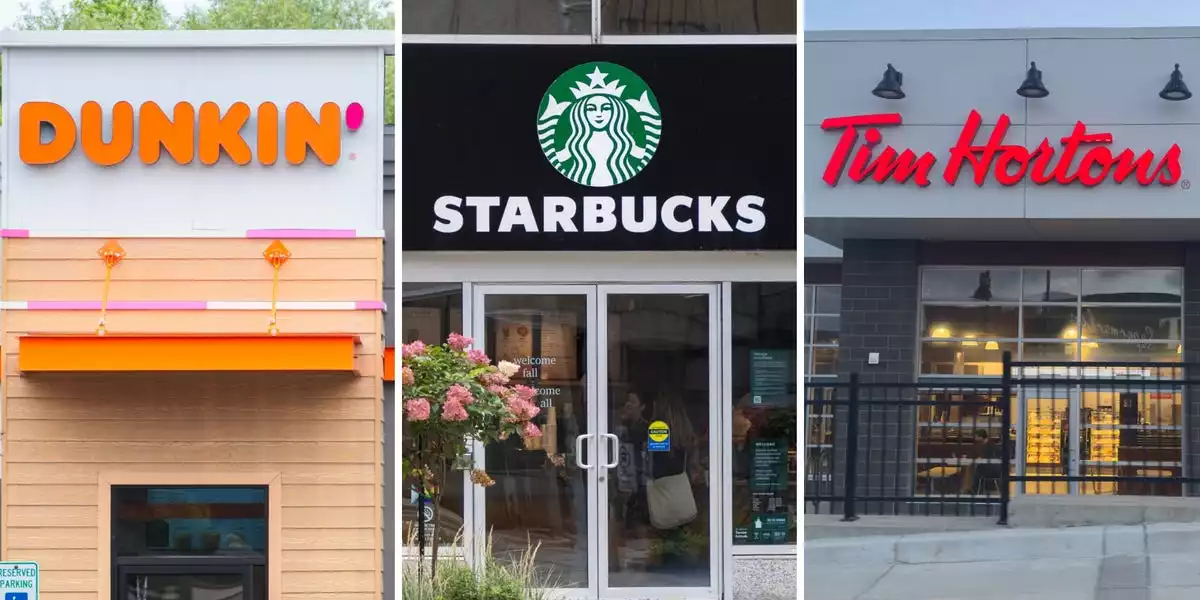
A simple field test—spending roughly $10 on breakfast at Dunkin’, Starbucks, and Tim Hortons—reads like a miniature earnings call for the quick-service restaurant (QSR) sector. In a market where consumers are increasingly deal-conscious and operators are navigating commodity inflation, labor costs, and throughput constraints, breakfast has become a daily proving ground for pricing power and execution discipline.
What emerges is not merely a taste ranking, but a clearer picture of how each chain is positioning itself in a bifurcating landscape:
- Tim Hortons used bundle clarity and portion satisfaction to deliver the strongest perceived value.
- Starbucks reinforced its premium posture with an à la carte approach that can feel exclusionary to value-seekers.
- Dunkin’ attempted a middle path with a $6 meal deal, but the experience exposed how quickly “value” erodes when flavor coherence and consistency fall short.
For business leaders, the key takeaway is that price is no longer the headline—credibility is. Consumers will pay more when the experience feels intentional; they will trade down quickly when it feels improvised.
Bundles, price elasticity, and the psychology of “worth it”
The most consequential difference across the three brands is not the coffee roast or sandwich format—it’s menu architecture.
Tim Hortons’ $6 biscuit-sandwich bundle, paired with a medium iced coffee and doughnut (plus an add-on bagel), demonstrates the enduring power of structured bundling. Bundles reduce decision fatigue, anchor value, and create a clean mental model: *this is a complete breakfast at a fair price*. That clarity matters more in inflationary periods, when consumers scrutinize every line item.
Starbucks, by contrast, effectively asked customers to assemble their own $10 breakfast through premium à la carte pricing—a croissant sandwich and a small blonde-roast coffee. This supports higher average check sizes and protects brand equity, but it also introduces a psychological barrier: value-oriented customers can feel they are paying for the brand narrative as much as the food.
Dunkin’ sits between these poles. Its $6 “meal deal” (two Wake-Up Wraps plus a medium iced coffee) is priced to compete on value, yet the reported gaps in taste and portion optimization highlight a strategic risk: when a brand positions itself as affordable, execution becomes the product. A value promise is fragile; it cannot be “marketed” into existence if the sensory experience doesn’t align.
From a pricing strategy standpoint, the test underscores several dynamics executives will recognize:
- Bundling increases perceived value without necessarily collapsing margins, especially when engineered around high-margin beverages.
- Premium pricing relies on trust—customers must believe quality and consistency justify the premium every time.
- Mid-market brands can win share during trade-down cycles by delivering “enough” quality with unmistakable value cues.
Operational consistency is now a competitive moat, not a back-office detail
The critiques—dryness, saltiness, textural inconsistency—may sound like consumer-level nitpicks, but they map directly to operational levers: ingredient sourcing, holding times, training rigor, and prep standardization. In a breakfast category where products are relatively commoditized, variance is the enemy. Customers don’t benchmark a sandwich against a culinary ideal; they benchmark it against what the brand promised yesterday.
Tim Hortons’ stronger showing on sandwich freshness and coffee smoothness suggests tighter alignment across:
- Procurement and ingredient specs (reducing variability in taste and texture)
- Food-prep protocols (repeatability under peak morning volume)
- Front-line training (consistent assembly and handoff standards)
Dunkin’s reported ordering error—confusion between a coffee and a roll—also spotlights a modern operational fault line: digital UX and in-store execution must behave like one system. As QSR chains push app-based ordering, kiosks, and loyalty-driven personalization, the risk shifts from “wrong item” to “broken promise.” A mismatch between digital menus, store communication, and employee workflows can quietly tax brand trust more than a modest price increase ever would.
For technology leaders, this is the practical implication: integration is customer experience. The best loyalty program or app interface cannot compensate for inconsistent fulfillment.
Where breakfast competition is headed: AI-driven bundles, resilient supply chains, and modular loyalty
This $10 breakfast comparison lands at a moment when the industry is splitting into two lanes: premium-crafted experiences and value-forward incumbents. Starbucks remains the emblem of premium positioning, but the test illustrates the strategic tension: premium brands can maintain pricing power, yet risk narrowing their addressable market as households become more budget-sensitive. Meanwhile, Tim Hortons’ performance shows how mid-market operators can capture incremental share by making value unmistakable and repeatable.
Several forward-looking moves stand out as likely differentiators:
- Dynamic bundling powered by analytics: Real-time offer design based on local demand curves, time-of-day traffic, and purchase history can protect margins while meeting value expectations.
- Supply-chain resilience and quality assurance: End-to-end monitoring and tighter prep standardization—potentially including selective automation—can reduce the variability that undermines both premium and value propositions.
- Digital fulfillment excellence: Better app-to-kitchen integration, smarter combo suggestions, and fewer handoff errors can lift satisfaction and throughput simultaneously.
- Modular loyalty tiers: Programs that offer entry-level meal credits alongside premium experiential rewards can broaden reach without forcing a brand to abandon its positioning.
The deeper lesson from the breakfast “showdown” is that the next phase of QSR competition will be won less by novelty and more by systems competence—the ability to translate pricing strategy into a consistent, frictionless, high-confidence morning routine. In a market defined by tighter budgets and higher expectations, the brands that thrive will be those that make value feel not occasional, but engineered.

 By
By
 By
By
 By
By
 By
By

 By
By